
Reviews 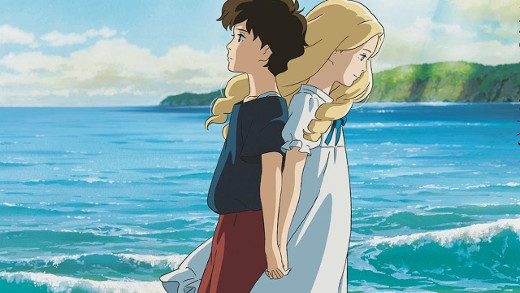
When Marnie Was There Review: Like A Fish Out of Water
Vassilis Kroustallis
Based on the eponymous novel by Joan G. Robinson, When Marnie Was There is the latest feature from Arrietty director Hiromasa Yonebayashi, and the latest production from Studio Ghibli.
Focusing on the well-established territory of teenage dreams and childhood traumas, When Marnie Was There is the story of the 12-year-old Anna, who lives with her foster parents.
The brunette Anna, a tomboy herself, with a knack for drawing, feels outside "the invisible circle" that surrounds her schoolmates. Her medical condition, an asthma that needs to be taken care of, doesn't make things easier.
The easiest solution for Anna is to visit distant relatives of her foster parents to spend the summer there, and follow the lead of Takamoto's heroine in Only Yesterday (1991). The urban environment always creates problems and exacerbates traumas that the Japanese countryside knows how to handle.
The bright greens and the deep blues of the film secure a sense of adventure. Anna's room seems to be modelled on Arrietty's bedroom, a rather exotic but still genial combination of flowers and greens. Only Anna, this time, has no desire to spend her time inside.
What immediately attracts her attention is the salt marsh and a long-abandoned mansion on the other side. Bullied by kids and in turn talking harshly to them during the Tanabata festival, Anna seems alone in her effort to discover what's hidden underneath - and find the blond Marnie in the process.
The film cleverly plays with the notion of mistaken identity: who is Marnie, and if she is a ghost from the past, what's her relationship to Anna? Anna herself seems lost in the beauty of her surroundings; her character can only be revealed in the sketches she draws, which need to be deciphered.
This promising start does not hold fast through the film, which is undecided between celebrating friendship and investigating a character in its various dramatic turns.
Anna indeed has a dramatic past (no spoilers here), but it is all revealed in a flashback sequence at the end of the film, leaving the rest a mystery.
In the meantime, her thoughts and intentions remain a secret to us as well; Anna has no real reason to get away from her foster parents (her excuse does not stand well in the film). Her reactions only make Anna a rather neurotic character, who can find comfort nowhere.
In contrast, her friend Marnie has a good reason to be unhappy: behind her blue grand bowtie, Marnie suffers from the lack of love her rich parents are unable to give her. Those folks can organize big parties, but Marnie only gets scolded by her nannies and maids.
If this story were the focus of the film, it would have been a dramatic turn indeed. Instead, the perplexed Anna needs to find her answers in the impressively looking surroundings. It is a beauty to behold, but it does not elevate the film above a well-prepared elegy on friendship.
Children (and grown-ups) may feel the serenity the film clearly wants to advertise at every level, and it spreads in its various supporting characters (including the mute old guy who helps Anna, and the all-knowing female painter, Hisako).
Still, the problem with When Marnie Was There is that there is no preceding storm.
Vassilis Kroustallis
Read More About:
Related Articles
Vassilis Kroustallis




Zippy Frames is the premier online animation journal promoting European and Independent Animation since 2011
Zippy Frames
Quick Links