
Shorts 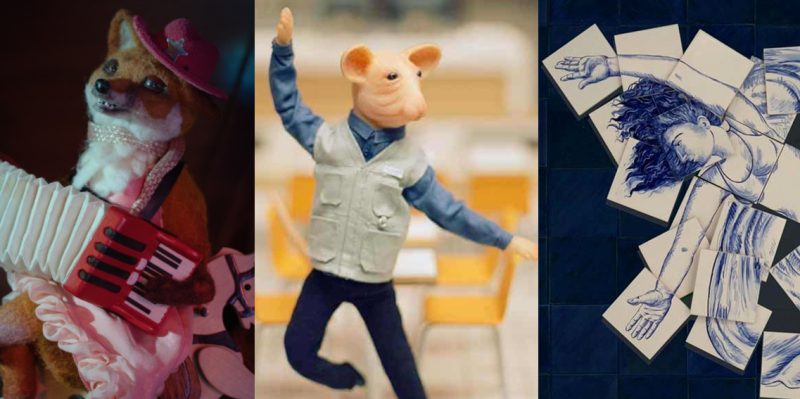
12 Indie Animated Musical Shorts of the 21st Century
ZF Team
Animation and music have been a pair since cinema's beginning. Animation and singing became interconnected in the glamorous thirties with the Betty Boop character (Fleischer Studios), 'The Three Little Pigs' (Disney, 1933), and, of course, the feature-length Disney animated films that followed.
In the 21st century, and with all the musical and sound design options available to all ends, it initially seems parochial/of no importance for an indie animation filmmaker to repeat the US studio animation canon. Yet, despite appearances, a new wave of singing animation shorts has emerged in recent years. More introspective, definitely offering more than a sing-along of favorite tunes, but still important to animation filmmakers. Rosto's 'The Monster of Nix' and Niki Lindroth von Bahr's 'The Burden' are two examples of an all-growing tendency; animation shorts don't always have to employ the spoken word, yet the singing word in all its forms (recitative or full song, solo or in a choir, a cappella or with a full orchestra, etc.) has come back in the last 10 years -and is probably here to stay.
We compiled a list of 12 short animation musicals, ranging from 2010 to 2026. The indie animation world is big, so we expect to find other entries not covered here. We counted out all kinds of music videos (this is a separate category). There are other short films not mentioned here (for example, the recent '9 Million Colors' stop-motion animation short by Anna Stejskalová), and there are musical films without singing (like the Busby Berkeley-inspired, 2010 short animation 'Spin' by Max Hattler).
Here's what we picked up (in alphabetical order:
'Cockpera', Kata Gugić (Croatia, 2020)
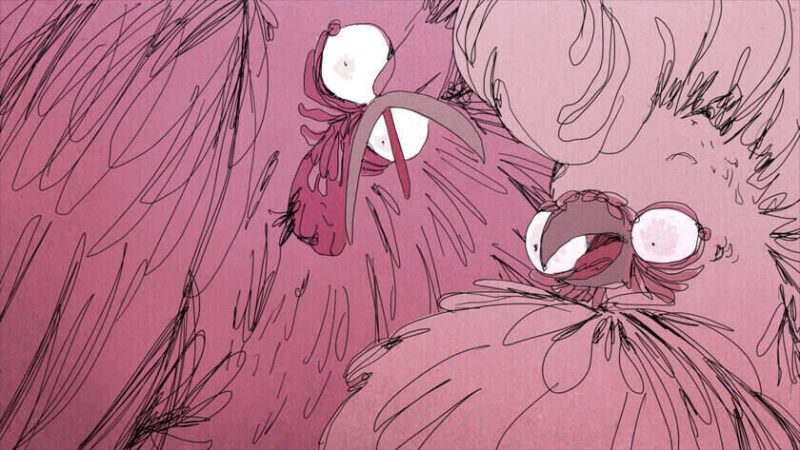
A cockfight opera? Yes, please! Inspired by Aesop's fable 'The Fighting Cocks and the Eagle', this animated short turns the tale into a miniature opera, or rather, an operatic battle for dominance over the farmyard stage. The artistic team delivers excellent music, with Vjeran Šalamon composing an original score for the film, and vocal work featuring real opera singers. The storytelling style relies on hand-drawn, sketch-like animation that jitters and wobbles, lending extra tension to the static shots filled entirely with the two roosters' faces. This musical interpretation of the ancient Greek fable is spot-on, charting a suspenseful path toward its resolution as a vocal duel between two roosters unfolds while the tension mounts. Pride goes before a fall, and for one of these birds, it will not end well. Read our detailed interview with director Kata Gugić to learn more. - VS
Watch the Film
‘Dragfox’, Lisa Ott (UK, 2024)
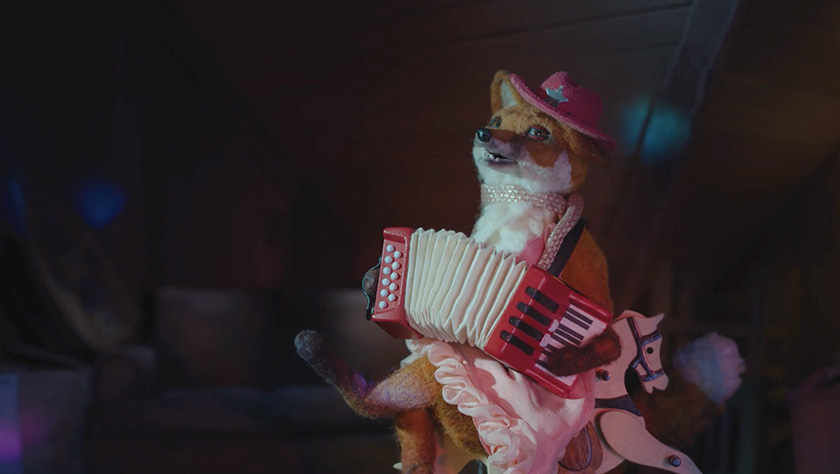
The more traditional sing-and-dance song of our entries, but also one of our most politically relevant, in this NTFS queer-themed short by Lisa Ott (produced by Owen Thomas). A puppet child, Sam, who likes to wear dresses, is stuck in his closet and attic; suddenly, unexpected help arrives, and an old, cunning fox bursts into a song about affirming identity (voiced by Ian McKellen, sung by Divina de Campo). “Bask in the spotlight / The truest version of me” is a queer anthem (film composer: Charlie Mackie) that is as recognizable as any, yet completely necessary in the recent drag and trans people pogrom. As always, singing in musicals is a way to move away from the real world (even if you use mops as your props), get the empowerment you need, and then come back to the real world -hopefully with more courage. We’ll never know how Sam’s parents will react when they see their kid in drag, but we can be assured that Sam has now realized that “when in drag you can go bonkers.” -VK
‘Fish River Anthology', Veera Lamminpää (Finland, 2024)
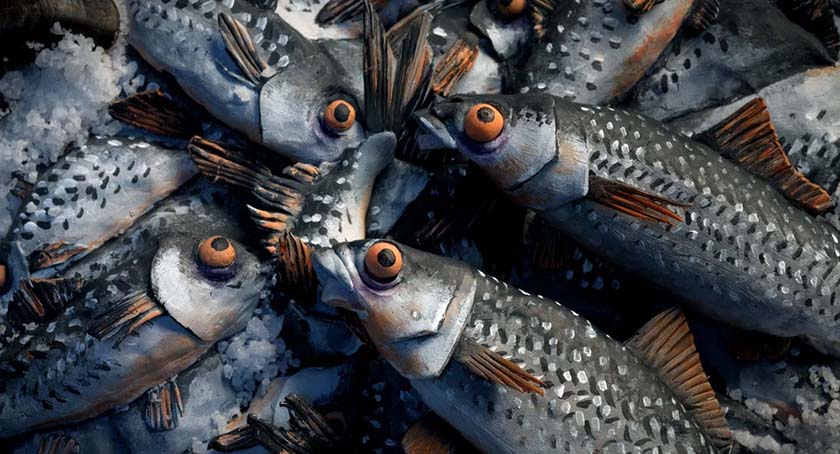
"All of us are here for a reason / No one wants to end up here." The luminously ominous stop-motion animation short by Veera Lamminpää, a graduate of Aalto University (Finland), brings together a moment in time where the big fish market suddenly suspends its function -while the customers are left with their queue ticket at hand. This is the time for the various river fish to sing (composer: Iiti Yli-Harja). From the majestic red snapper, who dreams of a rich man to eat them with a silver fork, to the small roach who didn't manage to get away, the list of despair options is really class-mediated and determined by beauty and intelligence standards (just like the human options). The synthesizer-accompanied fish choral is a big cry that mostly addresses the market customers; their queue numbers only denote they're next in this ever-evolving chain of consumerist nothingness—a fitting conclusion for this much energetic, carefully coordinated, and darkly comical musical animation short. - VK
'Psychonauts', Niko Radas (Croatia, 2025)
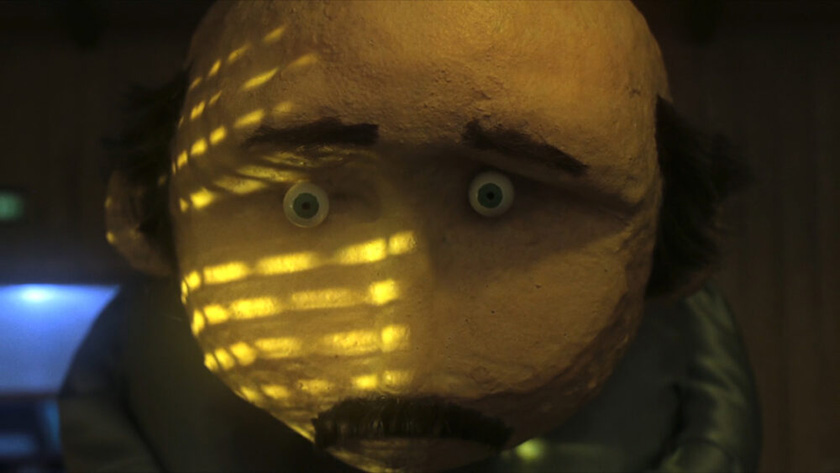
An art therapy program at the University Psychiatric Hospital Vrapče (Zagreb) becomes a discordant but inviting musical puppet animation short by hospital employee, sculptor, and filmmaker Niko Radas (also the film's composer). 71 in-patients in the secure hospital's forensic ward worked on the 'Psyconauts' film, which explores "where does my illness go after I get well?" The result is an almost recitative announcement of medication names (most of them in Greek), side effects, and conditions in a distorted (but inflected) voice tone; this non-ordinary doctors' announcement removes the third-person instruction and transforms it into a first-person experience (easily translated into the characters' movements and behavior). This medical singing recipe is a bittersweet reminder that not everything is clear sailing on the physical front after recovery, and that every guide and prescription can still be internalized and become a patient's inner voice. And that is also hopeful. - VK
‘Stone of Destiny’, Julie Černá (Czech Republic, 2025)
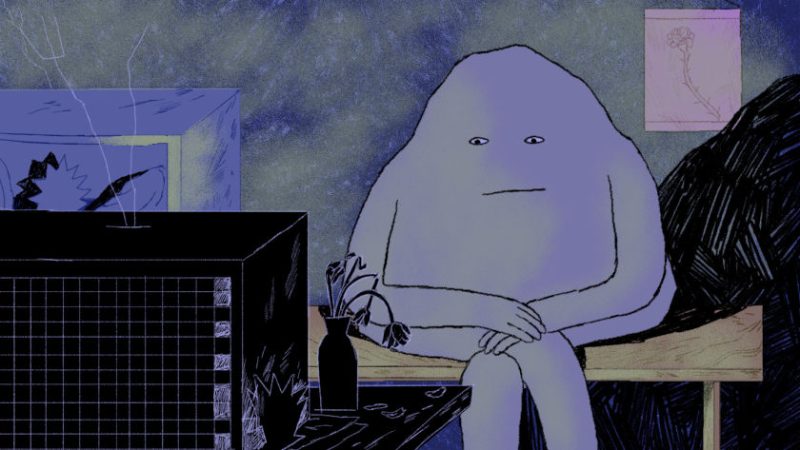
A stone is made not only of feelings but also of their articulate singing expression in Julie Černá’s Czech student animation short (premiered at Berlinale Shorts 2025). A palette of yellows and purples, an isolated villa that promises to be a safe haven -and it turns out that it may not be, a horse and a demon; all those figures parade. Yet the vibes are never abstract or surreal; they are deeply intimate in this coming-of-age journey. “I have so much free time to myself / But I miss the feelings I’ve never felt”. The tiptoe musical score by Johuš Matuš underscores all kinds of uncertainty, while the stone character moves between land, sea, and air. Based on the director’s own eponymous comic trilogy, the 2D hand-drawn film and its singing distills the “boundless certainty” that we are meant to feel when growing up -and instead fills it in with something more useful, an unlimited need for experience and self-knowledge. – VK
‘Stones’, Katarína Kerekesová (Slovakia, 2010)
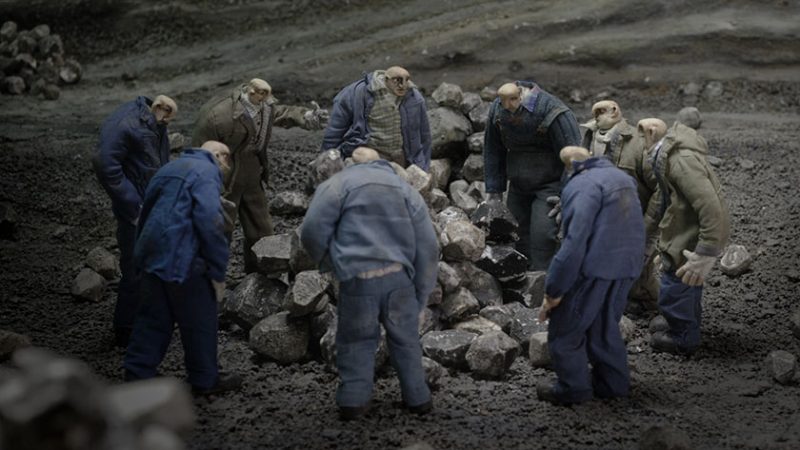
‘Stones’ is a stop-motion musical that boldly fuses drama, passion, and the stark brutality of alienation through work and unfulfilled desires. Written and directed by the talented Katarína Kerekesová (and co-directed by Ivana Šebestová), the film explores the base impulses and unvarnished desires. In a quarry where ten men labor extracting rock, one worker’s wife arrives seeking the closeness that would let her become a mother, only to be rejected by a husband whose energy is entirely devoured by his toil. The film's music (by Marek Piaček) features marvelous vocal pieces that mark the story's arc, while also expressing the wife’s desire and the yoke of the men in their daily choreography. Finally, the starring character finds a lover, and in her resolve, kills her husband, ignoring two great rock columns that seem to warn her away. Nevertheless, she does it, triggering a rockslide. Her lover spurns her in horror, and the other men, armed with stones, move to take vengeance. The ending remains turbid and open: where once two rock columns stood, three now rise. It leaves me with a sense of emptiness and sorrow for the animated protagonist in this compelling short. - K
‘The Burden’, Niki Lindroth von Bahr (Sweden, 2017)
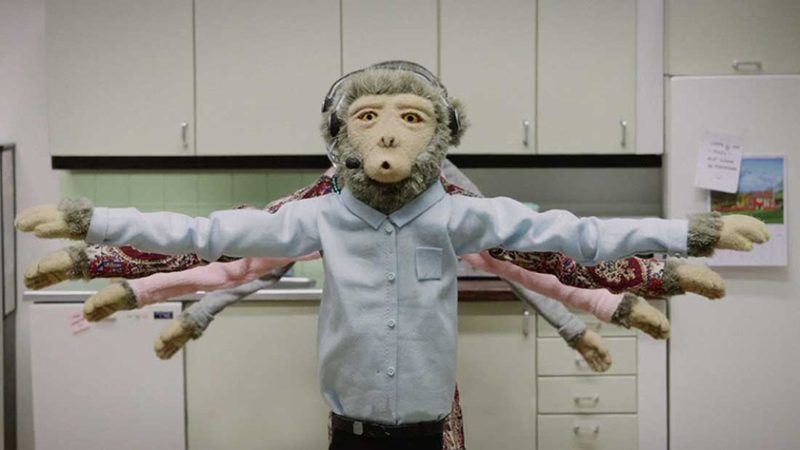
The award-winning (2017 Annecy Cristal for Best Short Film, TIFF’s Best International Short Film) ‘The Burden’ by Niki Lindroth von Bahr captures the quiet anxiety of a jaded welfare society, one where the smallest, most trivial frictions may well mark the dawn of an existential crisis. With sharp, understated wit and candid songs (music and sound: Hans Appelqvist, lyrics: Martin Luuk), some enhanced with autotune, that lay bare the burdens weighing on its characters, Lindroth von Bahr exposes the absurdity of modern existence. This exquisitely crafted stop-motion musical work makes me both laugh and reflect.
In a hotel, the fish in Room 7 has convinced itself its own skin is unlovely, only to be upbraided by the guest across the hall, who longed for Room 7 and was instead assigned to Room 12. Elsewhere, in a call center, monkeys peddling refunds and even satisfaction guarantees lay their hearts bare in song: they feel their lives slipping away, tending always to others’ needs and never their own. The music amplifies the absurdity of their lives, yet at the same time stands as their only way to express their dissatisfaction. The whole film is a musical number that delights me as deeply as it moves me. - K
'There is a Wolf', Saerom Seo (South Korea, 2025)
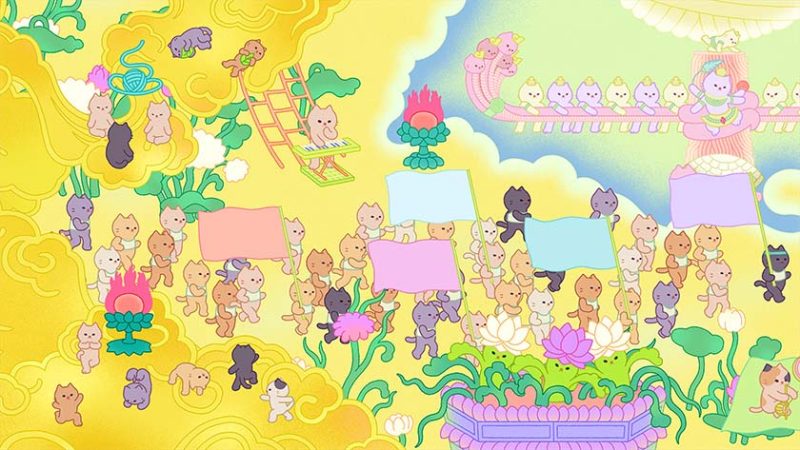
A good old contrapuntal sound never fails to captivate the viewer. What two old masters, Eisenstein and Pudovkin, had theorized is now used in ‘There is a Wolf’, a captivating animated film. Here, sound and song are used as the main soundtrack. The film proceeds through a classical Eastern form, a traditional Korean procession, borrowing from the famous scroll paintings that unveil horizontally to infinity. The film starts with stop-motion animation of us, the viewers, represented by a cat listening to a vinyl record. The rest of the film visually scrolls to the right in 2D animation. In the best tradition of Stromae, the music itself is upbeat, fun, and cheerful, practically inviting you to dance, while the film tells a horrifying story of poverty, struggle, labeling, and oppression as we watch cute little cats being processed and executed. Well, as was said, the old trick with music works, and animation only reinforces it! - VS
‘The Monster of Nix’, Rosto (France/Belgium/The Netherlands, 2011)
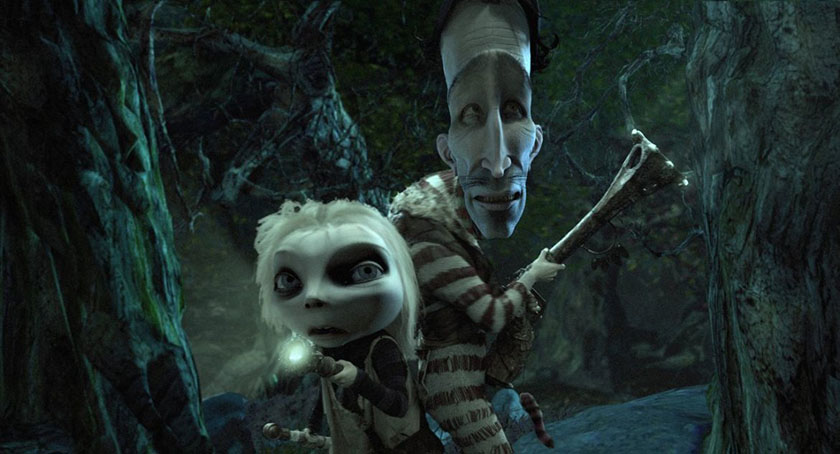
Just eight years before his death, Rosto, an imaginative, expressive, and deeply charismatic artist, left behind an animated work that defies easy categorization, even as many draw parallels to cult classics of fantasy cinema. I must confess: the first time I saw ‘The Monster of Nix’ at Animateka Festival 2015, I did not fully grasp what it was about. However, the wondrous atmosphere, the strange cast of characters, and above all the music, which drives the narrative forward, captivated me entirely. The songs, written by Rosto himself, are the film's uncanny essence. My first viewing was steeped in wonder and uncertainty feelings at everything unfolding on screen: stories nurtured within eggs, crows with human hands, an enigmatic baby swimming in a lake singing, a gentle character, a boy in search of his grandmother. I found myself seeking an ulterior meaning in every detail, but the sheer visual richness was enough to fascinate me, no deeper explanation required. Undoubtedly, Rosto made the six arduous years spent on this project worthwhile, adding a cast of stars such as Terry Gilliam, Tom Waits, and Suzie Templeton herself. - K
'The Soloists', Mehrnaz Abdollahinia, Elias Woldehawariat, Razahk Issaka, Celeste Jamneck, Yi Liu (France, 2021)
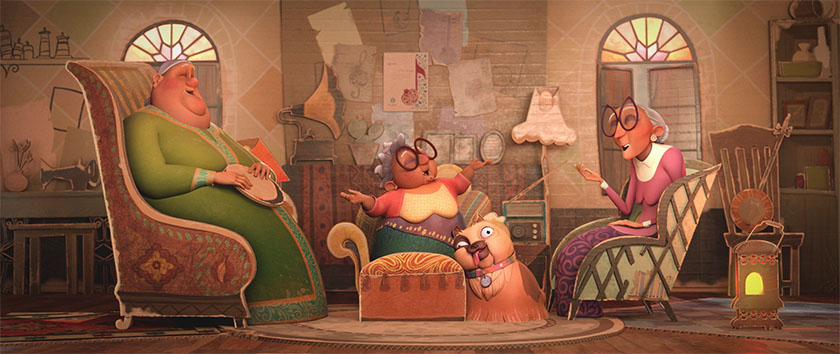
What does it mean to be free in the modern world? The feminist fight around the globe covers a variety of life aspects, ranging from social to private, from public to cultural. In The ‘Soloists’ three "solo" singers, our grandmothers, work together toward one unifying goal. Only by working together, while maintaining their differences, is the music born. Two amazing musicians, Antoine Duchene and Valentin Hadjadj, created a special original score for the film. The singing of the three main characters, careful sound design by Mathieu Tiger, together with the music, constitute the foundation of the short's core idea. What happens when the trio breaks apart? How can the fight go on? A series of ridiculous (yet real) laws seemingly forbid everything. However, our characters navigate this odd 2D/3D cutout world - a world created through animation techniques by a quintet of student/directors from Gobelins Paris, who make initially 2D objects appear in 3D and interact with 3D characters. A mesmerizing opening sequence, together with the closing credits, rounds out a perfectly balanced, paced narrative with a happy ending. - VS
‘Virgin Fandango’, Marcy Page (Portugal/Canada, 2026)
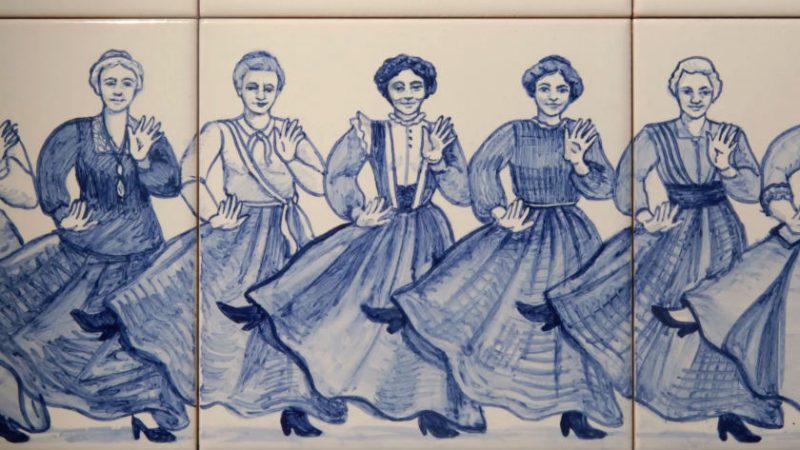
Music and singing play a central role in Marcy Page's ‘Virgin Fandango’ (2026). In this case, Marcy Page is married to Norman Roger, the film's music composer and sound designer (a marriage on screen). After all, an audiovisual work is always a marriage of image and sound, a “fusion”, as Laurent Jullier states. Aural and visual information enters our minds together, creating impressions and arousing feelings.
Marcy Page’s short, animated with hand-painted azulejos, uses diverse images, sounds, and musical rhythms (from traditional Fandango dances to hip-hop) to evoke historical periods, tension, drama, debauchery, and fun. Its lyrics help the audience understand women's strength from the Virgin Mary through history to the present day. The music and verbal message here tell a story, connect different moments, create turning points, and mark the rhythm.
However, in ‘Virgin Fandango’, music and dance do not only create intensity for the animated images; they are also crucial parts of the narrative. Through dance and music, Mary moves away from her “divine” position and embodies her role as a woman, opening the door for many other women throughout history. After all, even singing and dancing were forbidden to women at various moments and in different places. Music and women's voices take on multi-layered meaning in this animated short. – EG
‘Your Own Bullshit’, Daria Kopiec (Poland, 2020)
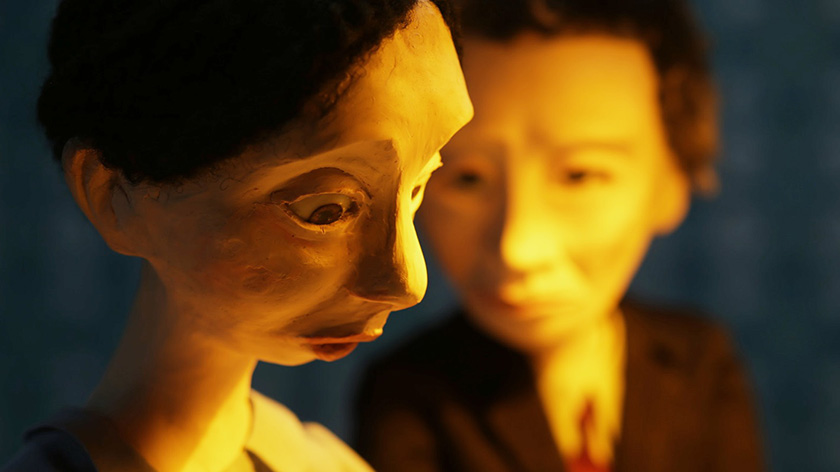
In her sixth short film, the consistently brilliant Daria Kopiec demonstrates her mastery as both storyteller and animator with striking assurance. Few experiences feel as fraught as gatherings where every exchange is predictable: the same circular song-arguments, the same grievances laid at our door, reproaches out of control. Executed with impeccable classic stop-motion and cutout craft, ‘Your Own Bullshit’ shows the raw frustration and quiet fury of hearing the same recriminations repeated without end. However, much like a strained shared meal, the narrative is leavened with deft touches of cringeworthy, deeply recognizable humor; moments that make us see ourselves in the characters, or simply feel empathy for the family struggling to sit through dinner. The music score by Natalia Czekała dynamically underscores the action, softening the tension while mirroring the film’s central motif: a broken record, or more precisely, a cassette loop playing endlessly. This short film could be like a therapeutic viewing before stepping into any family gathering or dinner party where the same patterns will repeat. - K
Check out our Shorts Corner coverage of indie animation shorts
By Eliane Gordeeff, Kropka, Vassilis Kroustallis and Viktor Smolkin
Read More About:
Related Articles
Have an animated short film?
Get it featured on Zippy Frames. We present, interview and cover independent animation shorts of every animation technique.

Zippy Frames is the premier online animation journal promoting European and Independent Animation since 2011
Zippy Frames
Quick Links