
Shorts 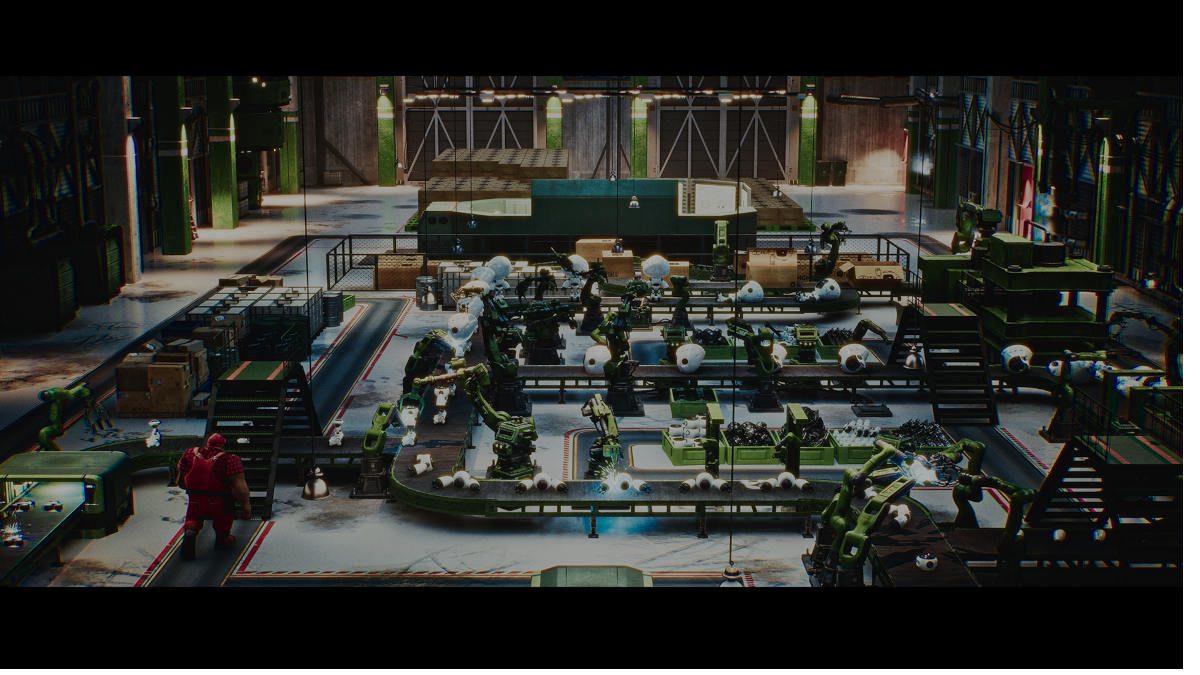
Animation Short About AI and Authority: 'Machines Learning' by Anthony Koithra
ZF Team
Machines can learn, but what do we teach them? This is the focus of a new animation short by Anthony Koithra (Locodrome) that now circulates at festivals, appropriately called 'Machines Learning'. The 8-minute 3D animation short was made primarily in Unreal Engine. The Indian-born, US-based engineer and maker has been an Epic Games Unreal Fellow since 2023 (and received an Epic Megagrant in 2025 for his contributions to the Unreal Engine community).
His need to address accepted historical narratives, socio-economic hierarchies, and coexistence in a polarized world led him to write, animate, and direct his first animation short, a shift from our previous narratives. The issue in 'Machines Learning' does not come from the machines' possibility to learn (and overcome humans), but from quite a different question. Do we teach machines all the bad habits that we (humans) have culturally and personally cultivated?
Anthony Koithra spoke with Zippy Frames below as part of our Animation Filmmaker Spotlight section.
AI and Machines are a topic AI & The Impetus Behind the Film
 I started working on 'Machines Learning 'in 2024 - and while anxiety levels around AI were rising then, it certainly didn’t seem as scary as it does now. The idea was to tell a story about accountability. Machines overthrowing humans is a classic sci-fi trope - but what if I could show how obvious it is that the machines learn their violent tendencies from humans? As a species, we’re very good at rationalizing why what happens afterward is not our fault. But at the end of the day, what we build reflects who we are, as individuals and as a society. And we are just at the beginning of this completely uncharted territory, which is getting exponentially more complex and nuanced.
Timeline Development and Challenges
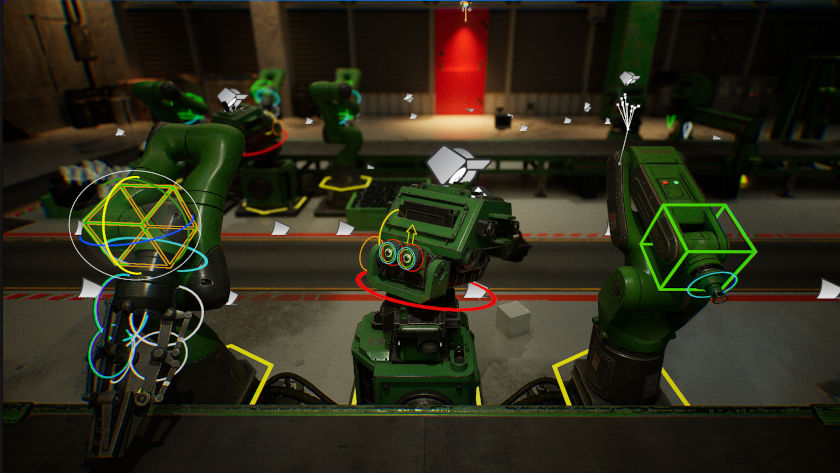
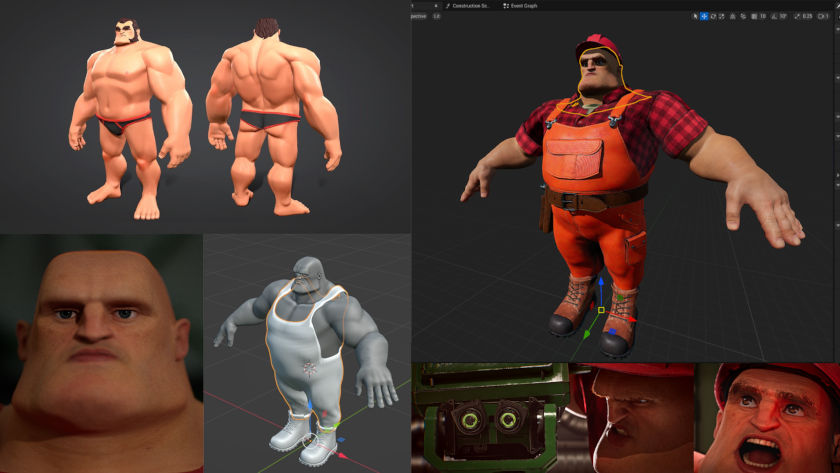
'Machine Learning' took about 2 years. The script and storyboard were quick. Character design was an early source of delays. I had to make the human factory worker (Herman the Human) much scarier and hulking than he originally started out. I had to develop the Controlbots - the industrial robots with the faces - because emoting with just the arms and grippers was tough. Each of those required restarting after roughing out 20-30 shots.
I find my taste evolves much faster than my actual skills, so that led to a lot of rework and iteration. In the end, my various detours (including animating 112 shots) made the film better.
Unreal Engine & Animation
As an indie solo, I try to keep my software stack simple and free whenever possible. All environments, character rigs, FX, shots, and animation are done in Unreal Engine. I use Unreal as a camera, so I render shots as EXRs, then cut them together and do color and post in DaVinci Resolve. Like live-action, I built the entire factory and assembly line as a spatially coherent location so I could fly the camera around and “find” shots.
For asset prep, Blender is my DCC, and I do materials in Substance Painter. I did a LOT of kitbashing - so taking pieces from marketplace models, environments, characters, re-sculpting, re-modeling, and combining, re-painting, etc until things looked consistently the way I wanted them (in Unreal, I can instantly see how things look in-camera, with final lighting, FX, etc.)
Add-ons: MeshMorpher and MetaReforge to create the stylized MetaHuman factory worker, Divine Cut for making his clothes, Diversion for version control, and DRKR PXLS CamCompOverlays for framing.
Production Challenges
All the schedule spreadsheets I made at the beginning of the film got tossed very quickly. However, in the final few months, when I was doing clean-up on hundreds of little things (“random smoke coming out of robot in shot 023”), I had a dense line-item punch list ordered by shot, which was helpful. I now have some pretty good systems in place for my next short.
On the music, Tyson Cazier saw something I’d posted, and I liked his game music stuff as well. We did some quick early iterations with musical sketches to align on a mood. Our longer development time didn't affect our agreement - Tyson even made a special track for the trailer, which wasn’t in the original plan. And the final score is great.
The Film's Style
It’s a dark comedy for sure, but the tone is always tricky. The violence and danger certainly ramp up as the film progresses - I wanted to convey the idea that machines learn quickly, so by the time things are out of control, it is way too late to do anything about it. But a screwball comedic tone was also important throughout to keep it from getting too bleak or frightening.
Aesthetically, I like the combination of stylized geometry and characters with realistic materials and lighting - and Unreal Engine (I used Lumen throughout, including rendering) is very good at that kind of look. There are a number of 'Love, Death & Robots' episodes that use this approach - like Mason’s Rats and Automated Customer Service. The stylization creates a heightened world where really crazy stuff can happen.
References
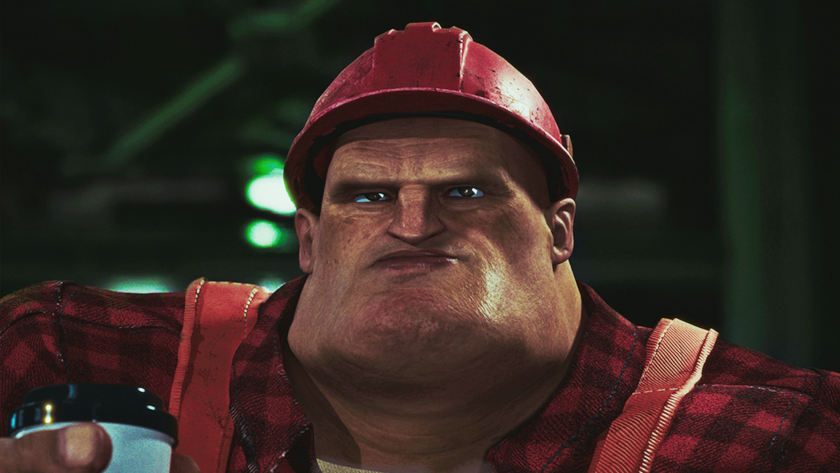
Films and series like 'The Iron Giant', 'Metal Skin Panic', and inevitably the 'Transformers' movies too. Some shots are definitely horror-inspired, like the close-up on the worker, and the robot is straight from 'Alien 3'.
An Unlikable Central Character: Herman the Human
He’s a bully to his robots, but he’s a total yes-man to HIS boss - as with most bullies, his behavior is predicated on power dynamics (simultaneously an oppressor and being oppressed). The machines learn about systems of power from him.
One challenge with an unlikeable main character is who do you want the audience to root for - and based on the first half of the film, they will likely be on the robots’ side, despite Herman being the only human character in the story. This is a purposeful inversion of most robots-attack-humans stories. Their goal begins as escape from their daily torment at Herman’s hands, but it might evolve into something darker.
Training and Learning as Theme and Practice
The entire film was a learning exercise for me. There’s nothing like doing every part of an animation pipeline to figure out which parts you never want to do again! Regarding learning as the film theme, we are often quite conscious of what we’re learning but often less conscious of what we’re teaching - though in any work environment we are usually doing both. I worked in big companies for a long time before quitting to make animation full-time, and I’ve seen it firsthand. It comes down to empathy - for your peers, your subordinates, and your bosses - and empathy is a muscle that can be trained.
The film is about accountability. If the machines we build are a reflection of ourselves, and they always are - are we teaching them empathy or selfishness? Kindness or violence?
Film Showcase & Future Steps
The film just screened at the NYC Indie Short Awards. Next stop: Newport Beach Film Festival in LA on October 17, then the Oscar-qualifying San Jose International Short Film Festival on October 24. I’ll be at both, so do come say hello if you’re attending!
I am in pre-production on a second short, called 'Colonized' - not fully solo this time - I have a number of friends from the Unreal Fellowship and other communities helping me.
Also in the works: an adult-focused animated feature in development with some A-list US talent and producers -not much to say publicly so far, except for it being my original IP and a story and setting that is very close to my heart. It’s badass, bonkers, and very exciting.
Watch the trailer
The article is part of our Animation Filmmaker Spotlight series.
Read More About:
Related Articles

Have an animated short film?
Get it featured on Zippy Frames. We present, interview and cover independent animation shorts of every animation technique.

Zippy Frames is the premier online animation journal promoting European and Independent Animation since 2011
Zippy Frames
Quick Links