Shorts 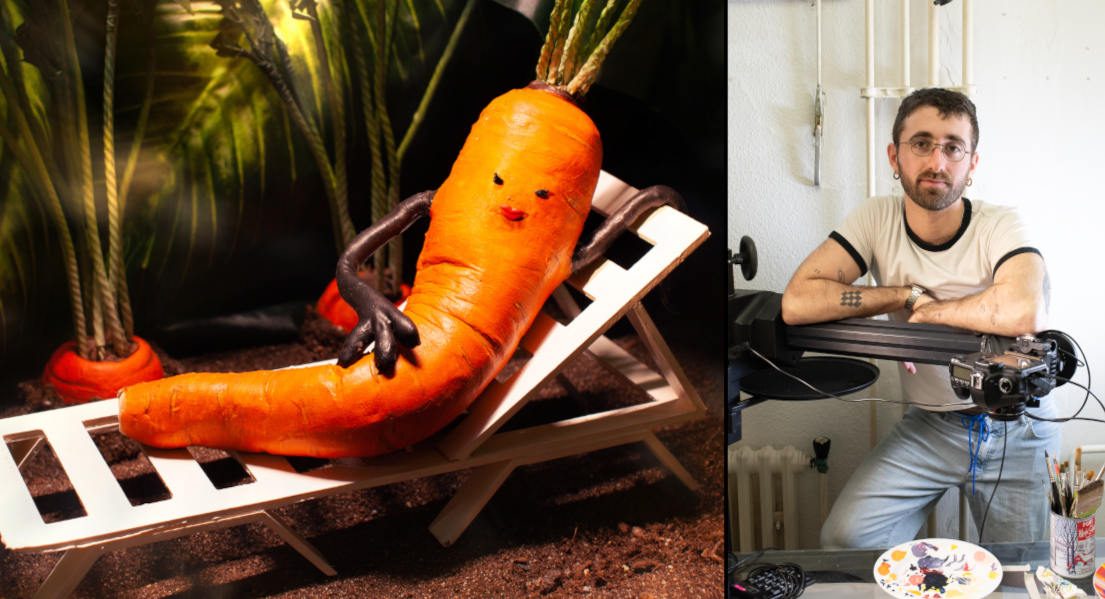
Carrotica / Daniel Sterlin-Altman (photo: Jörg Dedering)
4:3 Shooting Format
Queer Animation: 'Carrotica' by Daniel Sterlin-Altman
Vassilis Kroustallis
Carrots are the catalysts of queer stop-motion animation fervor in Daniel Sterlin-Altman's awarded 'Carrotica' -now released online. The 13-minute puppet film tells the story of the 16-year-old gay Nadav (who writes explicit gay erotica) and his mother, Shari, a Fertility Botanist; while the two characters are apart from each other, the mother seems to fall for a sexy carrot, while the son prepares his own fantasy.
The short film started its writing in 2018 (Kunstort ELEVEN residency in Baden-Württemberg), storyboarded at the Open Workshop (Viborg, Denmark), and produced as part of the director’s Master's in Animation Direction at the Filmuniversity Babelsberg Konrad Wolf in Potsdam, Germany.
It managed to win both the 2024 Cristal for a Graduation Film at Annecy Festival and the Dušan Vukotić Award for Best Student Film at Animafest Zagreb the same year -while winning other similar awards along the way, such as the Best New Talents *Best Short Film* Young Talents- PÖFF Shorts, Estonia. It was also nominated for an Emile Award in 2025 (Best Student Short).
We talked with Daniel Sterlin-Altman on the occasion of the online release of 'Carrotica' (scroll below for the full film).
Being Situated In Time
The film takes place in a hybrid stream-of-consciousness of the 1990s into the early 00’s with a small touch of today. Social media in the film is limited to Tumblr/MSN Messenger era, when using these platforms was something you did only in complete privacy on your computer at home. But the mother, Shari, also has a smartphone and a Bluetooth speaker, and the technological advancements of today’s modern science to interact with such a life form as Femme Carrot. The result is a blur of memories for today’s adults, blending the anxieties of experiencing desire, having control over one’s feelings of self-validation, which changes forms with different technologies, but stays constant in the core aspects.
Playing with the Narrative
I’m generally interested in playing with traditional narrative and seeing how subversions of the single-character arc can work to surprise as well as strengthen a story. This is part of my “usual” creative process, giving myself a constraint to shape a story. In this case, the story of Nadav and the story of Shari both started as separate seeds of ideas that didn’t initially have any obvious correlation. When I put them together, I was confronted with the task of linking these stories, which in turn helped to shape and deepen the experience of each character. In the end, there are three narratives happening over these brief 13 minutes: Shari’s carrot romance, Nadav’s never-quite-happening encounters, and the swimming pool erotica Nadav is writing. Through the chaos of the three overlapping each other, the actions and words change meaning in a way that’s both playful and ever-changing with each subsequent watch of the film.
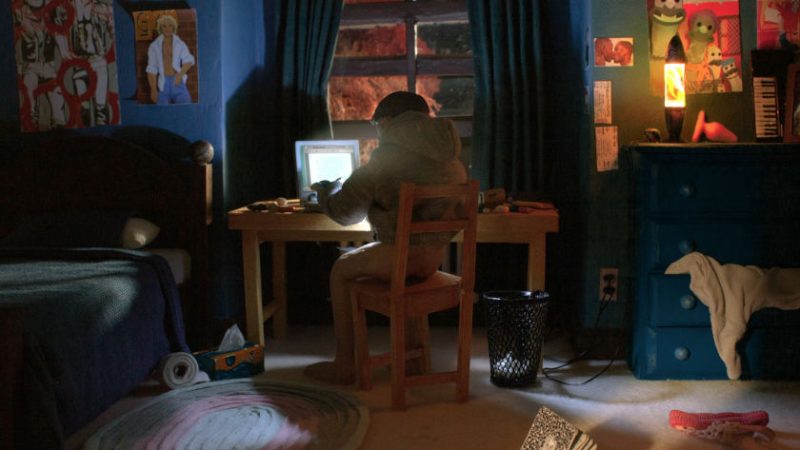
The sexually explicit 'carrotica' text
It's been 8 years since I first started the script. I do sometimes watch the film and cover my eyes thinking (oh lord…we get it, he’s uncut!). At the time, it was a defiant decision, but it is still one I can stand by. This text is written by a 16-year-old with presumably no actual sexual experience and only fantasy to live off of. So the earnestness, the unedit-ness, the focus on the more vulgar aspects of sexuality, then read by an adult man (talented narrator Enaitz Greaney), has an absurd and strangely truthful aspect to it. This aspect has isolated some viewers (my parents said “It’s interesting that you’re making films less and less for us” when they saw it), but at the core, I still feel it’s a film that is thematically accessible to everyone. And will particularly tickle the freaks like me.
The film's Jewish cultural dimension
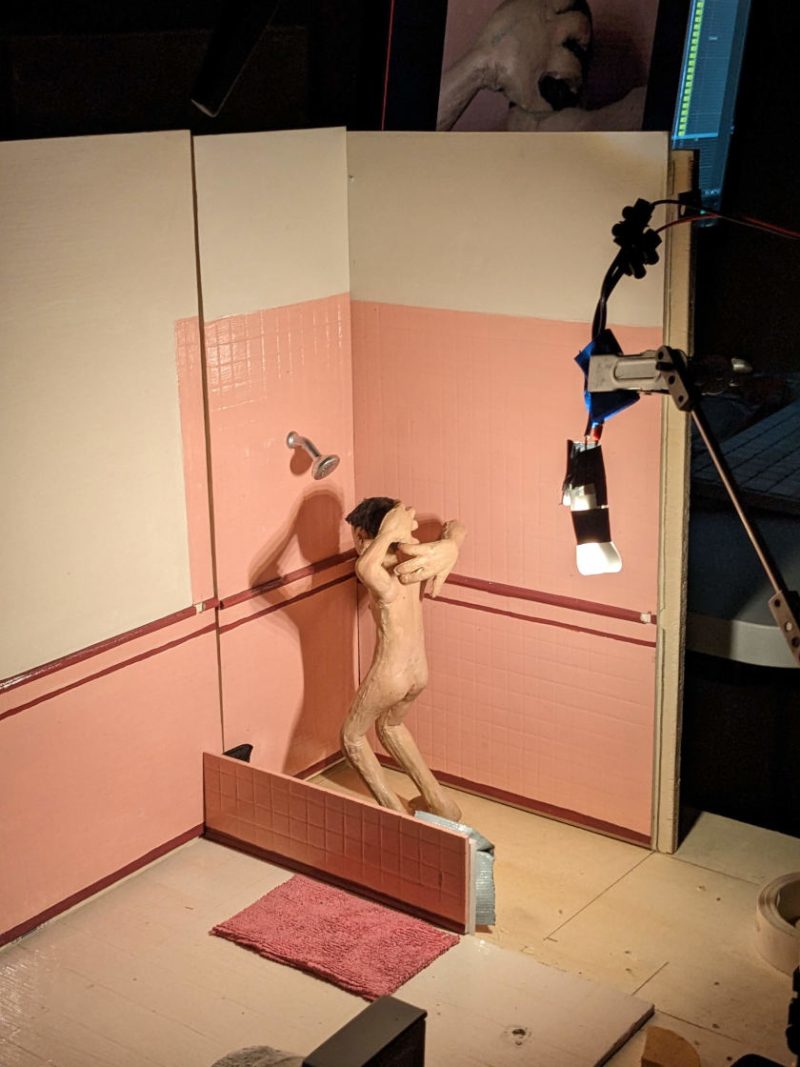
For a lot of the Jewish diaspora in Canada and North America, the bulk of our identity lies less in the religion itself than in the nuances of speech and family dynamics. The audacity of (spoiler alert!) a mother entering her son's room and using a camcorder to film him singing in the shower is absolutely something that would happen in a typical Canadian Jewish household. In this sense, it is a strange anomaly that Shari begins fairly disconnected from her son, giving him space. It’s almost unnatural, and unstable tension that needs to be resolved and does so eventually.
Making the film
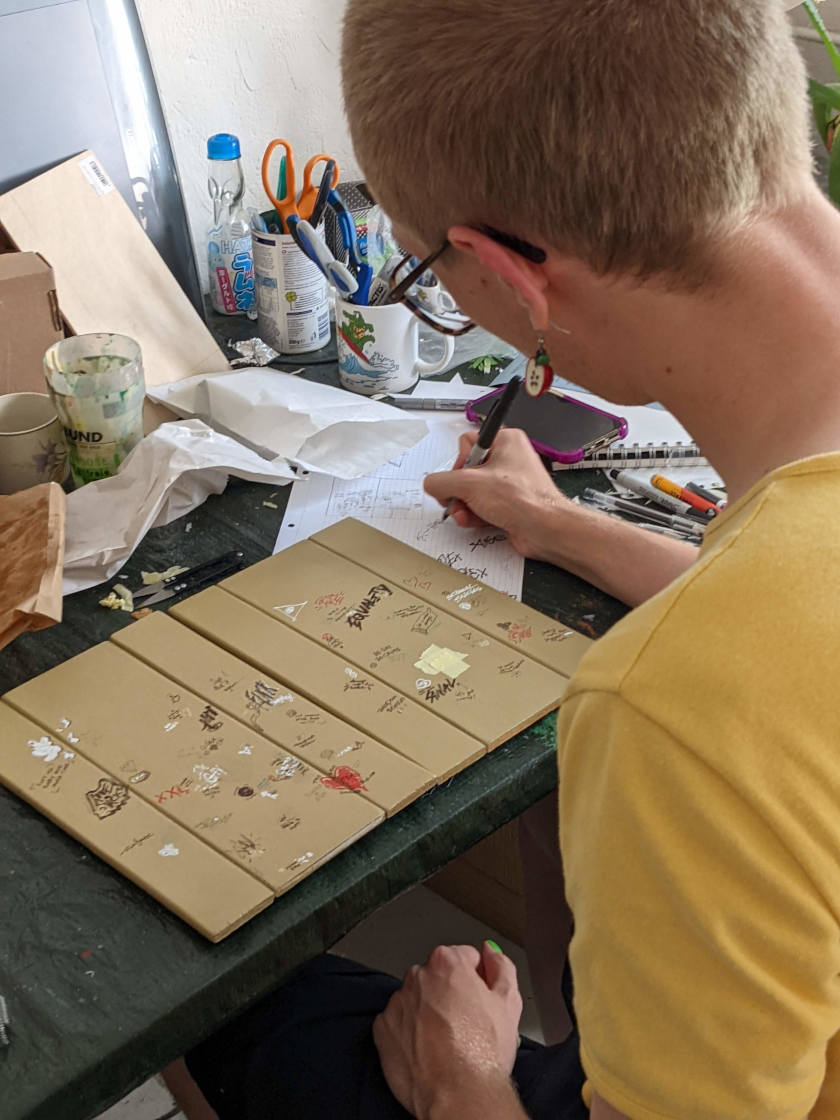
This project was a major labor of love, emphasis on labor. I wrote an accompanying thesis paper for this master's project, titled “Leid und Leidenstolz in der Animationsfilm” (Suffering and Pride of Suffering in Animated Film). This project was an arduous undertaking considering the means, with 10 miniature sets, 8 fully costumed characters, and 13 minutes of animation, which is on the longer side. It was an obstacle being a new student entering the university and attempting to gather a crew. This was aided exponentially when Production student Luis Morat joined as a producer a year in. He managed to gather an extremely talented crew of students and friends from outside my university. The talented DOP, Pip Koehler, even lived in Stuttgart, several hours south of Berlin, and trained when he could to arrange a new setup.
The crew was all working and studying themselves, and they generously offered mostly a day or two a week for two-thirds of a year, but it was insane to create a film of this detail and length under those conditions. I made sure to always take at least 1 day off a week during the 11-month shoot, but boy, I wouldn’t wish this on anyone. Annoyingly, it’s paid off!
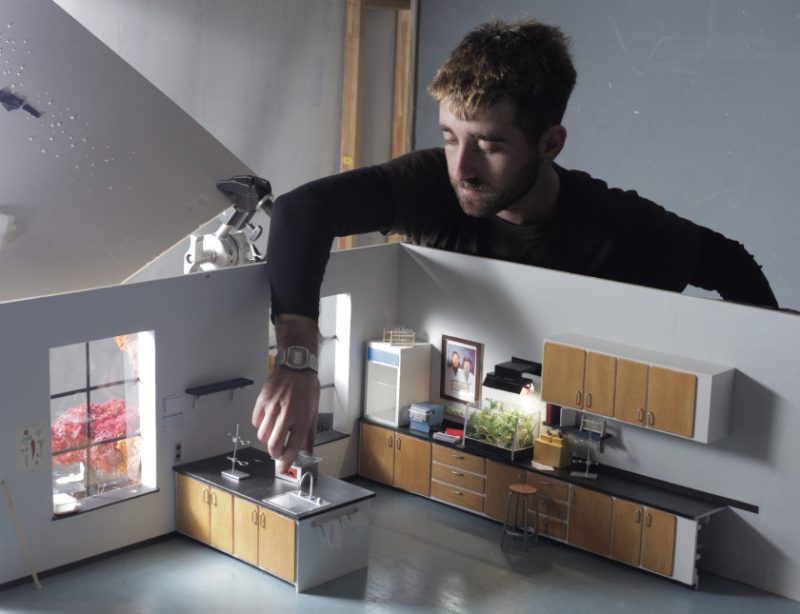
'Carrotica' - Behind the Scenes
Puppet Design and Puppet Eyes
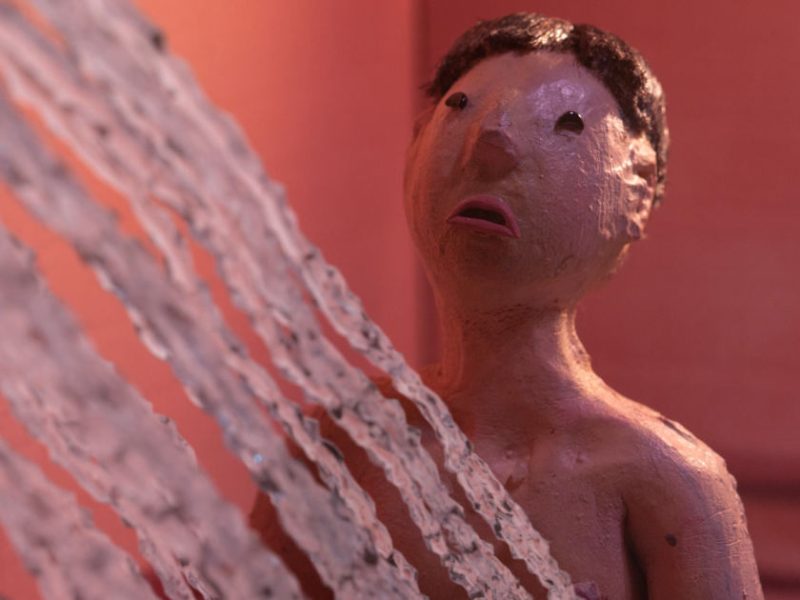
My now signature puppet design likely came from my fear of drawing. In my early student films at Concordia University, I made hand-drawn films ('Headstrong' 2013, 'The Chaise Longue 2014') and was drawing these simple cartoon figures with only dot eyes and no eyebrows. It became a no-brainer that this amount of facial information was enough to convey complex emotion. To have this design convey the complexities of emotion laid out throughout 'Carrotica' was a challenge, but I think this design proves the flexibility of human perception. Through very subtle movements of these button eyes, character acting, and dialogue, the lack of eyebrows goes completely unnoticed. The simplified face shape means that the characters are relatable, likable, cute even, and easy to project oneself onto, while also being strangely human and emotive.
4:3 Shooting Format
I have deep nostalgia for sitcoms from the 80s and 90s. 'The Golden Girls', 'Saved by the Bell', and 'Dawson’s Creek' were all relics of my own adolescence, a time when I was also doing private things on a computer and writing messages to crushes on MSN Messenger. There’s something nostalgic, but also unpretentious, about this more square-like format, one that readily invites viewers into a playful episode of something.
Writing Your Own Film Song
It was, for lack of a better term, a dream come true to write this. I am a fairly musical person (and would love to make a musical film), and was grateful to have a chance to not only write this song, but to work with composition student Felix Gayed to turn it into a real, recorded song.
Is the Film's Fantasy Construction Still Relevant for Today's Queer Teenagers?
I wouldn’t be surprised if Nadav’s story were something teenagers still experience today. It’s one thing to live in a society that’s more open to queer existence and more people coming out, but it’s another thing to be confident in yourself and the kind of person you want to present. (This is an insecurity that can happen at any stage of life). In this sense, I think fantasy will always play a role for people of all ages. Queer people have special access to this part of the mind because we’re not automatically invited into the vanilla predesigned format (my words) and forced to think outside of what actually interests, excites, or comforts us. Fantasy is one of the most liberating aspects of queer existence!
Festival and audience reactions to 'Carrotica'
This film is as polarising as I expected. Some viewers or festivals love it dearly, and some do not understand at all. I have a lot of fun reading the Letterboxd comments for this reason. I have some people, both queer and not, tell me how touched they are by the relationship between mother and son, the level of respect and vulnerability that ultimately exists between them. I am very pleased to see how diverse the audience is that responds positively to this, considering it’s admittedly a very specific film. It’s validating to have worked so long on this project in such confinement, and to feel like we have created something that can resonate with wider audiences.
After "Carrotica'
I’ve closed the carrot chapter, and with it the teenage angst. I’m working on a couple of animated short films that blend puppet animation with paint-on-glass, and even currently writing a live-action feature film script. The theme of these works is markedly different from before, as I age and experience the happenings of the world with everyone else. Now I’m exploring themes including climate crisis, substance abuse, self-worth, and privilege. All of this does admittedly take me a bit away from the absurd humour I’ve thus far built my career off of, but I’m looking forward to seeing where that will take.
Watch 'Carrotica'
Credits:
Carrotica (2024)
Script & Direction: Daniel Sterlin-Altman | Producer: Luis Morat | DOP: Pip Kohler | Cast: Enaitz Greaney, Summer Banks, Daniel Sterlin-Altman | Animation: Daniel Sterlin-Altman, Anselm Mende | Set Design: Laura Thiele, Daniel Sterlin-Altman | Composer: Lena Radivoj | Mixing Engineer: Anastasiia Nasonkina | Puppets: Daniel Sterlin-Altman | Costumes: Teresa Velten | Filmuniversity Babelsberg KONRAD WOLF
About Daniel Sterlin-Altman
He is a Berlin-based multidisciplinary filmmaker working across animation and moving image. His films often blend tactile visual worlds, emotional vulnerability, and absurdity to explore intimacy, longing, and social tension. He has directed several independent short films as well as commissioned works, earning the Cristal at Annecy Festival, the Golden Horseman Award at Filmfest Dresden, and Best Student Film at Animafest Zagreb, among others. A collaborator with several Berlin collectives, he also facilitates political animation workshops throughout Europe.
Read More About:
Related Articles
Have an animated short film?
Get it featured on Zippy Frames. We present, interview and cover independent animation shorts of every animation technique.
Zippy Frames is the premier online animation journal promoting European and Independent Animation since 2011
Zippy Frames
Quick Links