
From Burnout to Climate Anxiety: Czech Shorts at Anifilm 2026 (GoCritic! Review)
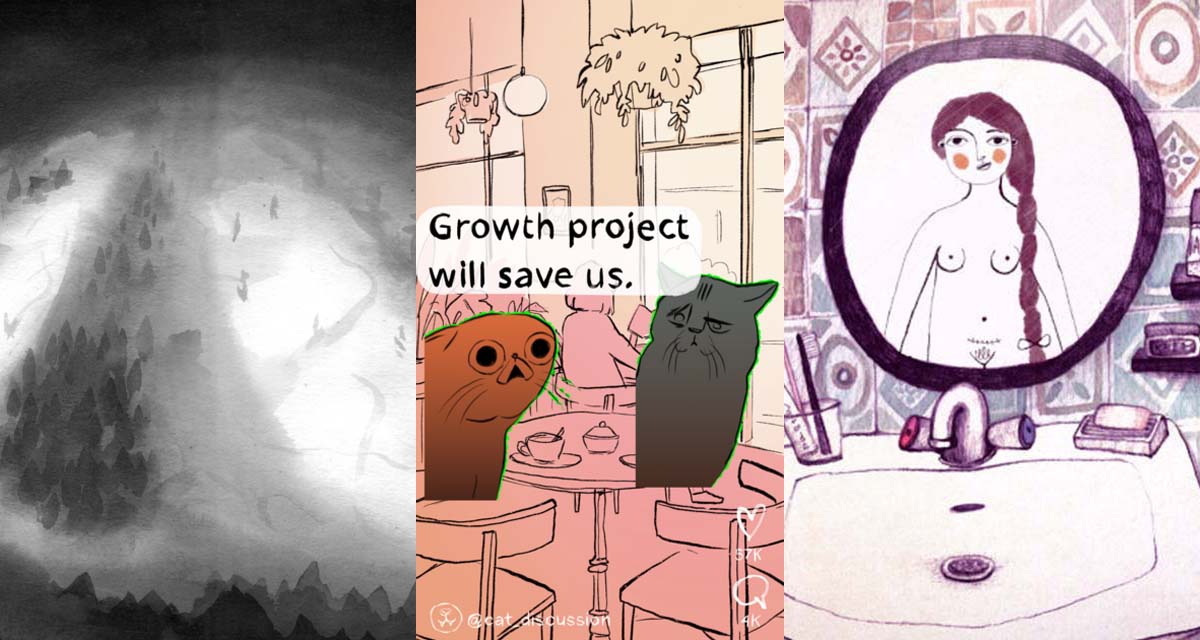
Clouds of contemporary anxieties gathered in the Czech Horizon program at this year’s Anifilm in Liberec. The annually organized animation film festival’s section, where Czech short films and videoclips compete together, displayed a large scale of complex emotions relatable to everyone trying to live a normal life among the various challenges of contemporary society. Some covered burnout, solitude, alienation, and climate anxiety from the perspective of women.
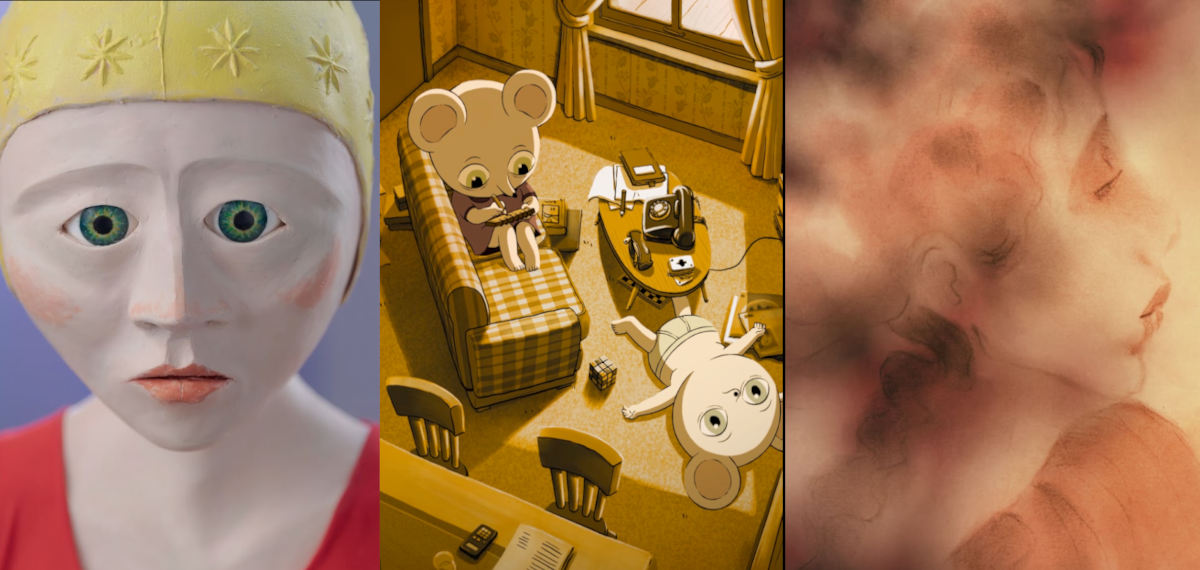
Motherhood is an eternal theme of visual art, and a woman’s endeavor to become a mother without losing her pre-maternal identity, as well as the burnout caused by reproductive work, are both hot topics of contemporary feminism. Veronika Pasterná Szemlova’s animation ‘Feed, Wash & Love’ is an enchantingly honest depiction of the everyday struggles of a mother who is – and attempts to remain – an artist as well. The self-reflective theme permits an empathetic tone, something a woman is in desperate need of when trying to cope with the changes of her body after childbirth, while running a household, being constantly available for her children and her partner, and last but not least, not neglecting her art at the same time. During the ten-minute running time, the style of drawing varies multiple times, yet it remains a combination of magical and realistic elements, thus making the imagery vibrant and dynamic, full of surprises. Via her animation, Szemlova shares with the viewer the magical feminine energy of creation, through which even a carrot can be turned into a work of art, celebrating women’s capacity to constantly reinvent themselves.
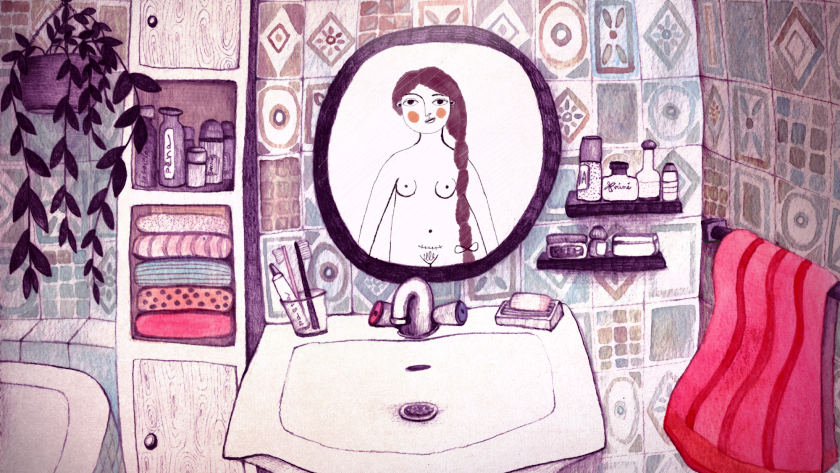
Feed, Wash & Love
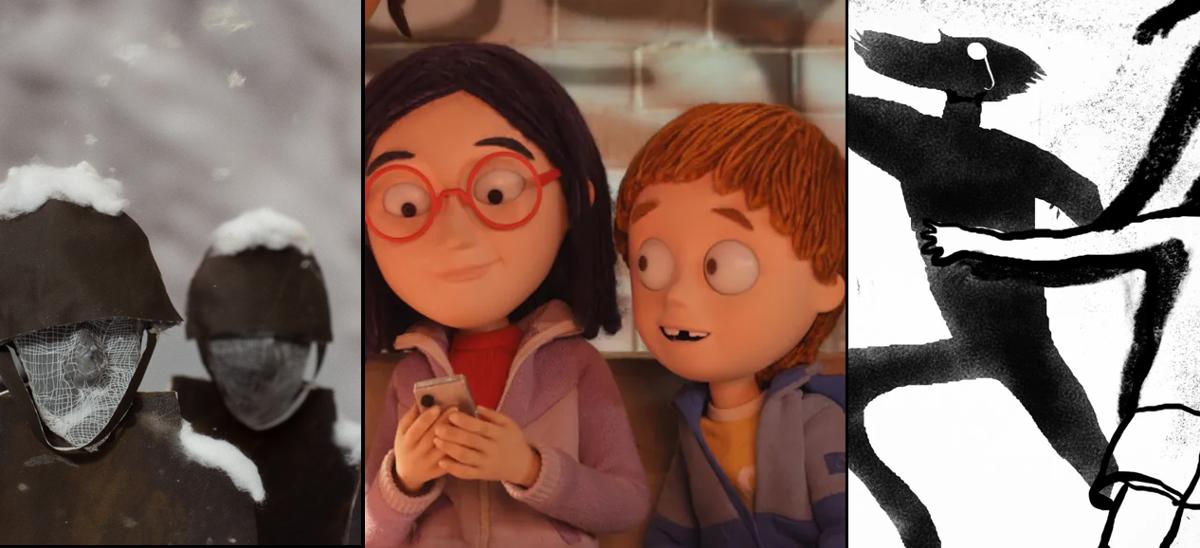
While some women face difficulties with balancing their career and family life, others suffer from lacking the latter. Antonie Zavadliková’s student film ‘The Autoharp Crushing on Hot Guys’ is an animated conversation between two friends sitting at a coffeehouse, complaining about their profound longing for love and their difficulties finding it. To cope with loneliness, the two girls create a naive, childish fantasy world to escape to, where they pick up hot guys with the help of a magic, heart-shaped autoharp. The colorful animation resembling children’s drawings and the silly love song sung by the two girls match perfectly with the naivete of their fantasies, while contrasting with the sadness of their dialogue. They know it well, and accept the fact with resignation that these dream-like fantasies cannot be taken seriously… or can they? Sometimes dreams, especially if they are based on the solid grounds of true friendship, can pave the way for real solutions.
In ‘Machine Mountain’, directed by Terezie Unzeitigová, solitude is no longer a problem to be solved, but is associated with independence and freedom. The film contrasts the loud and hectic alienating reality of a crowded ski resort with the silent, relaxed life of a woman living alone in the woods nearby. The disturbing sounds of the machinery – the ski lift, or the artificial snowmaker crunching and creaking – create a factory-like setting, where the dehumanized, uniformed mass of skiers moves as if they were produced on an assembly line. The whole mountain is transformed into an industrial area, manufacturing leisure activity as a product. This cold, rugged atmosphere, enhanced by the black-and-white animation, repeatedly collides with the harmony of the modest but cozy home of the protagonist, living in constant proximity to nature. As the days pass by in the middle of the ski season, the conflict between the two increases. ‘Machine Mountain’ turns a critical gaze toward the exploitation of nature, revealing the less shiny side of the advertising posters of tourist resorts.
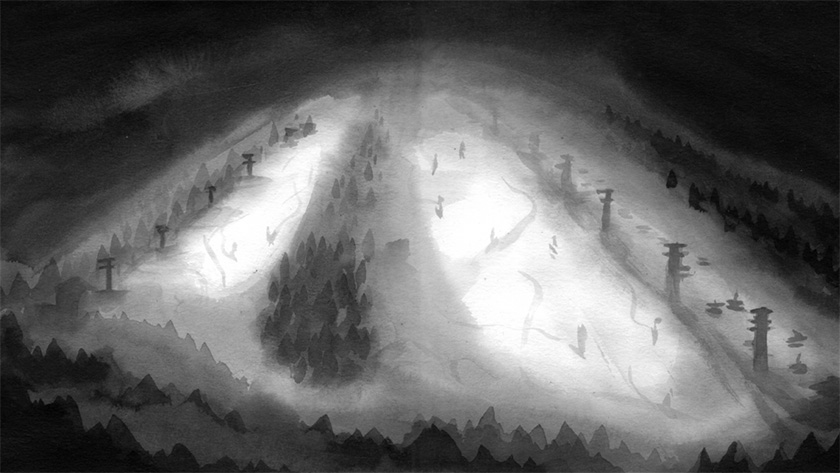
Machine Mountain
Anna Podskalská’s animation ‘Growth Project’ takes a step further in drawing attention to environmental damage. This student animation envisions a TikTok feed from 2034, a not-so-bright future with our world on the verge of climate catastrophe. In a desperate attempt to save the planet and the humanity that destroyed it, scientists have developed a technology that can regrow trees within just a few minutes. These “instant forests”, however, are not without risk. The TikTok feed we are watching is filled with people campaigning both for and against the growth project. In between these campaign videos, cute cats and dumb memes appear every now and then. Fortunately, Podskalská’s film, inspired by today’s existing geoengineering strategies, manages to ease the climate anxiety it provokes thanks to a great sense of humor reflected in the ironic portrayal of our chaotic online presence with constant scrolling, meme culture, influencers, and the pressing question of AI.
At first glance, the difficulties of motherhood and the environmental crisis might have a few things in common, much like the exploitation of nature and the isolation of young people. Yet all these social issues are particular to our 21st century life, giving birth to previously unknown and complex emotional reactions. The four animations discussed here by four talented female artists are not simply expressions of these states – burnout, solitude, alienation, and climate anxiety – but also creative responses formulated by means of art to the new challenges we are facing.
contributed by: Réka Erőss
Want to read more free articles like this?

Keep this professional animation journalism effort relevant and updated. Become our patron