
Inside The Animation Workshop: Uri Kranot Masterclass (GoCritic! Review)
ZF Team
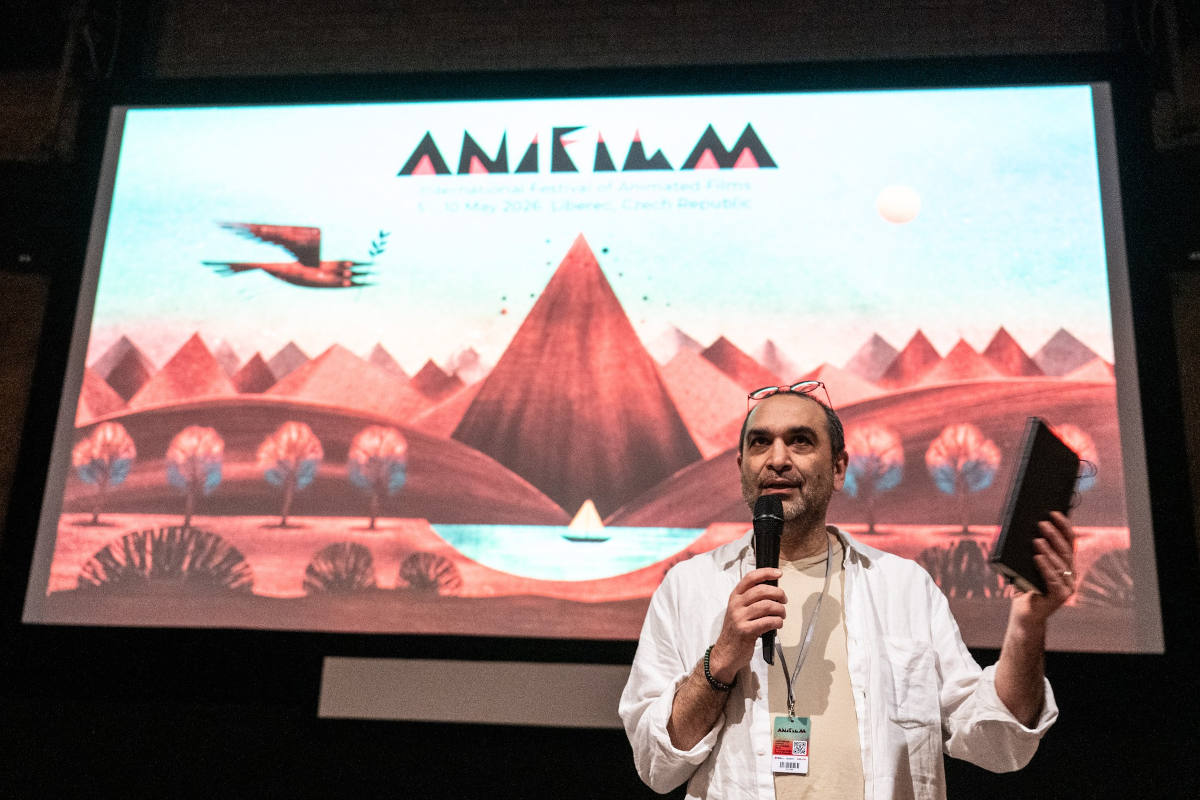
What became immediately clear during Uri Kranot’s presentation of The Animation Workshop at the festival Anifilm in Liberec was that he does not represent a school interested in producing isolated auteurs. Its entire philosophy seems built on a completely different approach to collaboration and communication around love for animation.
Based in Viborg, a small Danish city, The Animation Workshop is one of the best animation schools, ranking third globally and second in Europe. The speaker’s intention, however, was to elucidate through films, processes, and stories about students rather than highlighting institutional achievements. Kranot, who is both a filmmaker and a professor at the school, repeatedly emphasized the importance of teamwork. Students there are encouraged to develop interpersonal abilities as seriously as drawing techniques or technical expertise. Competition is not motivational to them. The goal is, first and foremost, synergy.
The presentation opened with the student short ‘Service Bus’ by Elmer Mikael Lødemel, a chaotic film with an almost nineties-inspired visual energy. In it, a boy riding a bus notices another passenger drinking coffee and desperately wants one himself. After pressing a button marked with a coffee symbol, the driver begins preparing the drink while simultaneously abandoning the steering wheel, sending the bus spiraling into danger. It was a funny and slightly unhinged animation and definitely an effective introduction to the school’s emphasis on storytelling.
The history of the institution itself proved equally revealing. Founded in 1988 with support from the Danish state, the school originally functioned as a program for unemployed people to train in a practical profession. Over time, it evolved into something much larger. In 1997, they established The Drawing Academy, a one-year program focused entirely on foundational drawing skills: characters, spaces, environments, and movement. Later came the specialized Bachelor programs in Character Animation, Computer Graphics, and Graphic Storytelling, all designed to intersect with one another rather than operate independently.
That intersection seems essential to the school’s identity, as all students are meant to engage with it. Even the production structure within the school resembles miniature studios. Students pitch projects to each other, collectively choose which ideas they believe in, and then form groups around those ideas for 15- to 16-week productions. Within these teams, different roles naturally emerge, so that everyone finds the space to work freely.
One of the most interesting examples shown was ‘Beanboy’ by Emily Hanning, a children’s animation initially created by a student as a proof-of-concept for a larger series idea. The short eventually succeeded in moving into development as a television project, illustrating how students are encouraged to dream big while creating films. Kranot also emphasized that they are not strict about what students can do with their projects, only requiring that the school has the right to screen them.
Throughout the presentation, we were shown all kinds of different animation styles. ‘Mano’ by Toke Madsen, another student short, moved closer to social realism, following two siblings growing up with a neglectful mother in a rougher Danish neighborhood. Meanwhile, ‘Untamed’ by Juliette Viger explored a more melancholic relationship between a girl and her father. By the time the workshop closed with ‘Deepness of the Fry’ by August “Poul” Niclasen, an existential film mixing multiple animation styles in a truly explosive way, it became clear that technical consistency is as crucial as the artistic voice. Kranot spoke about the school’s wider ecosystem, too, mentioning artist residencies through the Open Workshop, research departments, collaborations with other institutions for game development, and their connection to the Oscar-nominated animated documentary ‘Flee’ by Jonas Poher Rasmussen, which involved several graduates from the school.
Leaving the presentation, I kept thinking how refreshing it is to know that animation can exist as a continuously evolving conversation between people learning from one another. And, of course, it can consist of exceptional talent and experimentation at the same time. Communities have been proven to stand strong through the times, and it seems that The Animation Workshop is one of them, collectively trying to imagine new worlds together.
contributed by: Glykeria Pappa
Read More About:
Related Articles

Submitting your film to festivals? Get a festival roadmap for your animated short: the right festivals and pitching events, matched to your film. Festival consultancy →
Get Our Weekly Indie Animation News
Zippy Frames is the premier online animation journal promoting European and Independent Animation since 2011
Zippy Frames
Quick Links