
Monstrous Echoes and the Soul of Horror Animation: Joe Hsieh at Animafest Zagreb (GoCritic! Review)
ZF Team
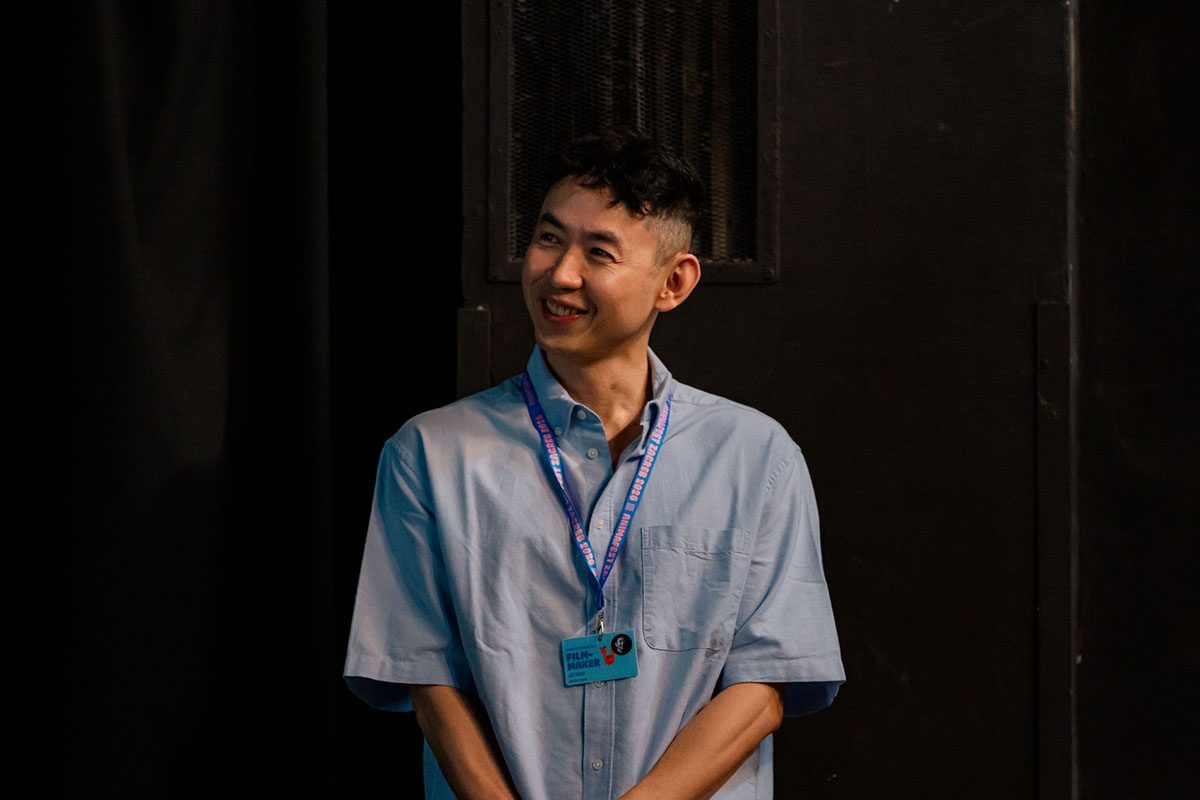
“I’m not a master; I’m a monster”, Joe Hsieh jokes as he takes the stage at Animafest Zagreb’s MM Centar. The audience bursts into laughter. Introduced as one of Asia’s leading animation masters, Hsieh hardly fits the image one might associate with the creator of unsettling, horror-inflected films. Warm and visibly delighted to be speaking before a live audience, the Taiwanese animator instead radiates an infectious enthusiasm for his craft.
Behind him looms the creature from his latest short, ‘The Praying Mantis’, which screened in the festival’s Grand Competition. Although Hsieh previously won the main prize at the festival for ‘Night Bus’, the COVID-19 pandemic prevented him from attending in person. This year, he finally arrived in Zagreb under considerably brighter circumstances, presenting a masterclass aptly titled “Monstrous Echoes”.
For Hsieh, horror has little to do with jump scares. Popular culture often reduces the genre to shocks and nightmares, but his understanding is considerably broader. Horror, he argues, should invite audiences to confront the darker corners of human existence. Rather than frightening viewers outright, it should leave them unsettled, prompting reflection on the contradictions that shape everyday life. Through this lens, the recurring themes in Hsieh’s films – love, motherhood, sacrifice and mortality – reveal themselves as horror’s very foundation.
The masterclass traced this philosophy and techniques through four films spanning his career. The earliest, ‘Meat Days’ (2006), already demonstrated many of the stylistic choices that would come to define his work. Created using cut-out animation techniques, the film reveals Hsieh’s fascination with texture and materiality. Drawn largely in charcoal, the images preserve the visible texture of paper, an effect the director deliberately retains. As he explains, “I want people to see the texture. With ‘Meat Days’, because I really enjoyed the texture of paper, I felt that charcoal could also convey the quality of flesh.”
His work draws on a range of East Asian artistic and cinematic influences, which shape his approach to movement, atmosphere, and character design. Unlike many mainstream horror films, which often rely on sudden shocks, Hsieh gravitates toward an accumulating sense of unease born from environments and suggestion. He also credits the late Japanese animation master, his mentor, Kihachirō Kawamoto, as a formative influence, recalling how he encouraged him to see animation not merely as entertainment but as an art form.
His next film, ‘The Present’ (2013), also served as a tribute to Kawamoto, who had previously adapted the same story in puppet animation. At the same time, it marked a deliberate shift away from the emotional heaviness of ‘Meat Days’. As Hsieh explained, “I still loved horror animation, but ‘Meat Days’ was so heavy to me, so I wanted to make something lighter.” Seeking something closer to a thriller than to the intensity of his earlier work, he experimented with color in ways largely absent from ‘Meat Days’. Most striking is the use of red, which gradually overwhelms the screen during the film’s climax. As Hsieh notes, “red can signify both love and hate”, which demonstrates his growing confidence in using color as an emotional rather than merely aesthetic device.
The award-winning ‘Night Bus’ (2019) presented perhaps the most demanding technical challenge. Inspired, as he put it, by Taiwan itself – “we have mountains, ocean and monkeys” – the film also emerged from a desire to push himself further: “I also wanted a challenge, so nine characters, counting the monkeys.” The production required seven human puppets, two monkey characters and dozens of interchangeable mouthpieces, all animated through cut-out techniques. As he explained, “Every piece is separate, allowing the characters not only to speak and shift expression, but also to exist in a much richer world.” In ‘Night Bus’, the familiar coastal scenery of Taiwan becomes a site where a layered tale of secrets, violence and revenge takes place, constantly shifting between genres while sustaining an atmosphere of dread.
His newest work, ‘Praying Mantis’ (2025), marks another evolution in Hsieh’s practice. While moving partially away from traditional cut-out methods, he remains committed to preserving their tactile qualities. Hand-drawn images are digitally layered to create characters that still appear physically assembled from fragments, resulting in a striking hybrid of analogue and digital aesthetics.
Thematically, the film returns to ideas that have long preoccupied him. Hsieh cites ‘Rosemary’s Baby’ as a significant influence, particularly in its treatment of motherhood and female vulnerability, while also reflecting on the expectation that mothers are often asked to sacrifice everything for their children. Horror becomes a language through which everyday fears and desires can be brought to the surface. In Hsieh’s hands, monsters function less as external threats than as mirrors, reflecting anxieties that already exist within us. The true source of unease is rarely the creature lurking in the shadows, but the fragile and complicated nature of being human.
Watch the 'Praying Mantis' trailer:
Contributed by: Ilo Tuule Rajand
Want to read more free articles like this? Keep this professional animation journalism effort relevant and updated. Become our patron 

Read More About:
Related Articles
Submitting your film to festivals? Get a festival roadmap for your animated short: the right festivals and pitching events, matched to your film. Festival consultancy →
FIND THE RIGHT FESTIVAL

Zippy Frames is the premier online animation journal promoting European and Independent Animation animation since 2011
Zippy Frames
Quick Links