
StopTrik Festival 2025 Report: A Carnivalesque, Stop-Motion Animation Call to Awareness
StopTrik Festival has solidified itself as one of the most interesting animation festivals to attend -and not just because it's the only European stop-motion animation festival. Its organizers (producer: Pekarna Magdalenske mreže) and artistic programming personnel (Olga Bobrowska and Michał Bobrowski, along with additional team members) continually present new creative challenges to themselves, aligning stop-motion animation with the world's challenges. Thankfully, the world never disappoints them.
For this edition (25-29 September 2025, Maribor, Slovenia) and a world that is going to explode (visual identity by Georgian animation director Ana Chubinidze), the organizers chose Bakhtin's carnivalesque concept as their main theme and course of festival action. In their words, "We cheer for humor with teeth. We seek laughter as a tool of creative resistance, which possibly is our last resort in a world that is set on fire by the power-greedy imperial. At the 15th StopTrik, we’re diving into the realm of satire, blasphemy, and carnival".
This countercultural procedure aligns with indie animation in general, in its short and feature formats. Yet, as experienced from StopTrik Festival proceedings, animation culture doesn't lead to an 'alternative' mode of action (the word 'alt' has now been appropriated by dangerous political movements in any case); it is only our familiar, resistant to unjust authority modes, that animation (and stop-motion animation) can make very prominent and difficult to evade.
Below you'll find a report on things experienced (films watched, discussions attended, concerts participated in) during the festival. There are things we missed, such as the 'Laughter Strikes Back' discussion and Izabela Plucinska's 'Imagining the Author' discussion. (Three partnership screenings from REX Animation Festival, Brighton International Animation Festival, and Feinaki Beijing Animation Week also took place during the festival). We also witnessed events taking place throughout the festival that we enjoyed their final outcomes, like the Workshot 2.0 'Satirie, Blasphemy, Carnival' animation workshop, using the combined forces of tutors Urška Breznik, Kaja Fiedler (Slovenia), Pedro Rivero (Spain), and Izabela Plucinska. Or the children's pixilation animation workshop with their appropriately themed Upside-down world. The two exhibitions AD HOC LAB. Show Me a Joke with Bibi Erjavec and Plucinska's 'Joko' exhibition filled the main festival's Vetrinjski venue, while the flipbook exhibition: DAUMENKINO – Animation between the fingers was present in the Obrat space, extending the festival throughout Maribor.
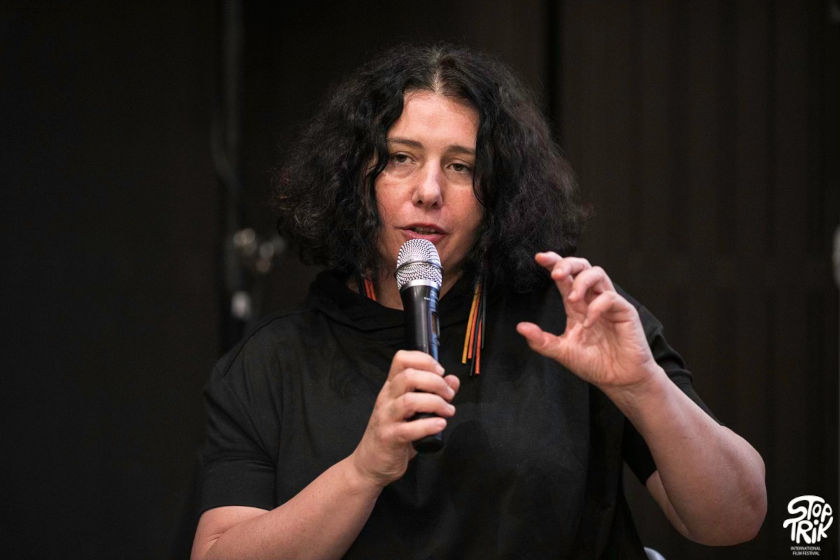
Izabela Plucinska / Imaging the Author (photo: Andrej Firm)
The Tram No. 9 Opening
The Ukrainian Berlin Silver Bear 'Tram no. 9' opened the programme of the 15th StopTrik Festival, along with its celebrated director, Stepan Koval. A fine image of clay disruption in movement (with a public means of transport, like the whole society needs to enter into a single bus), the film still reminds us of a community that takes itself not seriously enough in order to face all kinds of fatal issues. It feels almost nostalgic, and never cynical.
As the director (and artistic director of the Novatorfilm Ukrainian studio) stated during his presence at StopTrik Festival -words translated by Anastasiya Verlinska): If we want to live, we laugh. We can grieve and get angry too, but then there’s little left to share. A gloomy, boring lover never receives love in return. Let's see the funny things around us, laugh at our flaws, and perhaps all our problems and fears will disappear.
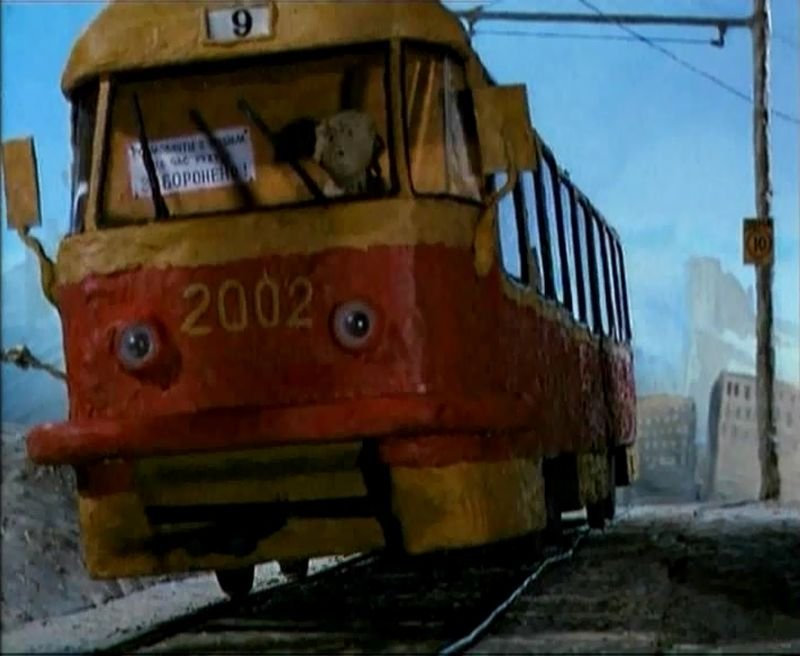
Tram no. 9
The Competition Programme: Animation Disruption
A few of Bakhtin's tropes of the carnivalesque (eccentricity, breaking the barriers between the high and the low, free interactions) are verified in the film's competition and panorama programmes. But let it be clear: these films (all stemming from the last two years) are not the usual, funny-laden films. Instead, they are films that movingly meditate on transience and disruption, for the better or the worse.
For instance, consider the puppet animation 'Dolores' (dir. Cecilia Andalón Delgadillo), which celebrates the unexplained and features a small girl entering a system of significations (including religious ones) she is unaware of. Or Niko Radas' 'Psyconauts', a moving and all-singing place in which medication becomes self-referential, as if reciting the medication names will somehow cure you. Or the experimental Austrian SKRFF by Corrie Francis Parks and Daniel Nuderscher, a decay of the past used as a new source of knowledge.
'The Gnawer of Rocks' by Louise Flaherty has all the cultural symbolism turned back on the person, making the process of learning a dangerous experiential journey (instead of relying on a distanced educational system and process). And 'Atomik Tour' by Bruno Collet exposes the naivety of Instagram tourism, suddenly turned into tourist slavery. The sand animation Litham (dir. Magda Brzezińska) tries to redefine individual personality in the wilderness, while 'Our Lady of Rot' (dir. Bibi Erjavec) brings a fresh (and fleshed) meaning to our neocapitalist exploitation.
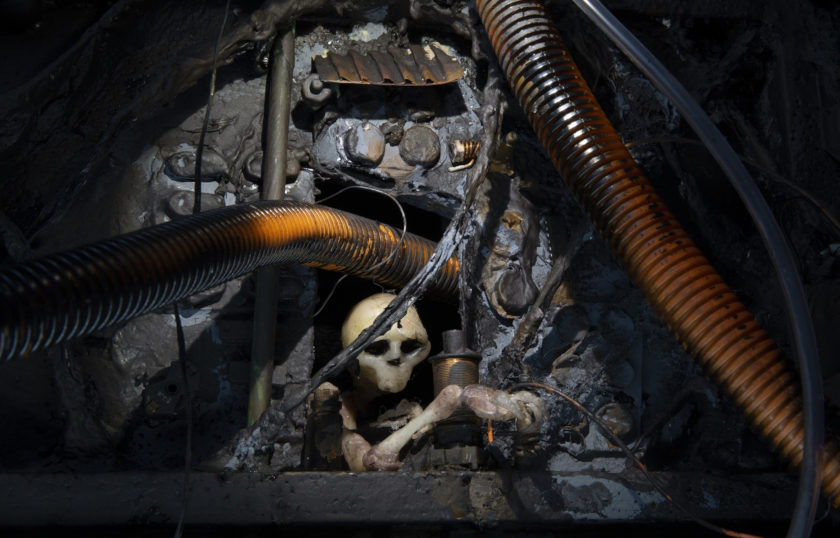
Our Lady of Rot
'High Street Repeat' (dir. Osbert Parker, Laurie Hill) portrays in an unmistakable way the transience of our everyday lives, and Ülo Pikkov's 'Sewing Machine' attempts a genealogy of identity in the medium of the cinema itself. Cinema is also the medium of 'Silent Cinema' by Krste Gospodinovski, whose one-shot treatment makes for an uninterrupted transience, as if the world continues up to the present.
Some of the authors in the festival's TrickShow discussions (moderated by Andrijana Ružić and Reinhold Bidner) made clear that the final image and sound (and concepts) had to come out of very mundane, sometimes challenging, but always adventurous work. Like Thomas Renoldner, whose archivally minded 'Stampfer Dreams' involved extensive on-site research in the Austrian countryside to investigate Stampfer's life, coupled with the demand to create a story based only on Stampfer's existing collection of stroboscopic discs. Or the Czechia-based Israeli Lee Oz, editor and animator of 'Why Don't You Touch Me' (dir. Eliška Oz, 2025, Czechia), who had to help during his partner's actual pregnancy, life imitating art.
The risography jazzy film 'Where Blue Meets Red' by the Hungarian Tamás Patrovits started from buying old stamps, and imprinted their patterns into 150 risograph pieces -tuned as a film to the sound of Barabás Lőrinc. Strata-cut animation was one of the fine ways to make the endearing 'Arachnophobia' (puppets & clay animation were also used), making the 3-minute student film by Melita Sandrin a visual delight as well.
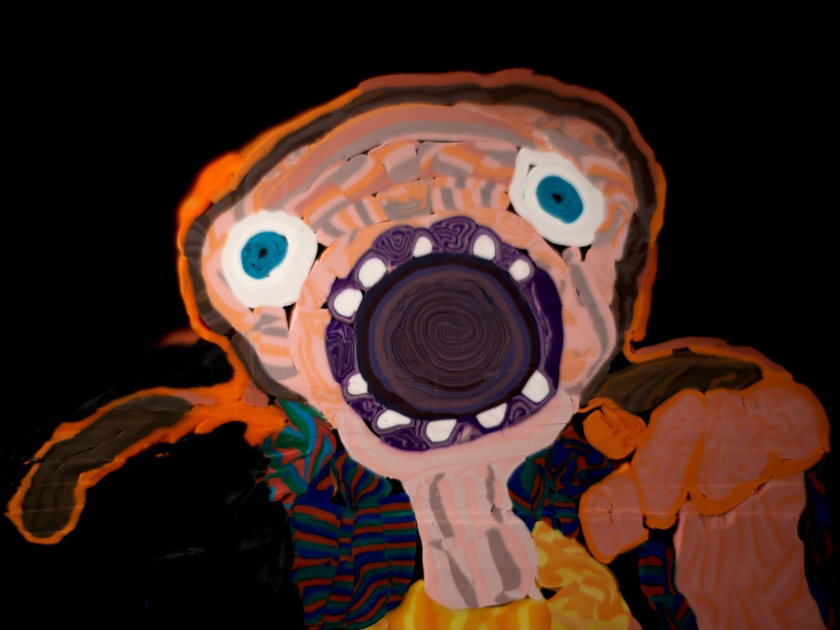
Arachnophobia
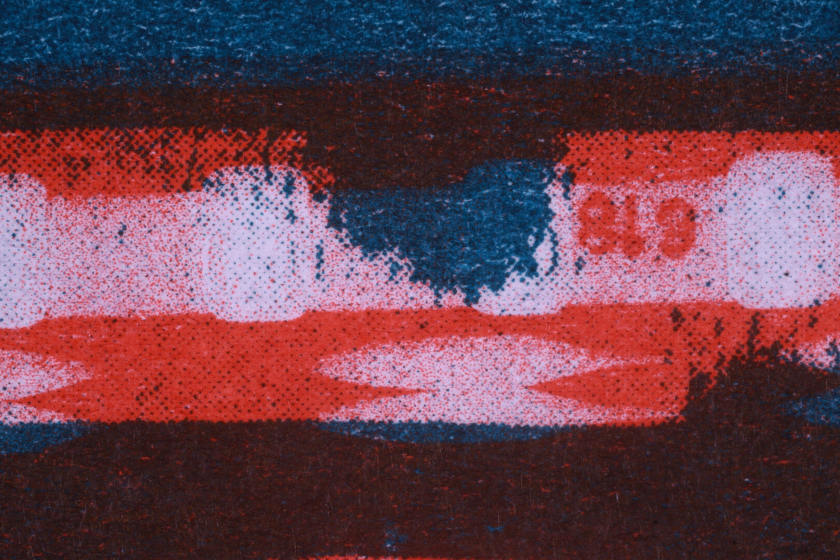
Where Blue Meets Red
From Maribor to Gaza and Palestine with Love
StopTrik festival was already aware of the Gaza/Palestinian crisis (before it was widely characterized as genocide) in its 2024 edition, organizing screenings and roundtable discussions. In 2025, it chose to headline each of its programs with an animation short from the global initiative AniJam (which premiered on 21 September), 329 short films from over 50 countries, created by animators, students, and studios in a collective act of solidarity with the people of Gaza.
At the same time, it presented the 'Palestine Animated' programme (curated by Samira Badran, Mats Grorud, and Angeles Cabria -the full programme list here). The initiative 'Palestine Animated' presents programmes of short and feature films by filmmakers from Palestine and the diaspora, resulting in 30 screening events since 2024.
Here we had a knowledgeable overview of the situation, ranging from animation work from Gaza children (Love and War) to diaspora films (Ahmad Saleh's 'My Second Eye) to more experimentally-minded animation shorts (like Samira Badran's beautiful 'Memory of the Land' - 2017). Overall, a programme in which even subversion steps aside to reveal the harsh reality of checkpoints and walls, tested even to its younger members (like 'Hide and Seek' by Rami Abbas and 'Checkpoint' by Jana Kattan).
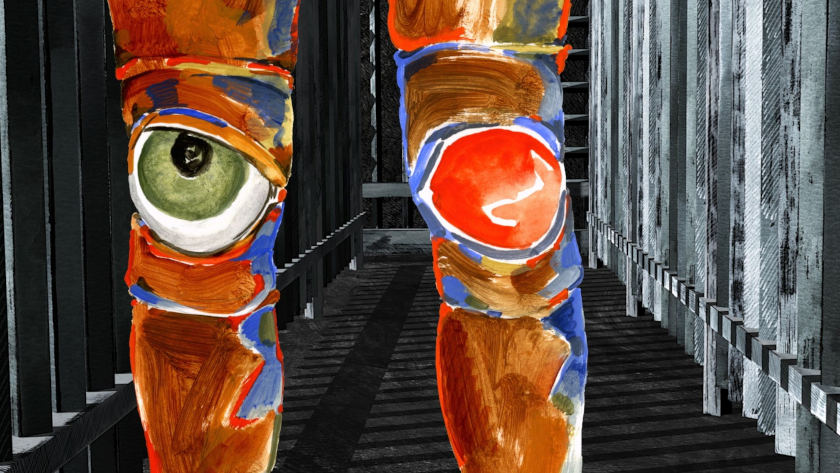
Memory of the Land
The Stop-Motion Animation Power of Programming Duos
It takes two to tango (or go to a carnival). Chris Robinson (OIAF, Canada) and Anastasiya Verlinska (LINOLEUM, Ukraine) promised a "cynical, borderline bitter laugh" in the first of the three retrospectives programmed by a duo of programmers -and in line with the festival's carnivalesque theme. It is welcome to revisit the trademark Estonian quirkiness of 'Breakfast on the Grass' (Mikhel Reha, Mari Liis Rebane, Mari Pakkas, 2011) and juxtapose it with Niki Lindroth von Bahr's singing surrealism of 'The Burden' (2017). The small and the large, the early work ('We Eat Shit' by Chris Lavis and Maciek Szczerbowski) alongside the later arthouse favorites, all in the same room, make for a cramped but welcome carnival life.
Things get comically darker in the Piotr Kardas (O!PLA, Poland) and Maciej Misztal (Lublin Film Festival, Poland)' programme, "That's Somethin’.. Two Middle-Aged Guys Standing On The Balcony and Reflecting on Existence". Self-declared as "Midnight Movies", from Piotr Dumala's 'Little Black Riding Hood' (1983) to 'Cowboys: That's Nothin' by Phil Mulloy (1991), the programme delves into much-needed subversion -of the kind that doesn't have to explain itself; it just exists (for our eyes and bellies only).
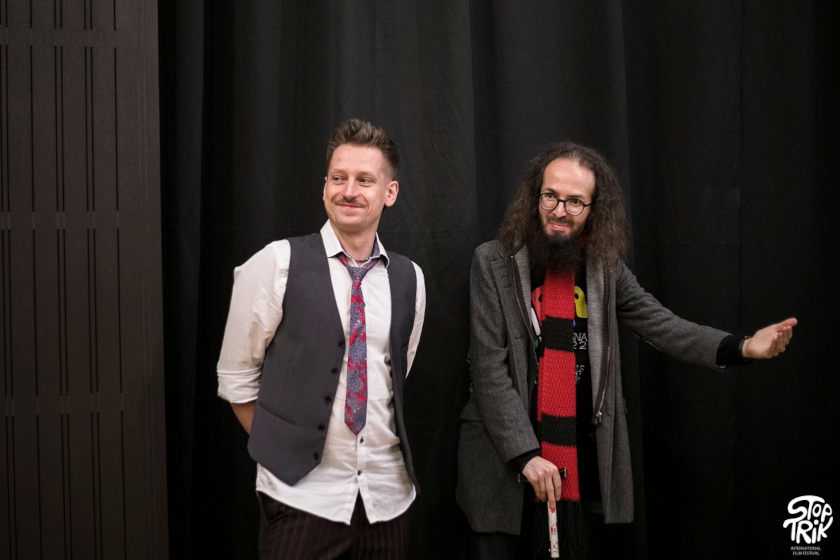
Maciej Misztal and Piotr Kardas (photo: Andrej Firm)
The third (it should have been the first) programme in line was the "Can Feminism Be Funny?" classic and more contemporary animation gems (not only stop-motion ones), curated by Kate Jessop (Brighton IAF, UK) and Olga Bobrowska (StopTrik IFF Festival Director). It is truly refreshing to watch Michaela Pavlátová, Joanna Quinn, and Signe Baumane in the same lineup, one after the other - this should have been part of the animation curriculum. And I really felt for the main character in 'The Astronaut' by Kate Jessop when asked sexist questions. From harassment to everyday sexism, the programme has a promising start in social criticism through animation. A 'Can Queer films Be Funny' follow-up is desperately needed.
And Sébastien Sperer (indie curator, former Annecy Festival programmer) and Petrit Gora (REX Animation Festival) had their own rapid-fire battle of sorts in the very short DJ "Animated Battle: Masters and Jesters". Unpredictability was the key in that programme, and it served the (excited) audience really well.
Animation Winners: Failed Masculinity
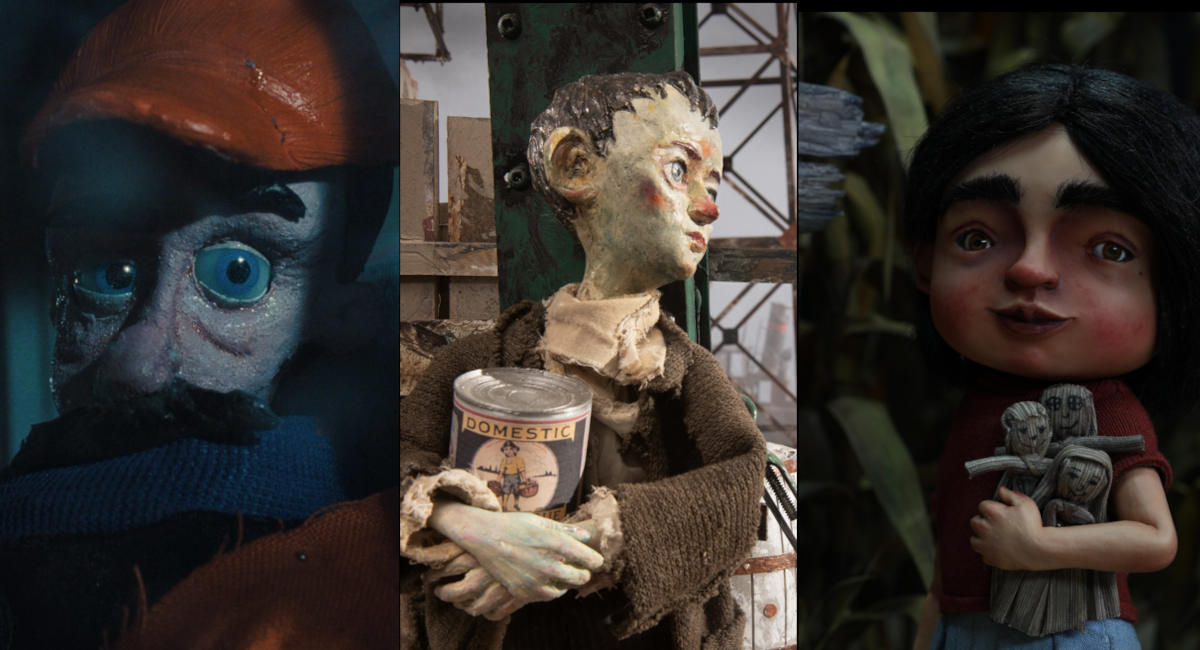
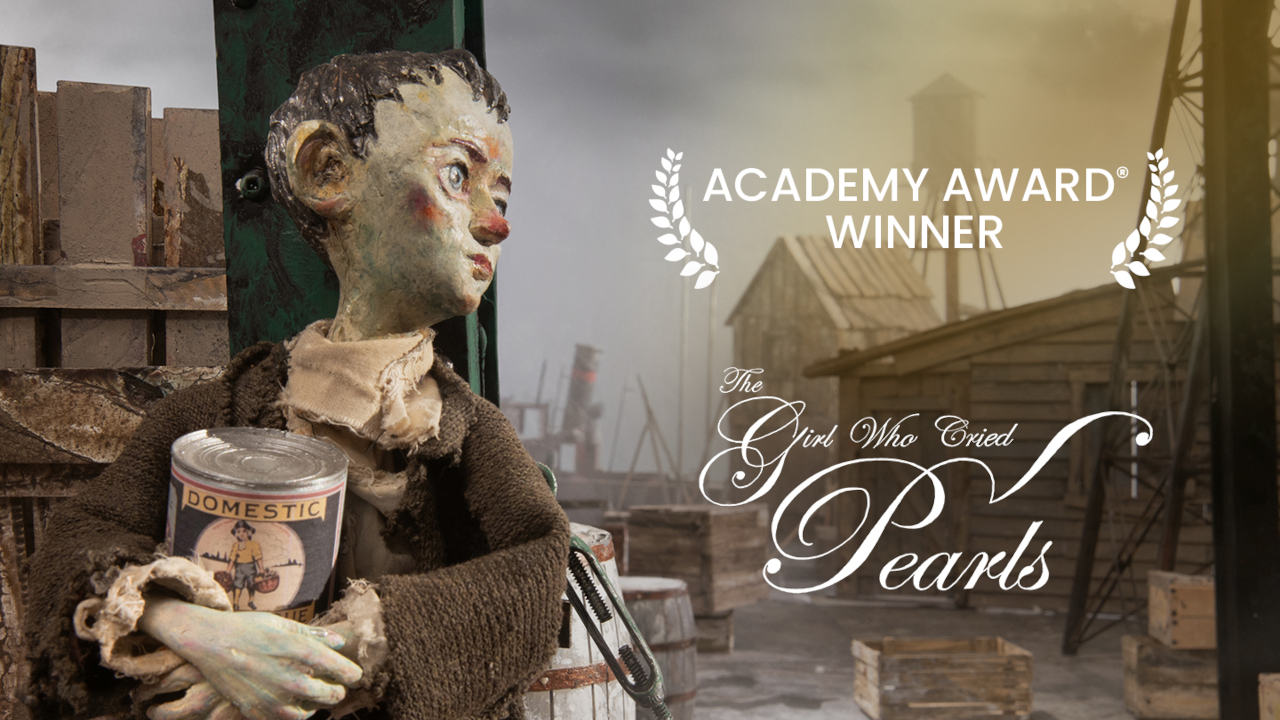
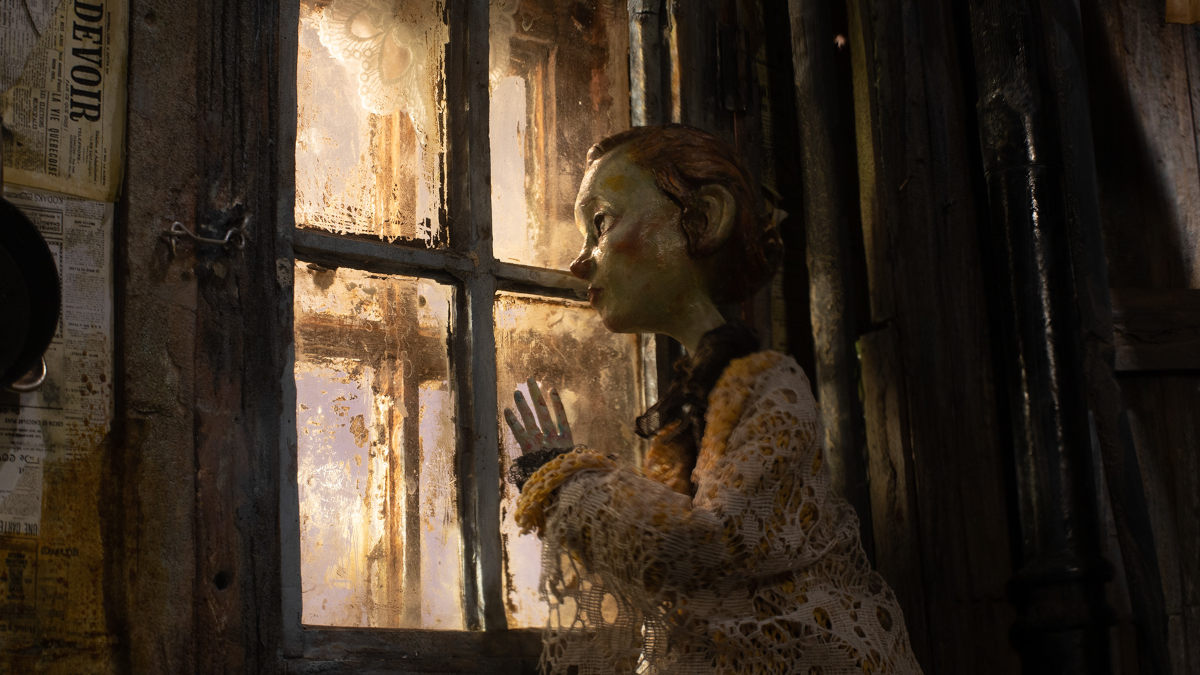
One of the few ties in the festival's history (StopTrik Festival's main awards are judged by the audience), the German student film 'Detlev' by Ferdinand Ehrhardt and 'The Girl Who Cried Pearls' by Maciek Szczerbowski & Chris Lavis (Madame Tutli-Putli). Both puppet films couldn't be more diverse in terms of production values and directing hands; 'Detlev' is a student film (Filmakademie Baden-Württemberg) from an emerging director, while 'The Girl Who Cried Pearls' boasts NFB mastery in set production and a long-standing directing experience. Yet somehow both films, depicting the ritual of a freezing man and the need for validation of a young boy, respectively -are very similar indeed (the title of 'The Girl Who Cried Pearls' is misleading; it is the boy's story of need here told).
Both films painstakingly (and sometimes tirelessly) show how masculine validation is about to collapse, at different stages of life. In 'The Girl Who Cried Pearls,' a boy must become the breadwinner, and the only way to accomplish this is to exploit others' labor, associate with shady characters, and be prepared to face the world of economic exploitation. Even the dream of a beautiful girl (who's fantasizing about being her savior) is here shattered, only leaving the cold impression of money (and, in a devious 'Sierra Mantre' twist, the treasure turns into something very trivial indeed). It is only the storytelling that saves the male character; he is as masculine as the choice he makes to tell (or not tell) what is true and what is false in the story— and the little girl now beside him obliges.
Whereas in 'Detlev', the middle-aged man faces a prescribed adventure and food routine that, in the absence of all women, is the one to keep him alive. In a world of truck drivers, petrol stations and junk food (the insignia of a masculinity that parades as not taking itself very seriously), the man is shaken and freezing (freezing as the absence of warmth here). A father figure comes to help, whereas a son (voice only) tries to bring a father back to reality. Watching 'Detlev' is like watching an artifact of typical masculine behavior collapsing and then trying hastily to put it back in place -for the main character to survive after all.
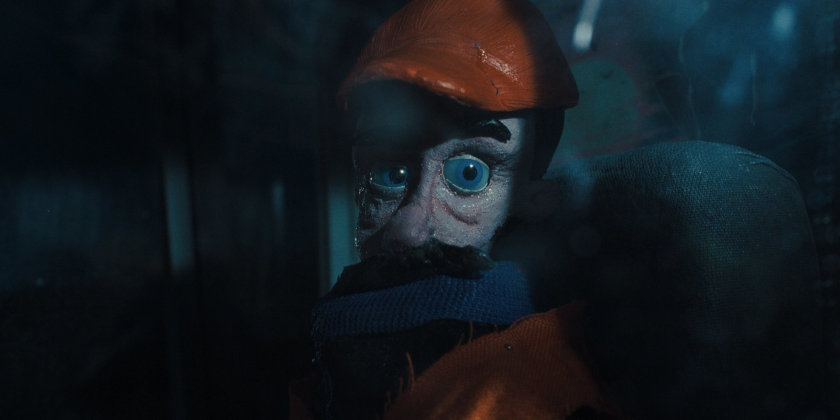
Detlev
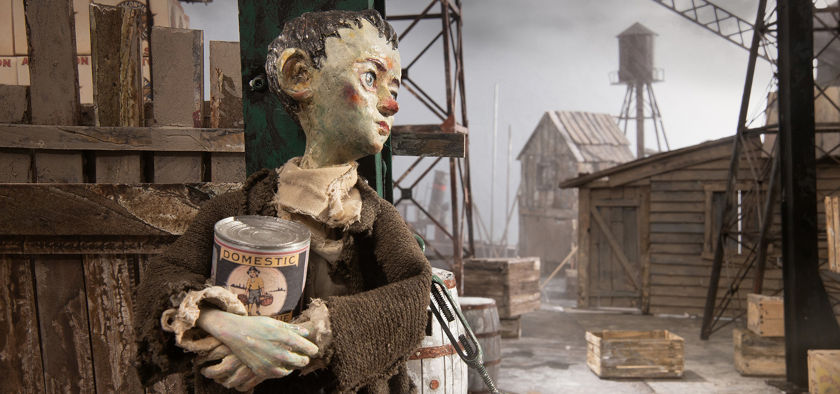
The Girl Who Cried Pearls
The Fine Print
As argued in an earlier editorial, you cannot have happy festival vibes without a robust film programming -for festival institutions that want to make a change. StopTrik Festival is a constant locus of interaction between the two, making stop-motion animation the key to successful community awareness. If this is carnivalesque, then all the better for everyone involved in the animation community.
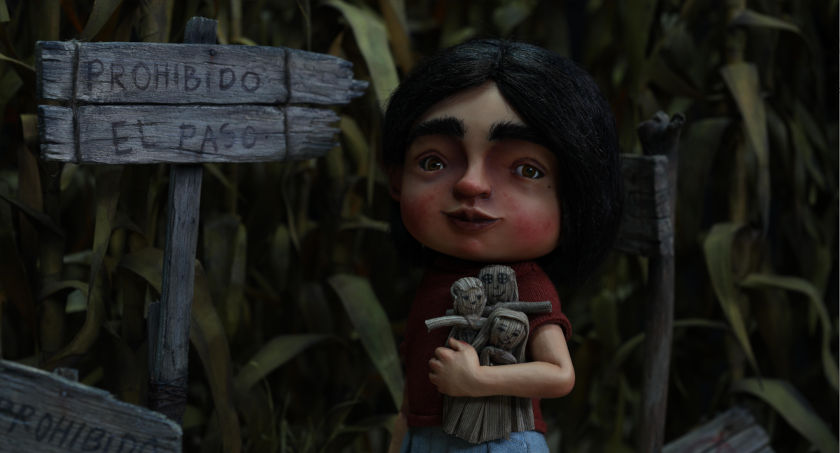
Dolores
Our Top Festival Picks (in alphabetical order, Main & Borderlands Competition, Panorama programme)
- Dolores, dir. Cecilia Andalón Delgadillo, prod. Universidad de Guadalajara, Taller Del Chucho, Agujero Negro Cine, Maltaraña, 2024, Mexico, 8' 14"
- Foreign Bodies, dir. Lysander Wong, prod. Central Saint Martins, University of the Arts London, 2025, UK, 3' 30"
- Litham, dir. Magda Brzezińska, prod. UAP University of Arts in Poznań, 2024, Poland, 1' 28"
- Mater Benefacta, dir. Marc Riba, Anna Solanas, prod. I+G Stop Motion, 2024, Spain, 11' 45"
- Occhio, dir. Giulia Falciani, prod. Film University Babelsberg KONRAD WOLF, 2024, Germany, 6' 06"
- On Weary Wings Go By, dir. Anu-Laura Tuttelberg, prod. Fork Film, ART SHOT, Moon Birds Studios, 2024, Estonia, Lithuania, 11
- Our Lady of Rot, dir. Bibi Erjavec, prod. Academy of Fine Arts and Design (ALUO), University of Ljubljana, 2025, Slovenia, 5' 08
- Pool or Death of a Goldfish, dir. Daria Kopiec, prod. Marmolada Films, 2025, Poland, 13' 48"
- Silent Cinema, dir. Krste Gospodinovski, prod. Focus Pocus Films, Flip Book Productions, Opal Film, 2025, North Macedonia, 16' 28"
- Stampfer Dreams, dir. & prod. Thomas Renoldner, 2024, Austria, 11' 50"
- Tennis, Oranges, dir. & prod. Sean Pecknold, 2024, USA, 10'
- The Gnawer of Rocks, dir. Louise Flaherty, prod. Taqqut Productions, 2025, Canada, 14' 28"
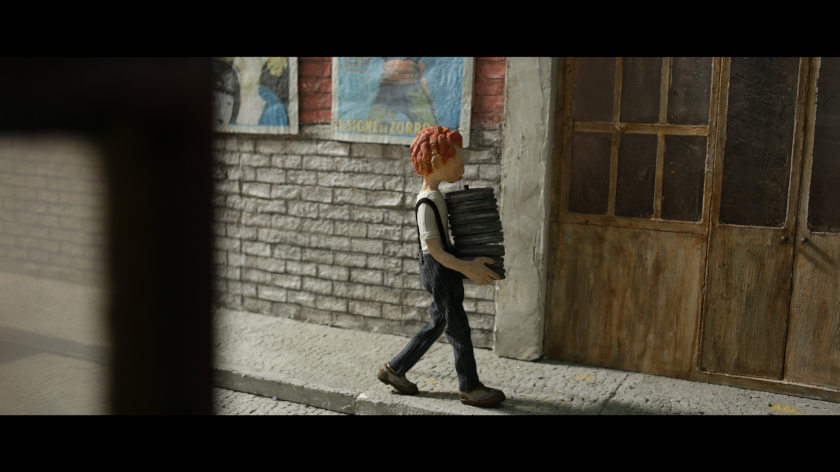
Silent Cinema
2025 StopTrik Festival Winners & Statements
STOPTRIK 2025 MARIBOR AUDIENCE GRAND PRIX STOP MOTION ANIMATION (tie):
- Detlev, dir. Ferdinand Ehrhardt, prod. Filmakademie Baden-Württemberg / 2024, Germany, 12’50’’
- The Girl Who Cried Pearls / La jeune fille qui pleurait des perles, d ir. Maciek Szczerbowski, Chris Lavis, prod. NFB National Film Board of Canada, 2025, Canada, 17'28''
STOPTRIK 2025 MARIBOR AUDIENCE GRAND PRIX BORDERLANDS
- Sewing Machine / Õmblusmasin, dir. Ülo Pikkov, prod. Silmviburlane, 2024, Estonia, 16'38''
STOPTRIK 2025 MARIBOR STUDENTS JURY
Maribor Student Jury: Melita Sandrin, Lucija Klauž, Kristjan Matjašič
Stop motion animation AWARD:
On Weary Wings Go By / Linnud läinud, dir. Anu-Laura Tuttelberg, prod. Fork Film, ART SHOT, Moon Birds Studios, 2024, Estonia, Lithuania, 11'
The jury selected the film because it believes that, by exploring the movement of various materials captured on analog film and animated in nature, it stands out in its experimentation with the medium of stop-motion animation. In addition, through the design of the puppets, framing, and sound, it skillfully and precisely establishes an atmosphere, thus closely linking the form with a series of intertwined themes: the circularity of nature and life, and the interdependence of different species, where humans are just one among many, and winter heralds the end of the cycle.
Stop motion animation SPECIAL MENTION:
Occhio, dir. Giulia Falciani, prod. Film University Babelsberg KONRAD WOLF, 2024, Germany, 6'06''
The jury gives special mention to the film Occhio. The film is distinguished by its detailed exploration and depiction of psychological spaces that refer to anatomical images of the interior of the body and it's delicate parts, successfully evoking a physical response from the viewer and conveying a sense of anxiety brought on by hyperfixation on (non-functioning) bodily functions. Visually, it is certainly a repulsive work, but within the context of the film, disgust loses its negative connotations, as its visceral nature further emphasises the humorous atmosphere of the film.
Borderlands AWARD
Dark Globe / Mračna obla, dir. Donato Sansone, prod. Base Zero, 2024, Italy, France, 3'18''
The jury selected Dark Globe as the winner of the Borderlands category. This three-minute comic-style animation embodies the essence of action films. The story has an apocalyptic feel, which foreshadows humanity's self-destruction and its almost inevitable doom. With its combination of neck-breaking pace, excessive violence, and a touch of transhumanism, it brings to mind the works of John Carpenter and Paul Verhoeven, creating an entertaining experience that ends just at the right moment.
Borderlands SPECIAL MENTIONS
Sewing Machine / Õmblusmasin / Šivalni stroj, dir. Ülo Pikkov, prod. Silmviburlane, 2024, Estonia, 16'38''
The jury awards a special mention in the borderlands category to the film Šivalni stroj (Sewing Machine). Through the skillful use of archival footage from the region, it takes the viewer through the events of the city with an intimate narrative, capturing the feelings of uncertainty and anxiety of individuals in wartime, highlighting the randomness of individual fates, and presenting a complex view of historical events.
STOPTRIK 2025 MARIBOR YOUNG AUDIENCE GRAND PRIX (group age 6-8 years old)
Bobel's Kitchen / Boblova kuhinja, dir. Fiona Rolland, prod. Atelier de production de La Cambre, 2024, Belgium, 10’25’’
STOPTRIK 2025 MARIBOR YOUNG AUDIENCE GRAND PRIX (group age 9-11 years old)
The Night Boots / Les Bottes de la Nuit / Nočni škornji, dir. Pierre-Luc Granjon, prod. Am Stram Gram, 2024, France, 12’21”
STOPTRIK 2025 MARIBOR YOUNG AUDIENCE GRAND PRIX (group age 12-14 years old)
Freak of Nature / Spaka, dir. Alexandra Lermer, 2024, Germany, 08’16’’
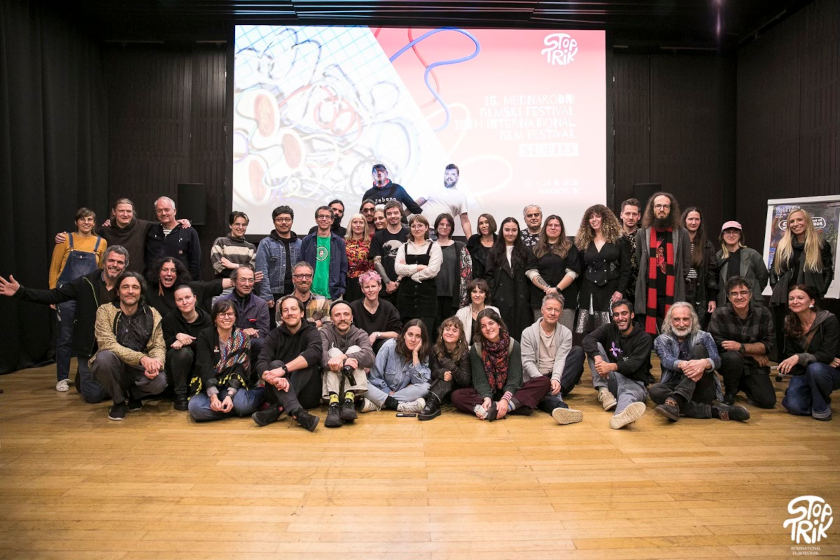
StopTrik Festival 2025 closing ceremony (photo: Andrej Firm)
The 15th StopTrik International Film Festival took place from 24 to 29 September 2025 in Maribor, Slovenia.
contributed by: Vassilis Kroustallis
Want to read more free articles like this?

Keep this professional animation journalism effort relevant and updated. Become our patron

Read More About:
Related Articles
FIND THE RIGHT FESTIVAL