
From Education to Infrastructure: Collective Animation Practices in Central Asia (Guest Article)
ZF Team
Guest Author: Dante Rustav
Over the past few years, I have been working with collective animation practices developed together with young authors in Uzbekistan, Tajikistan, and Kyrgyzstan. These projects take the form of short animated films created within laboratories and workshops, yet they are not conceived or realized as educational exercises. Rather, they function as artistic production processes structured around constraints, shared authorship, and sustained attention to form.
Within this practice, I do not arrive with a predefined theme, narrative, or technique. The direction of each film emerges through discussions with the participants, based on what feels personal, significant, or not yet fully articulated for them. This applies not only to content, but also to the animation form itself. Technique is not treated as a preset standard but is chosen in response to the actual capacities of the group. Some participants work confidently with drawing, others do not—and this difference becomes part of the formal decision. In this sense, animation functions not as a demonstration of skills, but as a way of thinking: a tool through which participants learn to formulate and sustain their observations regardless of their level of technical preparation.
This practice is fundamentally open to participants without prior experience in animation and does not require mastery of a specific skill set. Even when films address themes such as ecology, gender, or memory, they are not framed as theses or statements “about a problem.” Each participant enters the process from their own position, and the film takes shape as a constellation of different—sometimes conflicting—perspectives, held within a single space through form.
'Voices of the Mountains'
Constraints as a Working Tool
One of the key instruments of this practice is limitation. Formal, technical, or conceptual constraints are introduced not to control content, but to create a shared working field. In the absence of rigid production hierarchies, constraints help structure collective authorship and allow a film to acquire form without the dominance of a single voice or a didactic framework.
This approach has shaped several collective works, including 'Voices of the Mountains', 'Because I Am a Girl', and 'About Home'.
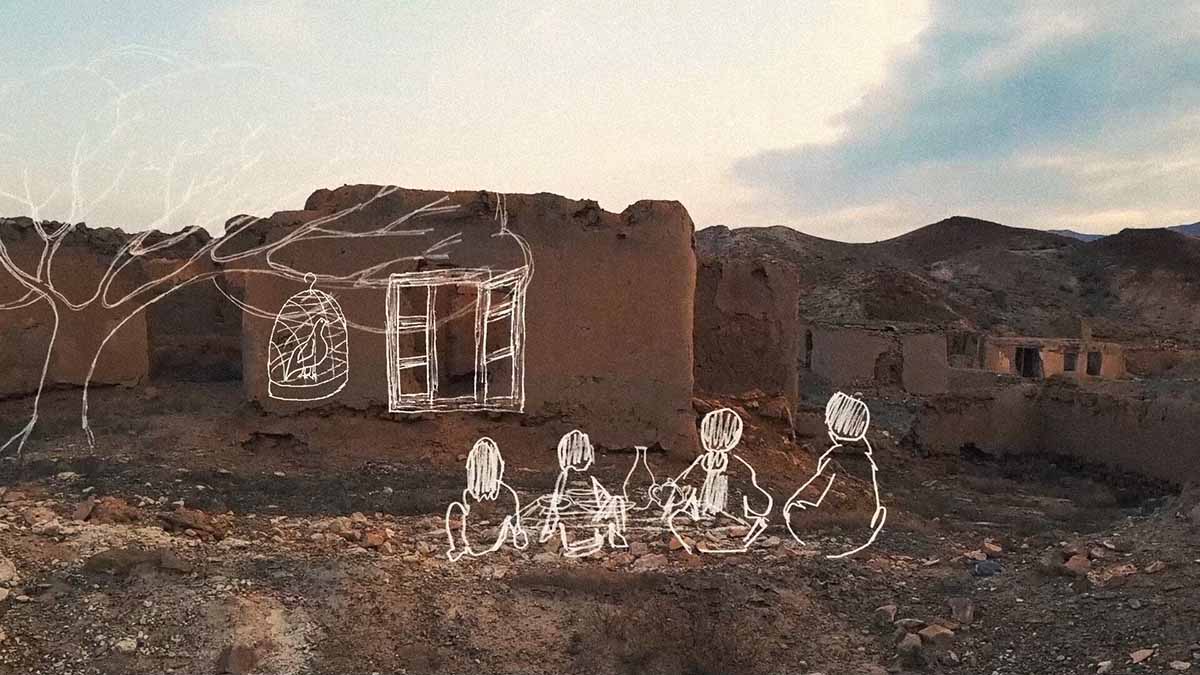
- In 'Voices of the Mountains', the process was structured through a fixed observational framework that minimized narrative intervention.
- 'Because I Am a Girl' developed through a shared textual constraint, where individual voices accumulated without contradiction or resolution.
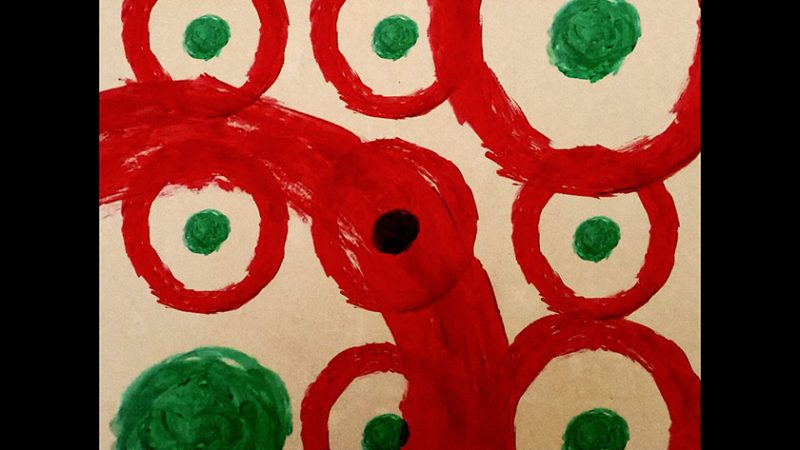
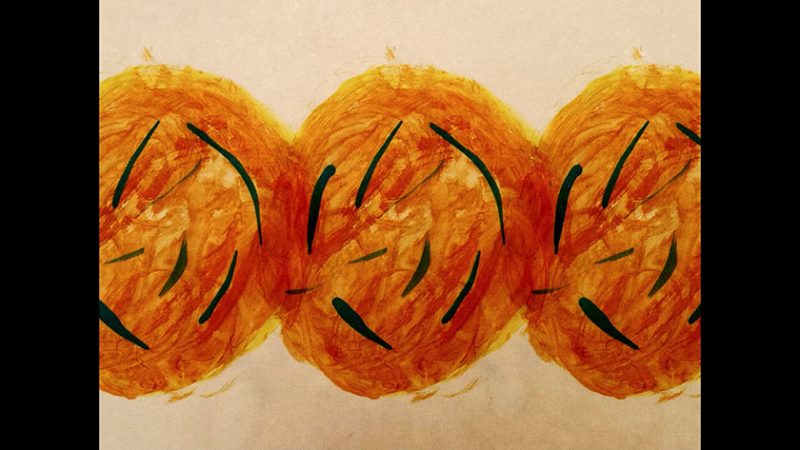
- In 'About Home', a single formal exercise defined the visual field of the film, allowing personal meanings to emerge through variation rather than explanation.
Expectations of Age and Region
Films created in youth-based formats are often interpreted primarily through the age of their authors. Such works are expected to be soft, sincere, or naïve—as if age alone predetermined the emotional register of the film. At the same time, works coming from Central Asia are frequently perceived through a different lens: one that anticipates cultural exoticism, visual otherness, or regional “mystery.”
In practice, what is read as exotic is most often the everyday reality of the participants, while the presumed naïveté tends to arise from external framing rather than from the films themselves. These works do not seek to confirm expectations linked either to age or to geography. They emerge from concrete experience and are shaped through formal decisions.
'About home'
From Workshop to Infrastructure
In contexts where access to independent funding and stable production environments is limited or unstable, such practices become one of the viable forms of artistic production operating outside traditional industrial models.
In this sense, laboratories and collective processes begin to function as an alternative infrastructure. They create conditions in which films can emerge, exist, and circulate as complete artistic works, rather than being reduced to pedagogical outcomes.
Presence as a Result
The method of this practice is therefore not only about how films are made, but also about how artistic presence becomes possible. Collective processes allow young participants to speak not as future filmmakers, but as already existing authors—with their own voices, experiences, and formal decisions.
They enter the contemporary cinematic field not in a mode of training, but as participants in an artistic process—working with form, constraints, and collective thinking.
Circulation and Visibility
Collective animated films produced within this practice initially exist in tension between process and presentation. On one hand, they emerge in a local context—within laboratories and screenings for participants, their parents, and immediate communities. On the other hand, without an encounter with an audience, a film does not fully become a film.
In Central Asia, opportunities for the public exhibition of short works are extremely limited. Short films have little to no theatrical infrastructure: specialized cinemas are largely absent, regular screening programs are rare, and institutional formats often require prior approval by state or expert commissions. In several countries, films must obtain distribution certificates or pass artistic councils, effectively restricting the free circulation of independent works.
Under these conditions, festival screenings become not merely a form of recognition, but an alternative mode of existence for the film. Festival spaces allow these works to move beyond the laboratory and enter into dialogue with audiences—without prior censorship and without the necessity of conforming to institutional expectations.
Importantly, this circulation is possible precisely because the films possess a completed artistic form. Unlike educational videos or workshop exercises, they can be perceived as autonomous works and included within an international festival context. In this way, the festival environment becomes not an external addition but an integral part of the ecosystem through which these films gain visibility and continue to exist.
'About home'
Uneven Conditions
Although the collective method remains consistent, the conditions of its realization differ significantly across Central Asian countries. These differences concern not only resources, but the very possibility of independent artistic production.
In Tajikistan and Uzbekistan, laboratory formats often become almost the only spaces where independent animation can be produced outside state or commercial frameworks. The absence of sustainable funding, limited regional infrastructure, and the necessity of navigating formal approval procedures render individual production particularly vulnerable.
In Uzbekistan, this situation is intensified by strong centralization. Independent animation is rarely produced in regions such as the Fergana Valley or Karakalpakstan. The reasons are systemic: the migration of professionals to the capital, the lack of local artistic communities and institutional platforms, and complex mechanisms regulating permission for public screenings.
The context in Kyrgyzstan differs. Here, more developed festival and educational structures exist, and independent production enjoys a greater degree of autonomy. In this case, laboratory practice is not the sole possibility, but rather coexists alongside other forms of production, entering into dialogue with them.
This practice does not seek to neutralize these differences. On the contrary, it is built in response to specific conditions, accepting unevenness as a working reality. The method adapts to its environment while maintaining its core principles: collectivity, work with constraints, and attention to form.
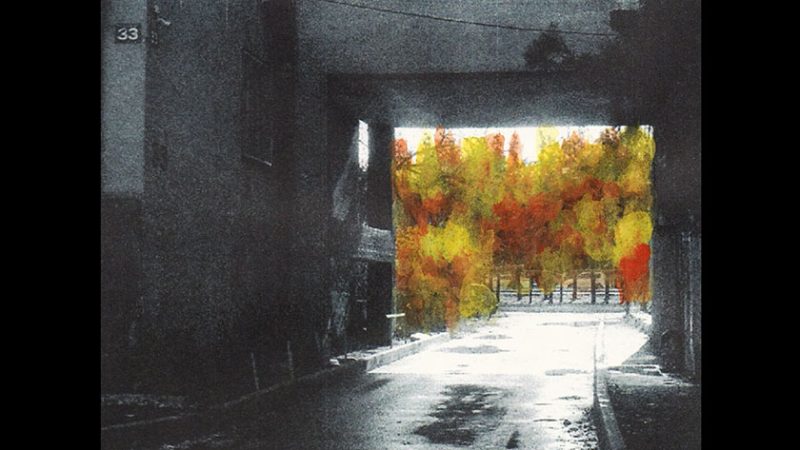
'Because i am a girl'
Authorship and Responsibility
The collective nature of these works inevitably raises questions of authorship and responsibility. Within this practice, a film does not belong to a single voice, nor is it reduced to the position of a curator or mentor. Authorship here is understood as distributed—emerging through shared discussion, shared formal choices, and shared decision-making.
At the same time, collectivity does not imply softening or neutralizing the statement. On the contrary, films created by teenagers often prove unexpectedly precise and direct—not due to intentional radicalism, but because of the straightforwardness of observation. Participants describe their reality without retouching, moralizing, or attempting to “formulate the problem correctly.”
This directness frequently renders such works sensitive within institutional environments. In my practice as program director of the TIAF festival, I have repeatedly encountered situations where films created by teenagers were blocked by artistic councils. Formally, the reasoning was framed in neutral terms: “we cannot speak about this from a large screen.” Yet behind this often lay a mismatch of expectations—educational films were assumed to be a safe format, not one capable of a full-fledged statement.
There exists an implicit assumption that if a film is made by children or teenagers, it will either be naïve or adjusted by a curator toward “appropriate” content. When this does not occur—when a film does not explain, justify, or soften reality—it begins to be perceived as risky. Not because it is provocative, but because it does not fit within familiar pedagogical models.
In this practice, the refusal of moralization and pedagogical control is a principled position. The role of the curator is not to filter or correct the statement, but to create conditions in which collective authorship can exist without losing artistic integrity or responsibility. This entails accepting that films may be uncomfortable precisely because they honestly register the experience of their authors.
In this way, collective animation practice becomes not only a mode of production but also a means of redistributing responsibility for the statement. These films are not produced as safe educational objects, but as complete artistic works existing within complex social and institutional environments—and they demand to be treated not as a “children’s format,” but as part of the contemporary cinematic field.
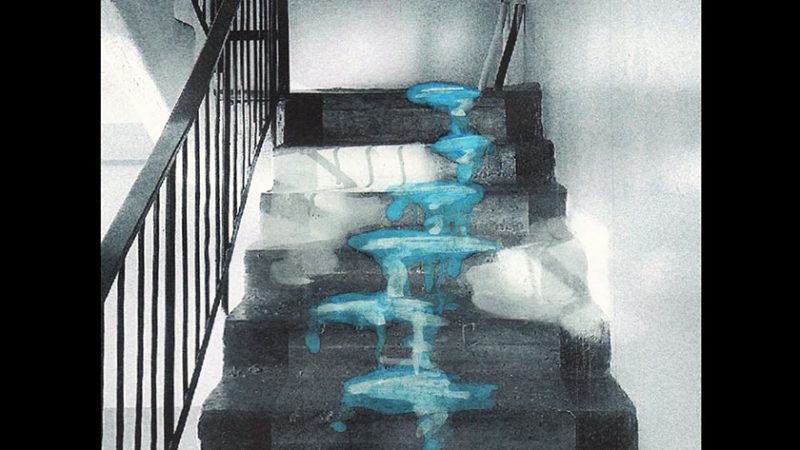
'Because i am a girl'
Selected Animation Works
'Voices of the mountains'
(Laboratory for visual storytelling), (Tajikistan, 2025, Hand-drawn Animation, Live)
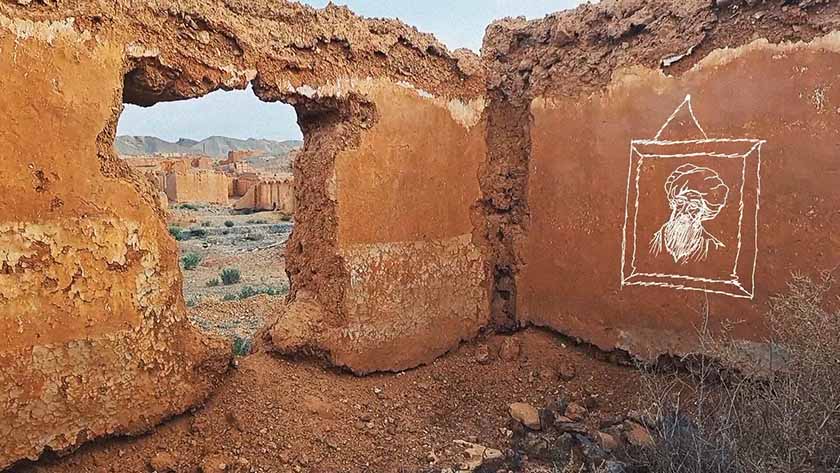
'Voices of the Mountains' is an animated documentary created with young authors from Tajikistan, reflecting on a mountain town affected by mudslides. Through drawings and personal narration, the film explores how natural disasters become part of everyday memory — not as a catastrophe, but as a lived reality. Nature here is not a backdrop, but a fragile archive where human voices, loss, and resilience coexist.
'Because I am a girl'
(Sayazhan Ispolganova, Alisa Tyan, Rosita Keneshova, Fatima Chorobekova, Alina Alybekova, Dariya Murzulukova), (Kyrgyzstan, 2025, Hand-drawn Animation, Printed Video Stills, Rotoscoping)
'Because I Am a Girl' is a short animated documentary created with teenage girls in Kyrgyzstan.
Through personal reflections, the girls speak about the everyday expectations and social roles they grow up with.
The film listens carefully to how these norms are expressed, repeated, and accepted as ordinary parts of life.
'About Home'
(Laboratory for visual storytelling), (Tajikistan, 2025, Hand-drawn Animation, 2D)
In the film, through an associative series of colors and shapes, a whole map of the Sogdian region (North Tajikistan). Through colors and associations, the guys talk about the pros and cons of their cities.
Contributed by: Dante Rustav. Dante Rustav is a filmmaker and animation director working across Central Asia
Read More About:
Related Articles
Vassilis Kroustallis
Get Our Weekly Indie Animation News

Zippy Frames is the premier online animation journal promoting European and Independent Animation since 2011
Zippy Frames
Quick Links