
The Past is the Present is the Future: Notes on Anibar Animation Festival 2025
Olivia Popp
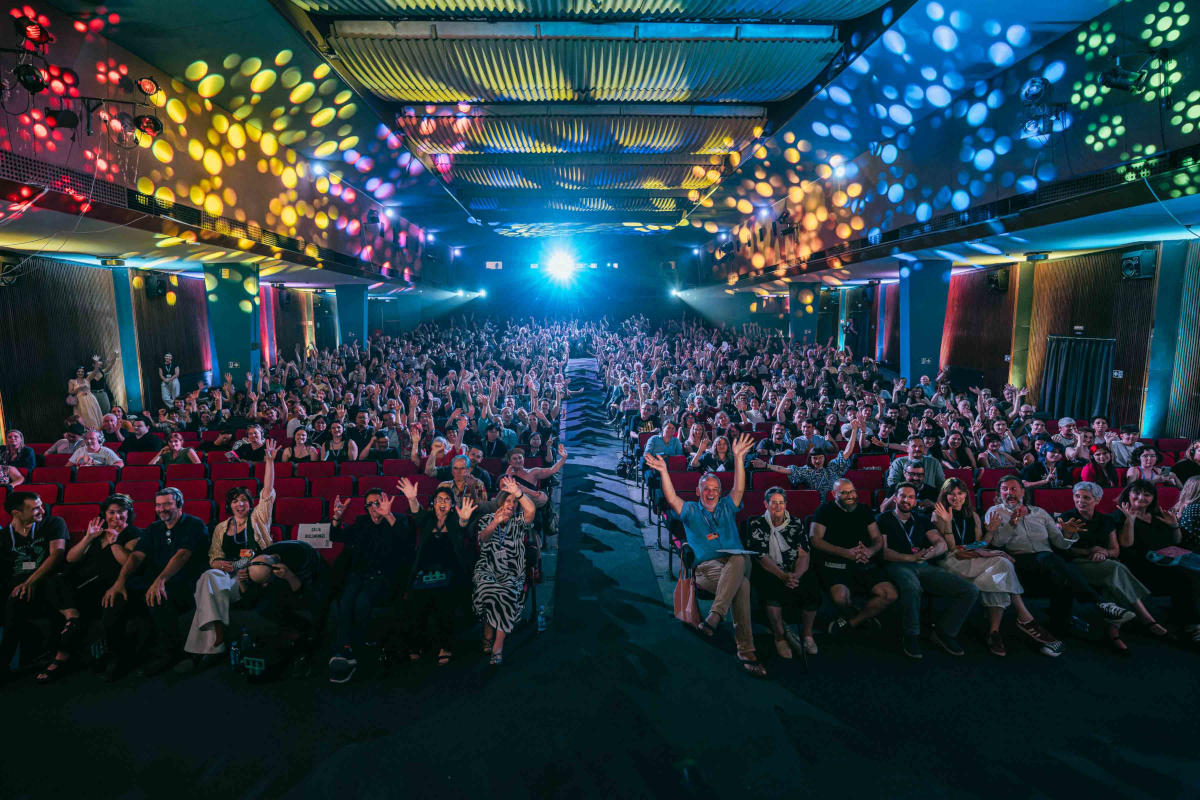
Two steps away from the Accursed Mountains—also known as the Albanian Alps—lies the city of Peja, nestled near the Montenegrin border in Kosovo. In fewer than two days, a visitor can figure out how to navigate the center city oneself, discovering its distinctly warm Balkan feel. If you’re not headed for a trek into the mountains or to the breathtaking river waters below, you’re probably going to the Anibar International Animation Festival, one of Kosovo’s largest cultural events of the year. This year’s 16th edition unspooled from 14-20 July, hosted largely at the Jusuf Gërvalla cinema, renovated by the Italian KFOR and named for the eponymous Kosovo Albanian freedom fighter. There is no question: history is fully embedded in the lifeblood of this festival, where looking forward is a matter of looking back.
With the festival in its adolescent or late-teen years, one could say, the consensus around the festival is that it is still “emerging” and growing while adopting an eclectic, communal identity. However, the collaborative ideals behind its leadership—where its staff must become jacks-of-all-trades to run a smooth festival—and successful all-hands-on-deck approach make it an admirable event. This year's theme, “What’s the Future?”, riffed on the cheeky acronym WTF, with a trailer by Joni Männistö, filmmaker and artistic director of the Turku Animated Film Festival, forewarning climate disaster and ending with an indirect plea for action. Taking this idea to heart, trying to imagine the future during Anibar, positive or negative, again means to gaze back: to trauma, memory, and history of a place like Kosovo.
Understanding Kosovar Animation through “Meet the Filmmakers” Talks
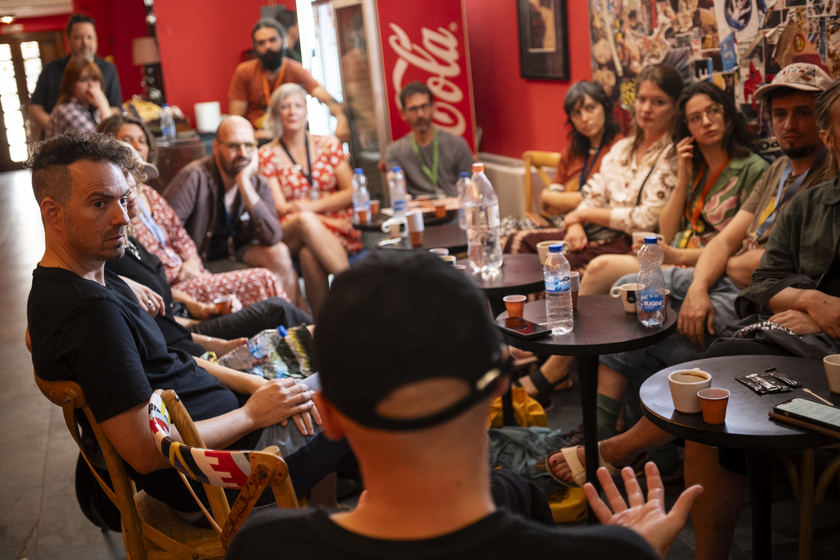
“The past finds a way to sneak in,” said Flaka Kokolli, a young Kosovar animator who presented her work during one of the daily “Meet the Filmmakers” talks at Jusuf Gërvalla cinema over coffee and Kosovo rakia. Kokolli, who is also the director of the Pristina-based Flammorum Animation Studio, also won top prize during Anibar’s Pitch It! competition for her project, I Still Haven’t Cried. Explaining the iterative, repeated appearance of trauma narratives throughout short films from Kosovo, she elaborated: “If you don’t vomit, you can’t eat something else—and I think that's what's happening culturally.”
The landscape of Kosovar film has been heavily tainted by geopolitical regimes—when filmmakers can’t leave, projects can’t leave, she illustrated—as visa-free travel in the EU for Kosovo citizens only began in January 2024. But restrictions come in all shapes and sizes, and from all sides. With her poignant short work, 17 O’Clock, commissioned by a German NGO, which depicts a family surviving amidst war, she says she fought back when there was a demand to remove instances involving watermelons in her film due to their association with Palestine. The irony of commissioning a work about everyday resistance while seeking to suppress even accidental symbols felt so strange, she shared.
Kokolli also explored her views on how the local industry is changing. Previously, many stories incorporating history sought to explore “battle as a process” surrounding the Kosovo War: “When people feel like there’s no justice, the narratives come forth.” Now, she says, there is a shift intended to romanticize the Balkans and steer the stories away from these stereotypical heroic stories, which were often very male-dominated. This sentiment is tied closely to another of Anibar’s promising programs, including the first iteration of the French-Kosovar industry initiative, Genesis. When the awards for the platform were announced, an electric feeling filled the room among young artists, where aspirations felt genuinely supported, and peers cheered on their peers. Looking around, one can see that these moments are among the most important ones at festivals like Anibar, as without the future generation of animators, there will be no future.
Small Festivals, the Balkan Way
Anibar also highlighted the strength of Balkan and CEE Animation more broadly, where the idea of fostering a particular community is appealing to filmmakers. Zagreb-based Venezuelan animator Lucía Aimara Borjas, who presented her film Sailboat at the End of the Street in the Young Audience Competition, cited the Croatian capital as an incredible site for indie animation; she described its strong community as the pull for her to stay in the country beyond her studies, making it her home. The festival’s Balkan Competition also played host to a small but diverse suite of films, where the support network among animators and their collaborators is replenished at an event like Anibar.
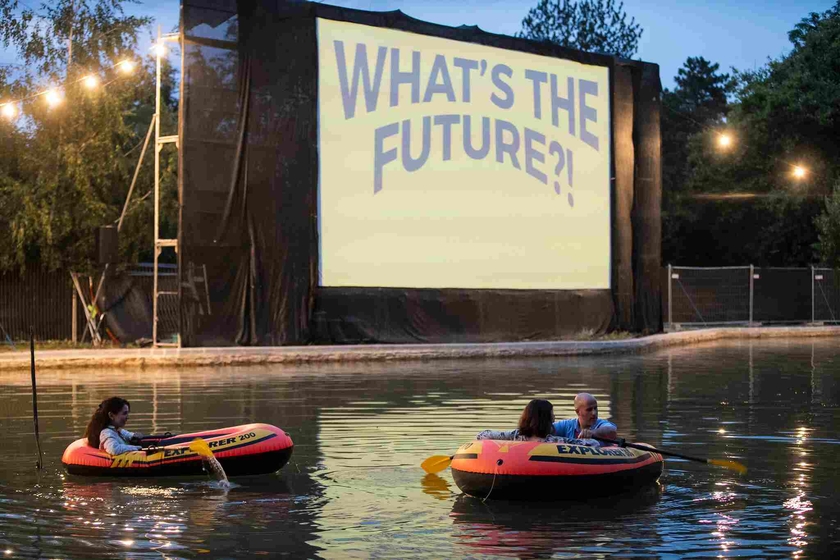
The festival is also known for its famous open-air cinemas, Lake and Cube, situated within Peja’s Karagaç Park; here, I watched both blocks of the eclectic Music Video Competition. One screening at the Cube cinema, situated next to the road, was "interrupted" by a set of loud fireworks shot off by a neighbor—but of course, the show must go on. At Lake, where a small pond foregrounds the screen and attendees can rent inflatable boats to paddle around in during the showing, bats flitted across the projection, casting fleeting shadows on the screen. Both instances were a loving reminder of cinema as material rather than as simply a sort of pure, untouched experience of complete silence and perfection (watching an analog film on 35mm, for instance, is an easy encounter with this phenomenon at one’s local independent cinema). There may be interruptions between the projector and the product that we are watching, but this process is just one in a long line of processes bringing a work to the silver screen. In these moments, we are encouraged or even forced to think about film beyond simply being good or bad and into the heart of spectating beyond pure judgment.
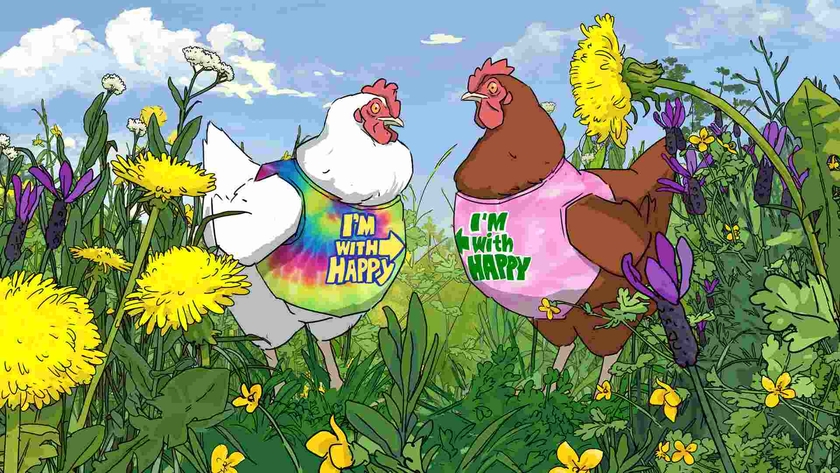
Festivals that are bound to a particular place have an intense, growing charm. These are often smaller festivals where filmmaker and audience aren’t artificially separated to create distance, where the boundary between audience and filmmaker is porous, and where engagement with the works themselves is part of the experience of the piece rather than an afterthought. Taking in works in context and in conversation with everything else should be a vital part of the experience for everyone who wishes it to be; Anibar is among these festivals that make this possible. You’re likely to see an award-winning film from the festival circuit like Matúš Vizár’s satirical, ecocritical short Free the Chickens, but you should be just as ready to step into a thoughtful discussion with a filmmaker whose work you’re only learning about now. And, as a bonus, a film screening is ten times more satisfying after you’ve had an ice-cold Peja beer, a plate of qevapa, and some spicy sausage next to the rushing river.
contributed by: Olivia Popp
Want to read more free articles like this?

Keep this professional animation journalism effort relevant and updated. Become our patron

Read More About:
Related Articles
Vassilis Kroustallis
FIND THE RIGHT FESTIVAL
Zippy Frames is the premier online animation journal promoting European and Independent Animation animation since 2011
Zippy Frames
Quick Links