
What About the Oscars? Panagiotis Rappas talks to Zippy Frames
When this time of the season arrives, there are always trials and tribulations. The Academy Awards are THE institution to be praised, angered about, or feel it doesn't really represent people in the field - take your own pick.
In animation, both the introduction of a Best Animation Feature category in 2001 (first recipient: Shrek for Dreamworks Animation), and the sheer bulk of fine and great short animation films have done much to heat up debates about the Oscars.
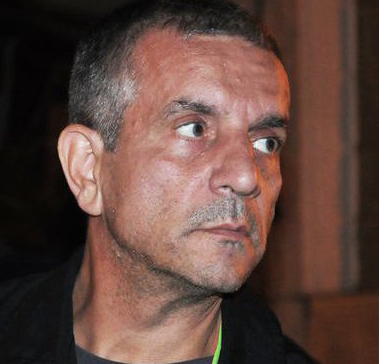 We tried to shed some light on this by talking to one of the voting members of the Academy of Pictures Arts and Sciences, Panagiotis Rappas.
The Greek animation artist and director boasts Steven Spielberg, Igor Kovalyov collaborations and an IMDB a resumé of American Tail II: An American Tail: Flevel Goes West (1991) Rugrats in Paris: The Movie (2000), Rugrats Go Wild (2003), participations, including work at the Oscar-nominated The Periwig Maker.
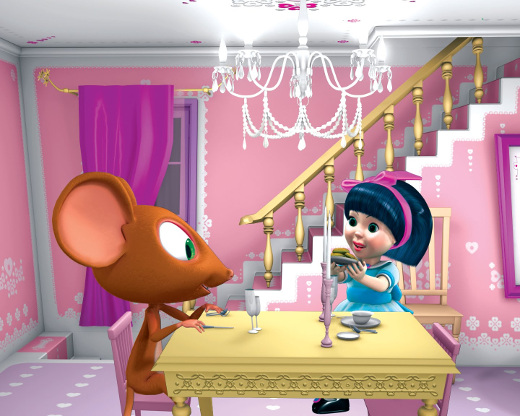
Moving to independent productions in the 2000s, he directed and produced the sensitive and inventive children 3D computer animations The Little Mouse that wanted to touch a star (co-directed with Angelos Rouvas, Time Lapse Pictures / ERT SA, 2007), The Boy and the tree (Time Lapse pictures/ ERT SA, 2009), and the meditative parable The Fountain of Youth.
Rappas agreed to talk to Zippy Frames (in all seriousness) about the Oscar frenzy.
ZF: When did you join the Academy of Motion Picture Arts and Sciences, and in which branch? Were you excited about it, and are you still?
PR: I was elected a Lifelong member of the Academy in 2000 (the turn of the century and the Millennium), following the proposal of two older members, and after the Board of Directors of the Short Film and Animation Branch voted unanimously in favor of it. Yes, it was very exciting, because the recommendation as well as the election were a recognition of the body of work for film and animation I had done until then. 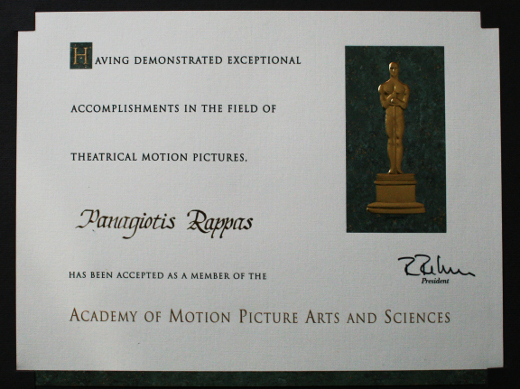
It was a nice surprise, and it is definitely a great honor when your colleagues, namely the "experts" for remembering Socrates, recognize the effort that you have made in the field and consider your work important for the field itself. I still see it as an honor but as a responsibility as well toward the art of animation to which I devoted my life, but also toward my colleagues and their efforts in the field. It is not an easy role to play the judge when you love both your medium and justice.
ZF: Did the Academy always have the system of long lists and qualifying festivals (then shorter lists before finally landing in the top 5 nominees? And how do you vote in the preliminary stage? Do you need to go to a common screening at L.A. or vote online? You need to review films as excellent, good, or fair, as the Academy regulations state?
PR: The changes are small in this process over the years. The Academy sends invitations to members asking if they want and have the time to participate in the selection process of films that will be nominated. The screenings are held in movie theaters in the Academy's headquarters in Los Angeles, and selected ones in New York and London. Because the number of films nowadays is huge, there are different groups who choose the movies at different stages until you reach the selection of five nominations. That is the first round: after that, all members are voting for the given nominees of each category.
ZF: I've read that you don't actually need to view the complete film in those screenings, but after two or three minutes, you could bypass a certain film, if you didn't like it. Is this an urban myth or that actually happened?
PR: Please don't forget, the members who participate in juries at this stage are professionals with many years of work in the field, and they know very well how difficult it is to make a movie, particularly as an independent production. If this has happened sometimes, though I doubt it, then the film was actually in the wrong place at the wrong time.
Usually, movies that arrive at the Academy have already gone through various filters, and I don't think there are among them some that are so bad that they force the jury to bypass them. Generally, there are many urban myths surrounding the operation of the Academy that are not valid at all.
ZF: Great animation names being awarded in the past (Frédéric Back, Zbigniew Rybczynski, Aleksandr Petrov, Richard Williams, Dudok de Wit), but in the last years, you don't see many "auteurish" or even "adult" films and, of course there are two wins for major studios like Disney (Paperman, The Feast). Do you think that's a sign of the times or the Academy members have become more conservative? Or perhaps studio shorts are now themselves semi-independent?
PR: The evolution of digital technology over the past two decades has brought great changes in the field of cinema. Besides, the media's relationship with technology has always been very crucial. A consequence of this reality is the huge increase in production, since everyone has access to this new digital technology. A simple example: twenty years ago, a big Festival, received usually few dozens of movies to choose, but today it receives a few thousand.
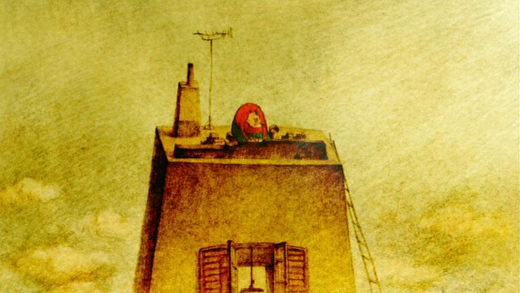
La maison en petits cubes, Kunio Kato. Academy Award win for Best Animation Short (2007)
I think it is wrong decision by the big studios -while they do very well to give to artists that belong in their crew an opportunity to complete short films and the whole mechanism of the studio to support them, within their efforts to research and develop new software for visuals- they put afterwards the films to compete with small independent productions. Productions that rely solely on the love for the genre of a solitary Horseman, who invests mainly his own time and means to prepare a film.
So, when the movies arrive to compete at the Academy, the movies that have been made by and within the big studios technically outweigh at all levels, and a member of the Academy has to take it into account.The Paperman, since you mention it, is a very good example: A beautiful story and a whole scientific research by DISNEY on the question of how someone can reach the charm of handmade animation through digital technology -an obsession for all of us who have started animating with pencil on paper, married in a flawless result.
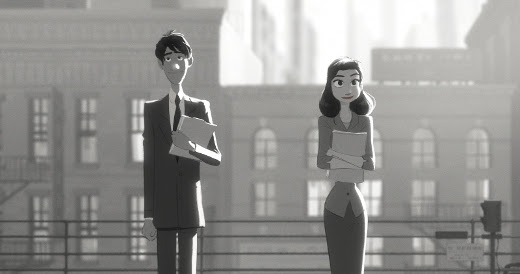
Paperman, John Kahrs, Best Animated Short at the 85th Academy Awards (2013)
What do you want a member of the Academy to do when asked to compare and choose? The problem, therefore, lies in the studios. They should reconsider this tactic, or the Academy should create a special category for "shorts by large Studios".
ZF: A related question: a big change, I guess, is that all members of the Academy can now vote for the 5 animation nominees (but they need to actually watch them as well) . Do you think that has resulted in a more "mainstream" winner in the short animation category?
PR: This was always like that. For the nominees of every category are voting all the members of the Academy. However, the Academy kindly requests that they refrain from voting for a category if they are not familiar with all the movies in it. Besides the constant friction with the art of filmmaking, the research done in the preparation stage of a film inevitably brings someone working on it in touch with art in general.
Everyone that I know personally of the members of the Academy has the knowledge and the awareness. But they are invited to compare things that others have chosen to compare. What has to judge a member of the jury is whether, in a movie that has been accepted to compete, the marriage between the art and the technique of animation or filmmaking works well.
ZF: People (and independent animators) complain that the Oscars in animation is a major studio affair (Disney/Pixar, etc.) and, in general, Oscar voters (apart from professionals) do not really care about animation. Also, a recent suggestion (Scot Feinberg at The Hollywood Reporter) proposed that short film categories (animation and live-action) should not be televised because the public does not care about shorts. What do you think?
PR: I believe it's a huge mistake to approach art, in General, and the art of cinema, in particular, as if it were a sports event. You don't have athletes here who run 100 meters, and the one who cuts the thread is arguably the first. Although there as well, they always follow endless discussions ...
And, of course, the judgment of a jury can only be subjective. Some people are invited to the jury to judge, and, of course, each one of them has their own personality, which affects their judgment. There are other important festivals with a different approach and priorities in their judgments. Festivals where narration and narrative films are not of such importance and priority is given to the artistic approach and the creators' vision.
Years ago, I received a letter from the artistic director of the Hiroshima International Animation Festival, who had seen the film The little mouse who wanted to touch a star, and had been frustrated because the film had been rejected by the selection committee due to the fact that was narration orientated -and it was. He wanted to have the movie screened in the festival, and finally he did with all solemnity, but out of competition.
The Little Mouse that Wanted to Touch a Star
There are both right views and this is the way it is. In our case, the approach of the Academy, as it is mentioned in the title ACADEMY OF MOTION PICTURE ARTS AND SCIENCES, is not only to be paid attention to in the art direction or the storyline of the movie, but also to its technical innovation.
The Oscars voters are all filmmaking professionals, and I do believe the vast majority of them adore animation. I have had the experience of working with quite a few famous actors after delivering the voice for a character; they kept visiting the studio, very excited to see the process of bringing the cartoon characters to life.
Now, about the suggestion expressed by the Scot Feinberg I would like to remind you that extreme approaches were always part of the game. I would recommend to him that he consider with greater concentration the factors that contribute to an individual's aesthetics, the processes by which they are formed, and the role of pluralism in the stimuli that someone must process and assimilate to achieve it.
In the past, Filippo Tommaso Marinetti suggested, in order to get Futurism as a dominant artistic movement, that we should demolish the Parthenon. Now, so many years afterwards, and with the knowledge of the fortune his big Idol Benito Mussolini and his theories have had, I doubt if he could advocate the same thing again.
ZF: I guess you can now watch the films online. What's your view compared to a cinema screening? Do you think that this does justice to the films, or maybe is the only way to secure a broader visibility for animation in the Academy?
PR: We are in a transitional period, and the way we see movies is constantly changing along with the developments in technology. Now, someone can watch movies from their cell phone as well. In any case, I find it fairer. While the big studios send their movies on a DVD to all members of the Academy to make sure they have the opportunity to watch them, an independent producer or creator cannot do it because they simply cannot afford the financial cost.
ZF: European animation features now enter the Oscar nominees more often. I counted 11 European films (including Triplets of Belleville, Persepolis, A Cat in Paris) since 2001, when the animation feature award was inaugurated -but none of them won. Do you think there is a future and more visibility for European feature animation?
PR: The evolution of technology has given us this possibility. You see how important technology is for filmmaking? Twenty years ago, the yearly production of feature-length animated films could be counted on one hand. In Europe, one or two per year, but most of the time, none. Now it's a few dozen.
Again, in Europe, filmmaking depends on one country's policies and EU policies in Brussels. Therefore, it will be better if this question gets answered by the responsible politicians. The fact that the three films you mentioned are French and France's policy for cinema is well-known is proof of the theorem.
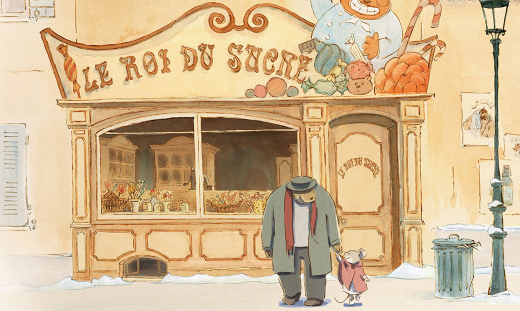
Ernest & Celestine, Benjamin Renner, Stéphane Aubier, Vincent Patar. Academy Award nomination for Best Animated Feature (2014)
ZF: We don't want to tell you how to vote, but what do you think in general about this year's long list selection in short animation and features? Can you draw any general characteristics?
PR: Many good movies, and therefore the choice is difficult.
Read More About:
Related Articles