Animation: Awards & Prizes
Cartoon d'Or: A European Award for Animated Shorts, 2010–2017 Coverage
ZF Team
The Cartoon d'Or was established by CARTOON in 1991 as a pan-European prize for animated short films. Its purpose was both to strengthen European animation and to give short animation greater recognition at a time when it had comparatively little visibility within Europe's major general film awards and festivals. Unlike a conventional open competition, the Cartoon d'Or operated through a network of partner animation festivals: films first had to win an important prize at one of those festivals to become eligible. A professional jury then selected a small group of finalists, which were presented during Cartoon Forum, with the winner receiving a €10,000 grant supported by Creative Europe MEDIA. Over its history, recipients included such significant filmmakers as Nick Park, Mark Baker, Michaël Dudok de Wit, Sylvain Chomet, Joanna Quinn and Benjamin Renner.
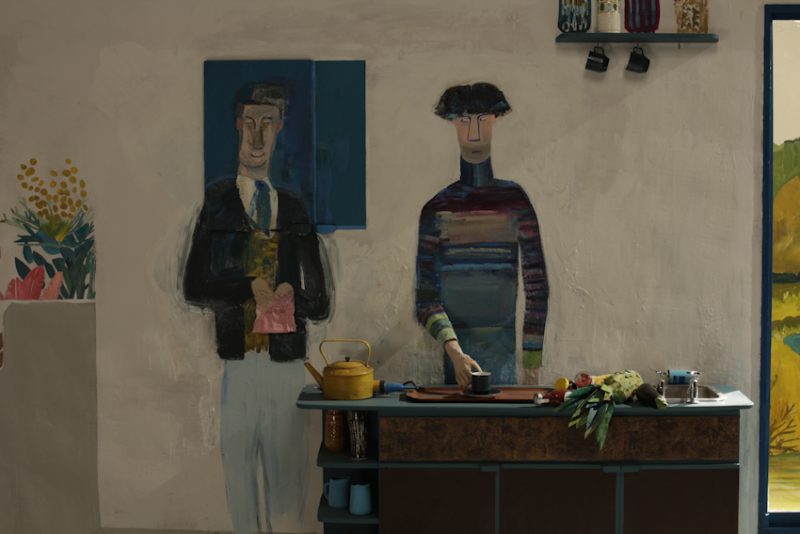
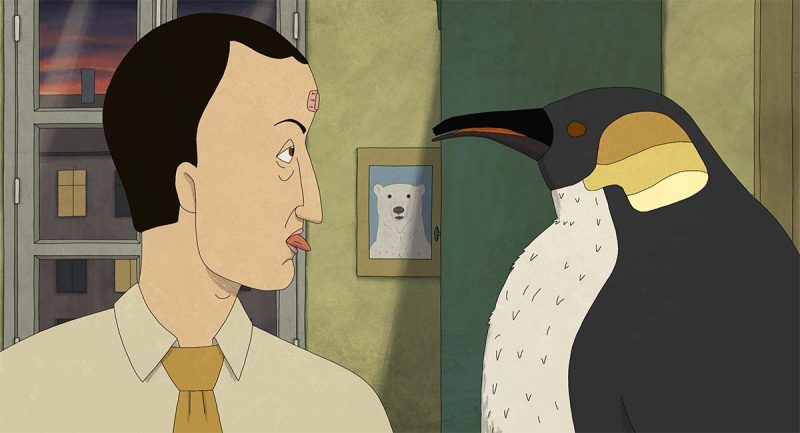
2010 brought a notable victory for Estonian animation. Kaspar Jancis won the Cartoon d'Or with 'Krokodill' ('Crocodile'), an eccentric story about a former opera singer reduced to performing in a crocodile costume for children. This was a surprise victory and the Cartoon d'Or as one of Europe's highest distinctions for animation. The win also demonstrated the award's capacity to bring comparatively small national animation industries into a genuinely European arena.
In 2011, the award went to Johannes Weiland and Uwe Heidschötter for 'The Little Boy and the Beast', a story that reverses the conventional parent-child relationship as a boy has to cope with his mother's transformation following his parents' separation. The other finalists included Verena Fels's 'Mobile', Damian Nenow's 'Paths of Hate', André Bergs's 'Pivot', David O'Reilly's 'The External World' and Jakob Schuh and Max Lang's 'The Gruffalo'. The ceremony took place during Cartoon Forum Polska in Sopot, illustrating how closely the award remained integrated with CARTOON's professional activities.
2012 produced one of the period's best-known Cartoon d'Or winners: Emma De Swaef and Marc James Roels's stop-motion film 'Oh Willy...'. The film, about a man returning to the naturist community of his childhood after his mother's death, had already accumulated festival recognition before reaching the Cartoon d'Or. It was selected from five finalists, including Franck Dion's 'Edmond Was a Donkey', Tomer Eshed's 'Flamingo Pride', Michaela Pavlátová's 'Tram' and Kyra Buschor and Cynthia Collins's 'Zing'. Directors Alain Gagnol, Esben Toft Jacobsen and Giuseppe Laganà formed the jury, and the award was presented at Cartoon Forum in Toulouse.
In 2013, the finalists demonstrated the growing strength and stylistic diversity of European short animation. They were Rémi Vandenitte's 'Betty's Blues', Tim Reckart's 'Head Over Heels', Ainslie Henderson's 'I Am Tom Moody', Regina Pessoa's 'Kali the Little Vampire', Rocío Álvarez's 'Off the Track' and Augusto Zanovello's 'Women's Letters'. Producer Didier Brunner and directors Anca Damian and Enrique Gato formed the jury. The Cartoon d'Or ultimately went to Tim Reckart and producer Fodhla Cronin O'Reilly for 'Head Over Heels', the stop-motion story of a married couple whose estrangement is visualized literally: one lives on the floor and the other on the ceiling.
The 2014 finalists were similarly prominent: Éric Montchaud's 'Anatole's Little Saucepan', Špela Čadež's 'Boles', Amélie Harrault's 'Kiki of Montparnasse', Laurent Witz and Alexandre Espigares's 'Mr Hublot', and Stéphane Aubier and Vincent Patar's 'The Christmas Log'. Four of the five were French productions or co-productions, already indicating the strong French presence that would remain visible in later editions. The jury consisted of producer Eric Goossens, director-producer Tony Loeser and director Benjamin Renner. The eventual winner was 'The Christmas Log'.
By 2015, the selection process drew on an extensive European festival network. The jury considered 31 award-winning films before choosing six finalists: 'A Single Life', 'Autumn Leaves', 'Brothers in Arms', 'Coda', 'I Can't Wait' and 'The Bigger Picture'. The jury comprised Philippe Delarue, Jan Bultheel and Cartoon Saloon producer Paul Young. Daisy Jacobs's 'The Bigger Picture' won the Cartoon d'Or, further confirming the award's close ties to the European festival circuit: eligibility itself reflected prior recognition elsewhere.
The final edition took place in 2016. From 23 eligible award-winning shorts, the jury—producer Clément Calvet and directors Mark Burton and Alessandro Rak—selected 'Alike', 'Machine', 'Peripheria', 'Under Your Fingers' and 'Yùl and the Snake'. Three of the five finalists were French, a particularly strong representation but also showcasing the lack of broader geographical and cultural European participation. Gabriel Harel's 'Yùl and the Snake' ultimately became the final Cartoon d'Or winner.
2017 marked the end of the Cartoon d'Or. CARTOON discontinued the prize after establishing the European Animation Awards (EAA) and its new Emile Awards. The EAA included a Best European Animated Short Film category, creating substantial overlap with the Cartoon d'Or. CARTOON director Marc Vandeweyer argued that maintaining two separate European prizes for essentially the same field made little sense, and CARTOON instead supported the new European Animation Awards, whose inaugural ceremony took place in Lille in December 2017.
Want to read more free articles like this?

Keep this professional animation journalism effort relevant and updated. Become our patron

Read More About:
Related Articles
Zippy Frames is the premier online animation journal promoting European and Independent Animation animation since 2011
Zippy Frames
Quick Links