
Shorts
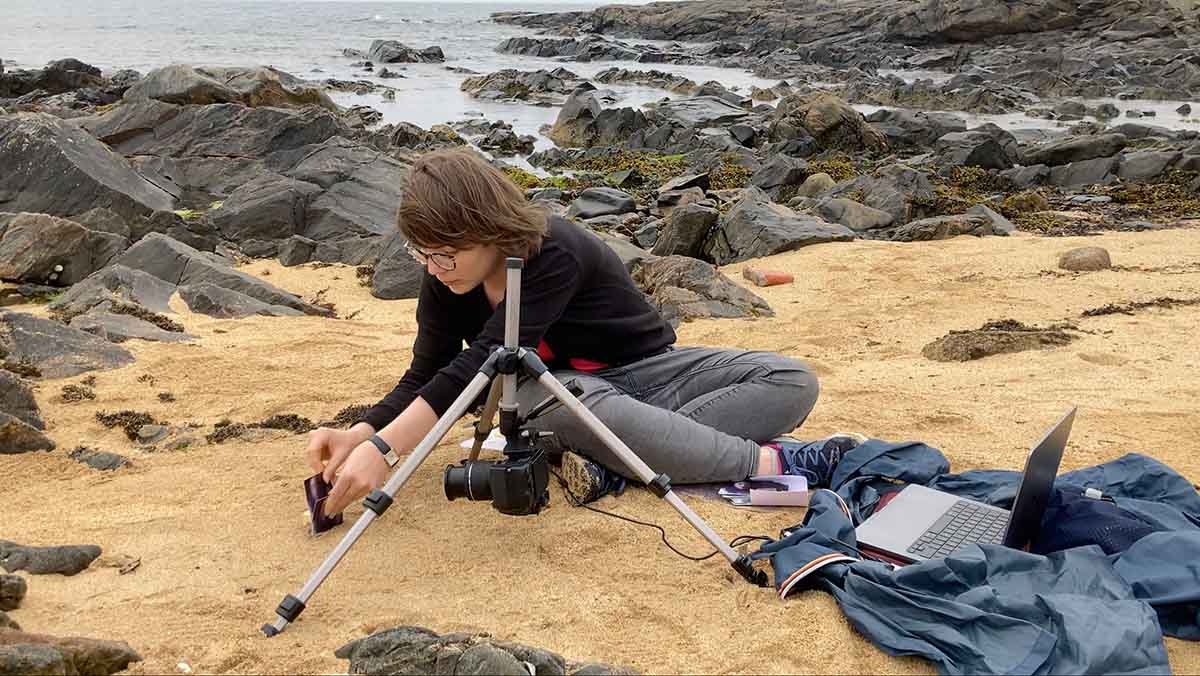


'1976: Search for Life' by Tess Martin
Amanda Barbour
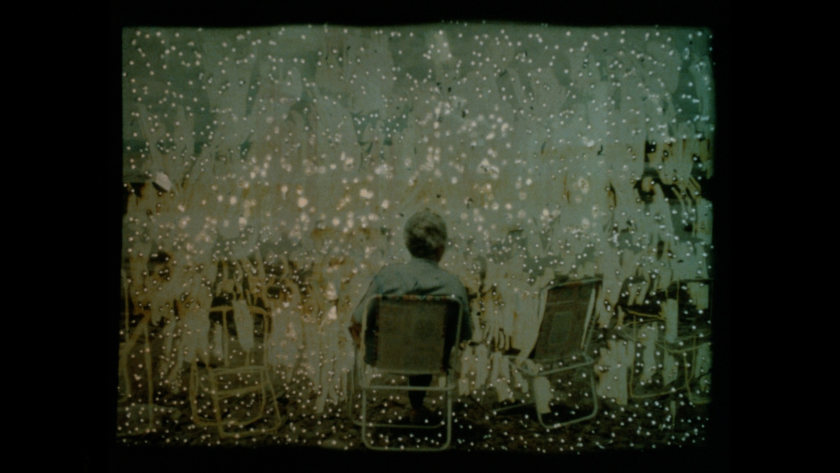
After premiering in the International Competition at DOK Leipzig, Tess Martin’s ‘1976: Search for Life’ is now available to watch online. It’s an experimental documentary about our relationship to the past, present, and future. As a new father brings his baby to his mother's hometown, the NASA Viking mission looks for life on Mars. Martin’s replacement animation technique returns Super 8 footage to its shooting location, decades later, then reshoots it with a digital camera. This creates a dynamic where time unfolds at different speeds, within and beyond the celluloid image. Recontextualization creates new meaning. Martin reveals how understanding your heritage can feel like an extraterrestrial pursuit: difficult, possible, outlandish, but ultimately, worth trying.
ZF: ‘1976: Search for Life’ is both an installation and a short film. Why was it important to tell this story in two media? How does the experience change for your audiences?
TM: This was the first project where I had an installation with a soundtrack on portable headphones worn by the visitor, parallel to the short film. Listening through headphones is very intimate. I wanted this intimate connection, since the narration largely consists of me reading my father’s journal. Portable headphones mean the visitor will be listening to the soundtrack as they enter, making the room (a fake Mars set with a space ship-like television cabinet) more immersive. This approach makes the installation a linear experience, since the visitor presses play on the audio player, and (presumably) listens to it from beginning to end. However, because the video on the television is looped, there is an element of chance that determines which part the viewer will see as they listen, making each person’s experience completely unique.
In the short-film version, this element of chance is replaced by an edit in which shots are repeated rhythmically (with additional shots of the television on Mars). As the narration progresses, we learn information that re-contextualizes the visuals we have been watching, making us want to see them again.
Both versions play with the concept of time. Journeys and experiences overlap, but in their own, slightly different ways.
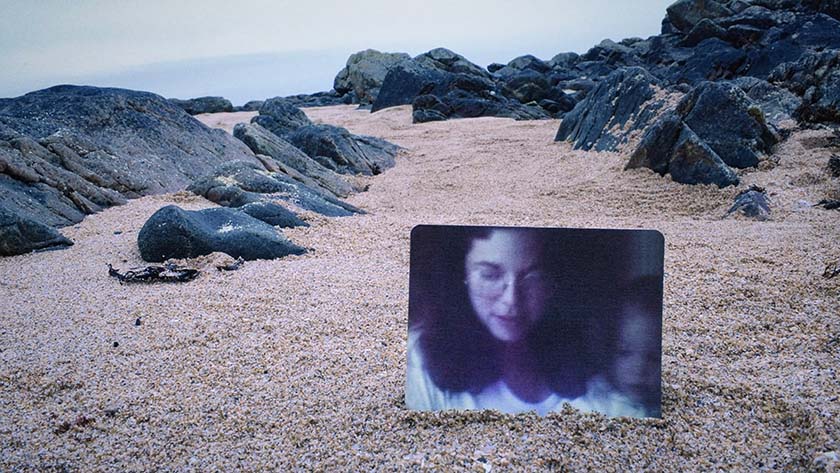
1976: Search for Life
ZF: Could you elaborate on the conceptual potential of hand-made animation and the narrative potential of site-specific pieces?
TM: To me, hand-made animation is inherently conceptual. As soon as you are making a film where audiences can see how it was made (paint-on-glass, charcoal drawings, etc.), you cannot divorce the material and technical choices from the meaning of the project. At least, I cannot. This is what attracted me to the work of Yuri Norstein, Caroline Leaf, and William Kentridge. Their choices for how the films were created had meaning. It added a specific atmosphere, emotion, and visceral response that would not be the same had the films been made a different way.
This is what I mean by pushing the conceptual potential of animation. Lately, I have been stripping it down even further. Not focusing as much on what is being animated, but on the frame-by-frame nature of it to begin with. How are we manipulating time? This is at the heart of the replacement animation technique used in ‘1976: Search for Life’.
In site-specific work, directors craft the narrative of the visitor’s experience: the time they spend looking at it, or are inside it. You are designing the viewer’s experience. Unavoidably, this is time-based. In this sense, there is a lot of overlap between animation and installations: they are both crafting time.
ZF: Your use of replacement animation foregrounds its own artifice. We see your hands holding Super 8 stills that are then re-photographed digitally, images inserted onto a television, and shots of you making the film within the film. What prompted you to break the fourth wall in this way?
TM: To me, the method of creation is important to how I should interpret a work. In this particular project, it was important that the viewer sense me, the artist. To sense the fact that I am doing these actions. I am retracing my father’s trip. I am recreating the NASA mission to Mars. I am reading my father’s journal because the project is ultimately about my trying to connect with this moment in my father’s life. The relationship between me and the topic is central, unavoidable. Showing my hand holding the pictures and briefly showing myself making the film, underlines this.
The art I most enjoy (from the films of Tarkovsky, to the performative actions of Sophie Calle, to my favorite animation, 'Tale of Tales') is art where the fourth wall is, if not broken, then cracked. It leaves a portal through which I can walk, if I wish, at my own pace.
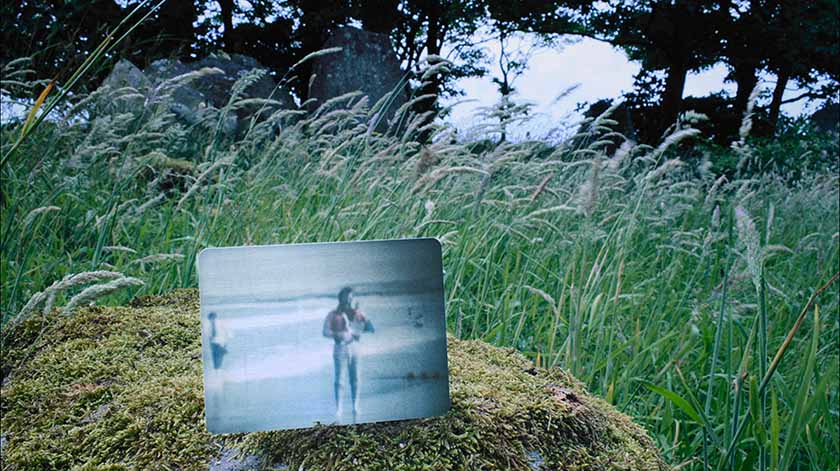
1976: Search for Life
ZF: Time is encoded onto your film's materiality in different ways. The old television, the Super 8 footage, the digital camera, the archival footage from NASA, and the passage of time made visible through on-location shooting. Are the materials you use telling the story, or in dialogue with your story? Are they conveying the story, or actively shaping its meaning?
TM: You are right that time is important in this project. It is an attempt at time travel, in a way, like all memories. If I understand your question correctly, you are right that time is ‘the material’ through which the story is told. The dissonance between the time passing inside the photographs and the environment around them has meaning. The choice of the different footage from different times, placed in today’s time, has meaning. The time it takes for me to read my father’s journal entries, thereby conveying a sense of the length and importance of this trip, has meaning.
But are the materials conveying rather than actively shaping the meaning of the story? For me, those two things are difficult to separate. I think the materials one uses always actively shape the meaning of the story being told – how could they not? Every material has its own history, connotations, and qualities. Every material is a choice.
ZF: As the Viking mission looks for life on Mars, the family brings new life (a baby) to the grandmother's hometown. “Science fiction” is an oxymoron because it implies fact and fabulation at the same time. Do you think our relationship to our heritage operates in a similar way?
TM: Yes. Everyone has a different experience of heritage, but by definition, it is something that is passed down. In that process, it is inevitably changed: by time, by memory, by the way the world has changed when it is time to receive it. What we inherit is never the same as what our elders experienced. The act of connecting with heritage, of traveling to one’s ancestral homeland, of looking up the address where your grandmother was born, of learning how exactly fishermen fished back then in that place, is an act of imagination – imagining what it was like. It gets us part of the way there, but only so far.
Just like the Viking mission, we go looking for meaning in these places, hoping to learn about ourselves. However, we rarely find everything that we were looking for. 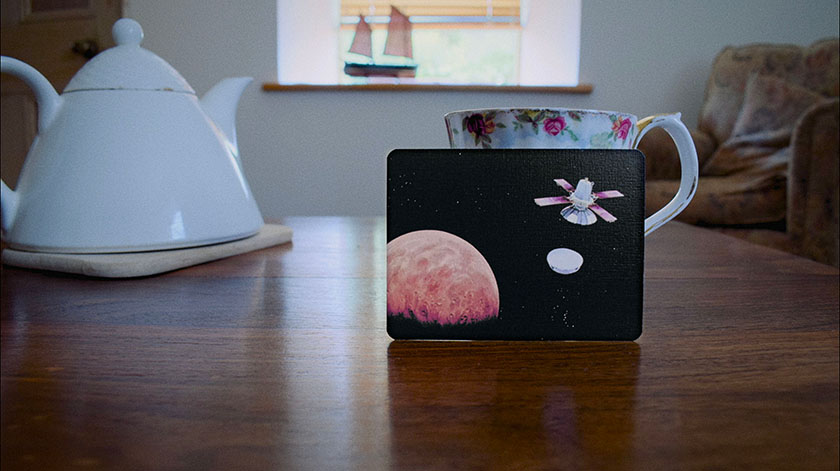
1976: Search for Life
ZF: This film is very much anchored in the past and in dialogue with the present. What implications does this have for the future?
TM: This film used the summer of 1976 as a sort of wormhole to today, so I understand why you would describe it as being anchored in the past and in dialogue with the present. But the NASA mission, as well as my father’s new parenthood, includes an act of imagination. A vision for the future, like the attempt to connect with our past, is a gap that we try to bridge but fail to do completely. We can imagine our future, but rarely do things work out the way we imagined. The future is present in the film. Just like the past, it is contained in the present.
The film resists the idea of linear time. Instead, it collapses time periods, the imaginings, the journeys, together. It is all happening at once, now.
The future will always be present, shaped by how we revisit and reinterpret the past.
It’s been fifty years since the events of the film. The baby now has her own teenage children, and my parents are nearing their 80s. Time keeps widening the distance between us and the past, but it never diminishes our urge to try to bridge it.
Watch '1976'
About Tess Martin:
Tess Martin is a Rotterdam-based film and visual artist working across animation, installation, and expanded cinema. Her practice explores how time, memory, and place can be revealed through handcrafted animations and site-specific works. Raised across shifting cultural contexts, her work reflects an ongoing interest in how belonging and identity are formed through perception, relation, and memory. Many of her projects exist simultaneously as films and installations, often incorporating sculptural elements and soundtracks to create intimate time-based experiences. Her work has been presented internationally in both film and exhibition contexts, including festivals, museums, and artist residencies across Europe, North America, and Asia.
Contributed by: Amanda Barbour
Want to read more free articles like this?
Keep this professional animation journalism effort relevant and updated. Become our patron
Read More About:
Related Articles

Zippy Frames is the premier online animation journal promoting European and Independent Animation animation since 2011
Zippy Frames
Quick Links