
Shorts 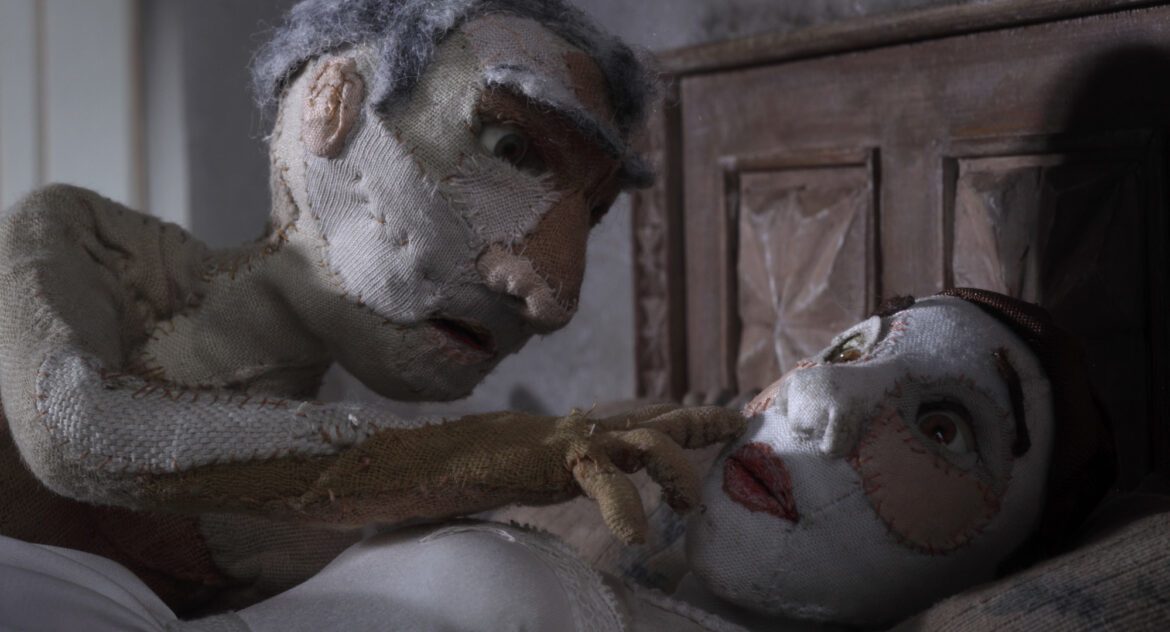
'The Flesh Dress' (La robe peau, 2026) Review: Animafest Zagreb
Vassilis Kroustallis
French animation director Joachim Hérissé again teases with a stop-motion animation tale of love, horror, and resurrection, screened in the competition programme of the 2026 Animafest Zagreb festival. After the evocative feeling of sisterly loss in 'Skinned' (check our review), he continues with an unmitigated Dorian Gray (plus Benjamin Button) story of conjugal love and torment that almost never finds rest.
In the 15-minute 'The Flesh Dress' (La robe peau), a Komawé French production, we meet the elderly couple of Jean and Jeanne, both tailors and dressmakers. In an isolated place, full of framed miniature models of previous dresses sold, we sense that their time has now inadvertently gone by. That's certainly true for Jeanne, who, both frail and tired, still has to work on the latest model, under the instructions of her vain and impossible-to-please Jean.
When the client tells them that the pink dress they made is out of date and leaves, everything falls apart. While we initially suspect that Jean has an issue with the sun (he never faces the mirror), his issue is more of the Dorian Gray variety; time has passed cruelly for the tormenting husband (who still professes to love his wife as an object of erstwhile admiration), and he cannot face his face in the mirror anymore.
The film proceeds to a harrowing solution (not here revealed), but one very swiftly made so that the same motif keeps coming back to ask for more sacrifices for the artist -until he finally realizes his dream of youth. This unfolds like a well-stitched horror elegy, in which vanity takes the name of love and desire wants to stop the natural process.
Like 'Skinned', 'The Flesh Dress' also takes place by a river, offering both a literal function (a boat carries and brings back) and a symbolic one, in the sense of Heraclitus' 'everything is in flux' dictum. What is disconcerting in the otherwise brilliantly narrated stop-motion film is not the bloody acts themselves, but the fact of uncertainty within repetition -you never know when the whole thing is going to an end, just like life itself.
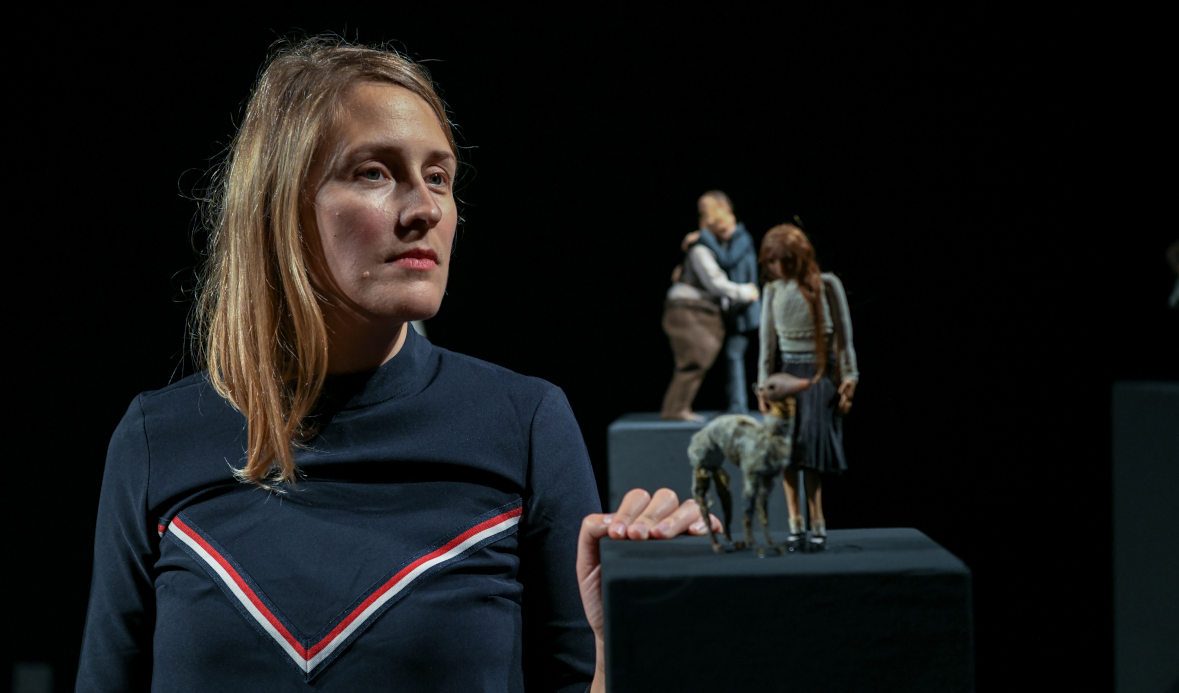
Puppets' design of rags and patches of various colors gives a palpable quality to the story of dressing your skin, while string music (and dance) reminds one of the old past. A complex characterization of the main character, Jean, is also in place here. Like a paraphrased Oscar Wilde dictum, he doesn't do good to the thing he loves; at the same time, he objectifies Jeanne via her memory as a young girl and hangs on to that memory, as if her portrait were his own.
Alternating between lyrical and tense atmospheres, the film is set mostly indoors, a safe haven to keep the secrets in place. Apart from the two characters, other faces are only shown from the back or in a completely raw form. The famous flesh robe (renewed every night) is variously shot (close-ups, wide shots) to become a central motif even when it's hidden from site (in the closet with fleas around it).
Life is better without delusions, yet people seem not to be able to live without them. Here's another exceptional reminder in 'The Flesh Dress', a stop-motion animation short that brings life and youth back in a delusional form -and makes the screen satisfaction all the devilish better for it.
Vassilis Kroustallis
Watch 'The Flesh Dress' trailer:
The Flesh Dress (La robe peau, 2026) screened in competition at the 2026 Animafest Zagreb festival.
Read More About:
Related Articles
Vassilis Kroustallis
Get Our Weekly Indie Animation News
Have an animated short film?
Get it featured on Zippy Frames. We present, interview and cover independent animation shorts of every animation technique.
Zippy Frames is the premier online animation journal promoting European and Independent Animation since 2011
Zippy Frames
Quick Links