

Reviews
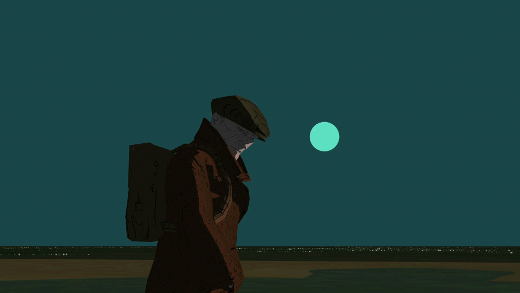
Cafard Review: Capturing Humanism
Vassilis Kroustallis
Cafard means both cockroach and is the nickname for the first ever armored car division ACM, part of the Belgian forces, who were instructed to help on the Eastern Front during World War I to help fight against the Russians and the tsarists, against the Germans and their allies.
When the Eastern Front collapsed and the new Bolshevik government signed the Treaty of Brest-Litovsk with its opponents, the Belgians suddenly found themselves in hostile territory. They managed to leave the USSR via the Trans-Siberian Railway and travel through China to the United States, before returning to Belgium.
Among those Belgian soldiers was Henri Herd or "Constant le Marin", a 4-time World Champion boxer.
This is where Cafard by Jan Bultheel starts (produced by Tondo Films / Superprod/ Topkapi Films/ Tarantula). Omitting any highbrow political events, but staying close to how their agents feel these, it tells the story of Jean Mordant (Wim Willaert).
Mordant is a World Champion boxer and a widower, whose only daughter, the 15-year-old Mimi, is raped by German soldiers early in the film, thereby constituting its scope.
Seeking revenge and translating personal rage into national enmity, he enlists, along with his more earthly partner Victor (Sebastien Dewaele), and his irritatingly vulgar nephew Guido (Maarten Thomas Ketels), into the Belgian army; and all of them now become part of a world adventure.
Working more like a slow-burner than a series of powerful dramatic confrontations, the film invests a lot in an old-fashioned sense of moral values and male bonding.
It is a journey of manly endurance, but not one of many surprising twists and turns: it dresses instead in extraordinary monochromatic palettes to tell the same anti-war message in various guises and sketches.
Motion-capture here (directors: Jean-François Szlapka and Emmanuel Linot) follows this rule: expect no shiny, uncanny characters, but faces which look like living corpses, examined meticulously from every angle in sweeping camera takes. Bultheel makes its characters raw, tired, and graceless.
It doesn't always work. It takes time to absorb the stamina behind those masks of torment, while the more intense confrontations are served up rather late in the film. Women, including Mordant's Russian love interest, Jelena, seem confined to being represented by men to tell their own worries.
Yet, unlike Waltz with Bashir (which sacrifices its main character in an attempt to revisit his memories), Jean Mordant remains a person of substance and an old-school hero from beginning to end; easy to understand, but hard to comprehend his surroundings.
The score by Hans Zimmer never misses a single cue to highlight the drama, and the "All Is Lost" song by Alex Ebert brings home the film's humanist despair.
In the current surge of European films doing politics (Persepolis, Waltz with Bashir, The Magic Mountain, Rabbi's Cat), Cafard selects duty to oneself and its values as the antidote to the futile feasts of modernism.
Animation here helps a lot to digest a subject matter that could be intolerable in live-action. Definitely worth seeing.
Vassilis Kroustallis
Read More About:
Related Articles




Zippy Frames is the premier online animation journal promoting European and Independent Animation animation since 2011
Zippy Frames
Quick Links