

Reviews 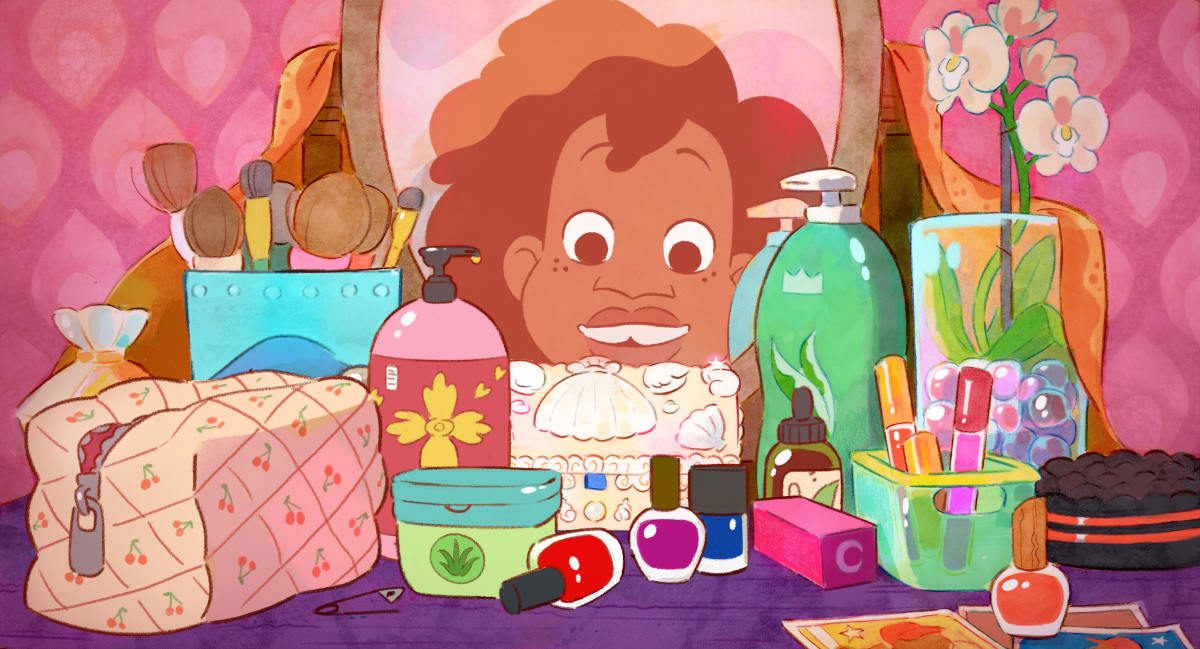


‘Julián’ by Louise Bagnall: Annecy Review
Olivia Popp
Adapting Jessica Love’s US award-winning children’s picture book ‘Julián Is a Mermaid’ into a feature film, Louise Bagnall ensures that her feature-length debut, ‘Julián’ (2026, Ireland/Luxembourg/Canada/Denmark), is a memorable new installment into an oeuvre of visually vibrant and emotionally emancipating films for young audiences. The Irish animator comes from robust artistic traditions, known for her work as a creative director at Cartoon Saloon and Oscar-nominated for her 2019 short, 'Late Afternoon'. Committed to a unified style and strong message about embracing self-expression, the 86-minute ‘Julián’ premiered on 23 June as part of the Annecy Presents strand at Annecy Film Festival.
The titular young boy (voiced by Knyght Darius Jack) begins to explore another side of himself after his father drops him off at the house of his Dominican paternal grandmother (voiced by Micania Diaz-Rojas) in Brooklyn for the summer. With a vivid imagination and fascination for all things related to the ocean, Julián makes friends with a trio of girls, and they together plan to take part in the Coney Island Mermaid Parade—with long, luscious hair and a flowing tail. However, his interest in play, dress-up, and performance does not match his Dominican Abuela’s initial expectations of who he is, as she assumes he will be more of a carbon-copy of his father.
We come to expect more culture clash—Abuela initially expects Julián to speak Spanish and eat all of her traditional homemade food, which he hates—but this is traded for a conflict around expectations surrounding what type of things a young boy should like. Bagnall plays with what could be described as gender expression or breaking out of gendered expectations for children. However, the film uses no labels, categories, or names that might hinder the film from being freely interpreted—or from being misinterpreted as ulteriorly motivated. Rather, this is simply Julián as he is: a joyful, well-meaning boy who is lightly brushing up against societal expectations for him, including a single instance of bullying by a group of older boys.
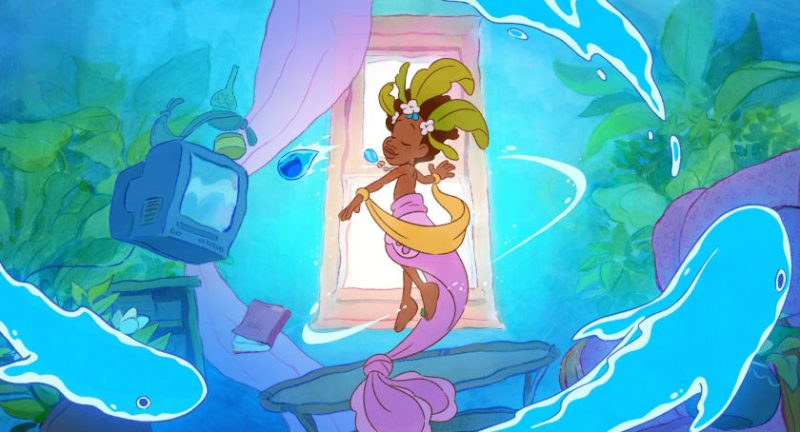
Using 2D computer animation, Bagnall combines two slightly different styles, in the foreground and background, to make film stand out. Simple, bold characters are placed within a detailed world that seems to emanate out behind them—yet all of it is diverse in color and brightly contrasting. With a naturally wide grin on his face, Julián himself epitomizes what we see in the clarity of character design. Clothing is single-hued and largely lacks shading—reminiscent of 2D-animated cartoons from the 1990s and 2000s—while the character silhouettes themselves are clearly outlined and have unique geometries. Conversely, the backdrops are more richly patterned, with stroke textures drawn from real-life creative materials that Julián himself might use, such as markers, crayons, and coloring pencils.
Featuring a simple structure, most of the film’s conflict comes from misunderstandings rather than active antagonism from other characters. This makes ‘Julián’ tonally best-suited for children and families—teen audiences might find the film’s narrative too straightforward or conflictual situations resolved too quickly, perhaps—even though the style is light and universally appealing. Accompanying Julián through his journey of self-discovery is a light-blue baby sunfish that springs to life from a drawing, with the film rapidly growing into a greater universe of magical realism toward its dramatic close. Scenes with fantasy elements are animated in lush palettes and composed of smooth, sweeping movements, allowing viewers to access his inner world with the most lucidity. For both ‘Julián’ and Julián, much of the excitement and delight comes from the journey itself: the experimentation, play, and little moments of personal bliss embedded inside.
contributed by: Olivia Popp
‘Julián’ screens in the Annecy Presents section of the 2026 Annecy Film Festival (21-27 June 2026).
Want to read more free articles like this?
Keep this professional animation journalism effort relevant and updated. Become our patron
Read More About:
Related Articles


Zippy Frames is the premier online animation journal promoting European and Independent Animation animation since 2011
Zippy Frames
Quick Links