
Interviews
Complete artistic freedom is reserved for short film directors, yet a certain deadline (attached to a paid salary) has to be met. A practice that nevertheless implies that directors can work for a longer period (at their own cost). "A big part of directing the movie is really animating; sometimes you have a director who is also an animator, and they’re never happy with the image, and they always change things". Some shorts took 4-5 years to make, whereas the initial plan was 1-2 years. Yet still principles hold: "the most important thing for short films is that the directors do what they want to do, the movies they want to do. It’s not the producer’s project, it’s the director’s project".
The case is different for TV series, specials, and feature films. "These need to be both very artistic and original, because we cannot compete with Disney or Pixar", Burlet explains. "We have to find an original way to do projects, to attract the interest of, and convince both the financiers and the distributors. We also need the market. If you want them to give you money, they need to think they’ll be able to take the money back from the spectators, from the market".
There were times when people had to be laid off from a project. "I hate it when I have problems with people, and have to say 'We have a problem together, and you have to start work at another place'. That is the worst part, because it’s never nice to be a bad guy".


Every Independent Animation Project Is Different: Nicolas Burlet Interview (Swiss Animation Portraits 2021)
ZF Team
Nadasdy Film, founded in 2001 by Nicolas Burlet (producer and studio administrator) and Zoltán Horváth (director and studio artistic director) in Geneva, Switzerland, has proven to be one of the most consistently productive and successful Swiss animation production enterprises. Starting from short films to TV series to feature films, its recent output garnered 5 official selections at the recent Annecy Festival 2021.
In detail: "Kiko and the Animals" by Yawen Zheng (co-produced with Folimage) grabbed the Young Audience Award at Annecy Festival," Bémol" by Dana Lacroix and"A Stone in the Shoe" by Éric Montchaud (Young Jury Prize Prix CANAL+ (2021) -all three films in the young audiences." Dans la nature" by Marcel Barelli was in official competition, and "Vanille" by Guillaume Lorin competed at TV competition.
Zippy Frames chatted with Nicolas Burlet to unveil the strategy and the challenges that lie ahead for all this independent animation film production.
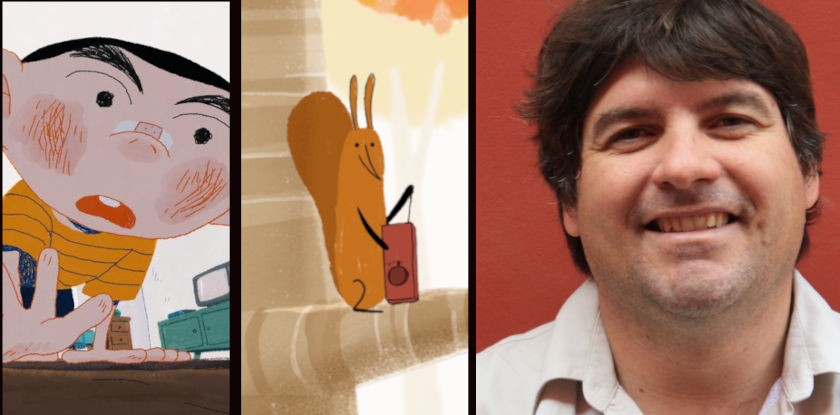
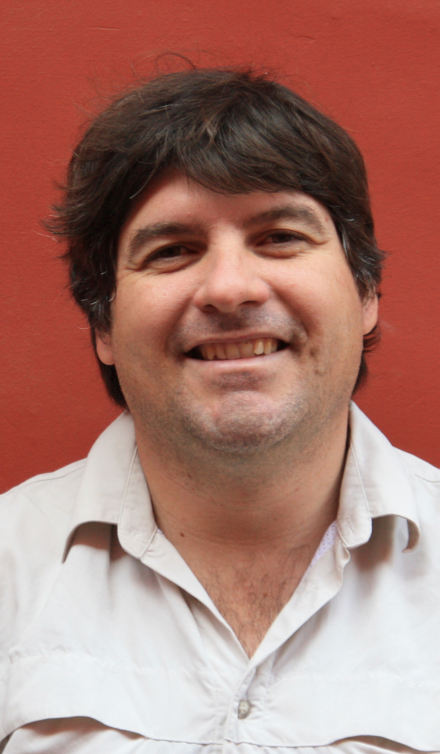 "This year was a good year for us at Annecy", Burlet tells Zippy Frames. Even COVID-19 didn't manage to halt production for the 2D animation film, made mostly at the studio premises. Yet the forthcoming stop-motion animation feature, "No Dogs or Italians Allowed" by Alain Ughetto, which Nadasdy Film co-produces, suffered from it ("We twice had to stop the shooting in Valence).
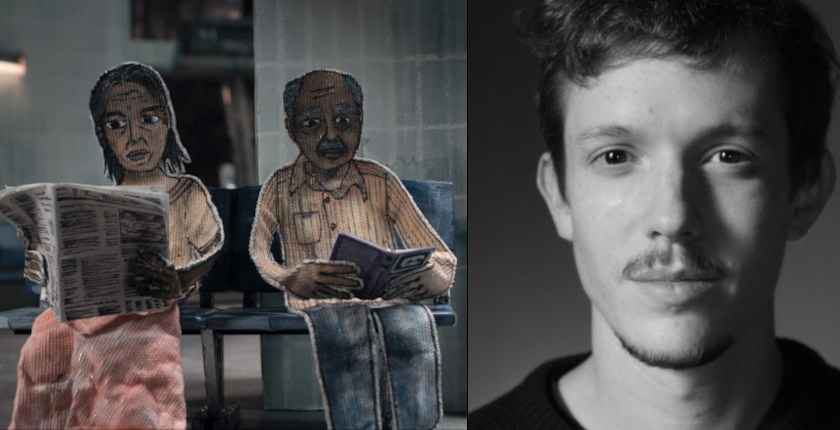
"No Dogs or Italians Allowed" is a semi-autobiographical feature for its director. It describes the quest of Luigi, Ughetto's grandfather, and other Italians to move away from their Piémont village for better work and settlement in France, Switzerland, and Belgium.
"I’ve been working for a long time with French co-producer Vivement Lundi! and they asked me if I was interested in working on this movie". Ιn the film, which finishes shooting in July, the main characters pass through Switzerland and work to build the Simplon tunnel. Nadasdy Film was responsible for both parts of the shooting and the compositing.
This is not the first feature film project for the company, which already has a track record, starting with "Couleur de peau: Miel" (2012) by Jung and Laurent Boileau - another autobiographical story of the Korean Jung, tracing his roots back to his Belgian adopted home. "In that film, it was a small co-production, with 2 Swiss artists involved in the image design and compositing", Burlet explains.
The co-production model of Nadasdy Film (currently employing around 50 people in its various projects) remains the same throughout the years. It is steadfastly linked to Swiss artists (or artists living in Switzerland); 100% of the expenses need to be spent in Switzerland for the funding the company receives from Swiss funding sources ("we are giving work to people, but we're not buying part of the film in return for future distribution sales").
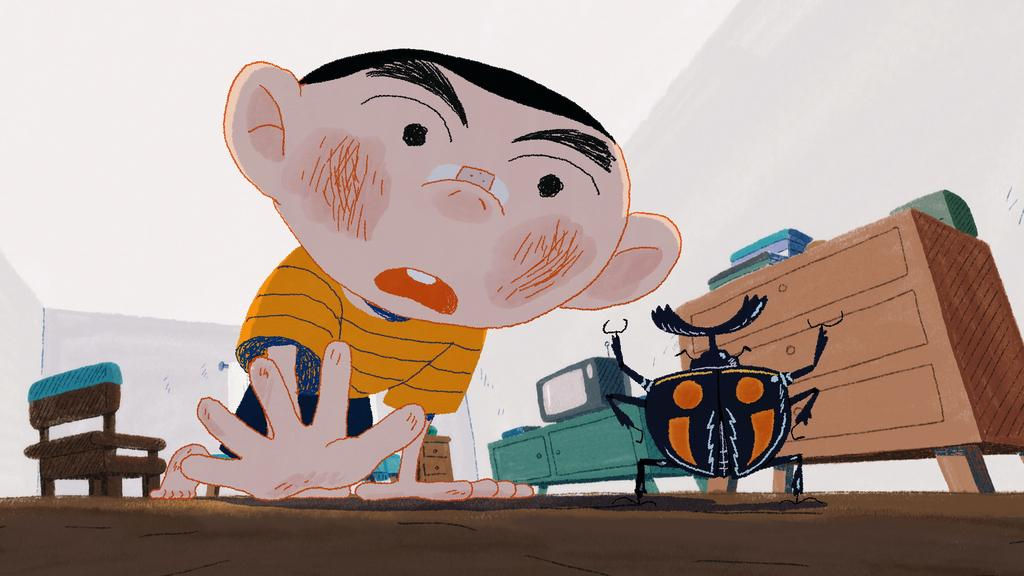
Kiko and the animals
And there is no dearth of talent in Swiss animation either. "People know us in Switzerland, and they are coming to us. I don’t need to look for people so much. I already work with about 10 directors, and we are mainly staying together". Directors Mauro Carraro and Marcel Barelli are only some of the names associated with the company for a long time.
Things were not always like that. "In the beginning, from 2001, we worked only on the movies of my business partner Zoltán Horváth for 7-8 years," Burlet explained. "Since 2007, I’ve been working 100% at Nadasdy". Short films were first made, followed by TV series and 26-minute specials; feature films came later.
One would say that the production company's project needs a tight, streamlined schedule; yet, independent animation still has its own intricacies. "Every project is different. We are adapting the way we are working with the director", Burlet will elaborate, noticing the difference between short films and features. "In short films, the directors are totally free to do what they want. Some arrive with only one idea, and we work together to follow the development and arrive at the final production; others arrive with the film almost totally developed, with all the ideas and graphics. In that case, and if we like that, we say that we can go now to look for money.”
Complete artistic freedom is reserved for short film directors, yet a certain deadline (attached to a paid salary) has to be met. A practice that nevertheless implies that directors can work for a longer period (at their own cost). "A big part of directing the movie is really animating; sometimes you have a director who is also an animator, and they’re never happy with the image, and they always change things". Some shorts took 4-5 years to make, whereas the initial plan was 1-2 years. Yet still principles hold: "the most important thing for short films is that the directors do what they want to do, the movies they want to do. It’s not the producer’s project, it’s the director’s project".
The case is different for TV series, specials, and feature films. "These need to be both very artistic and original, because we cannot compete with Disney or Pixar", Burlet explains. "We have to find an original way to do projects, to attract the interest of, and convince both the financiers and the distributors. We also need the market. If you want them to give you money, they need to think they’ll be able to take the money back from the spectators, from the market".
There were times when people had to be laid off from a project. "I hate it when I have problems with people, and have to say 'We have a problem together, and you have to start work at another place'. That is the worst part, because it’s never nice to be a bad guy".
Producers also need to handle film funding rejections and the intricacies and red tape that have proliferated in recent years. "To get public money now, you need to be 100% transparent. In Switzerland you have a lot of controlling over the funding, a lot of papers to submit -and the list is getting bigger, like for instance, transcriptions for blind people. Each requirement by itself is not so much, but when you put all the new things you have to do, and the forms you have to fill in, the work is changing".
At the same time, the budget for animation remains constant. "The maximum funding you can get from national funds for a feature film (animation or live action) is 1M Swiss Francs; for minority co-productions, you can get up to 300,000 Swiss Francs. Switzerland is a country where things are changing quite slowly". Burlet brings up the example of a regional fund, in which you need to apply to a cinema (not animation) fund; if you succeed, you can even get all the funding available for a single year for an animation project.
According to Burlet, the problem with feature films is not the funding itself (a Swiss animation feature typically has a budget of 3/4 million Swiss Francs), but the market. "If you're doing an animation feature for children in France, you can secure a minimum guarantee of 50 or even 100K EUR from sales agents and distributors. In Switzerland, the maximum is 50,000. It's very complicated to do features with more than 3 or 4 million budget".
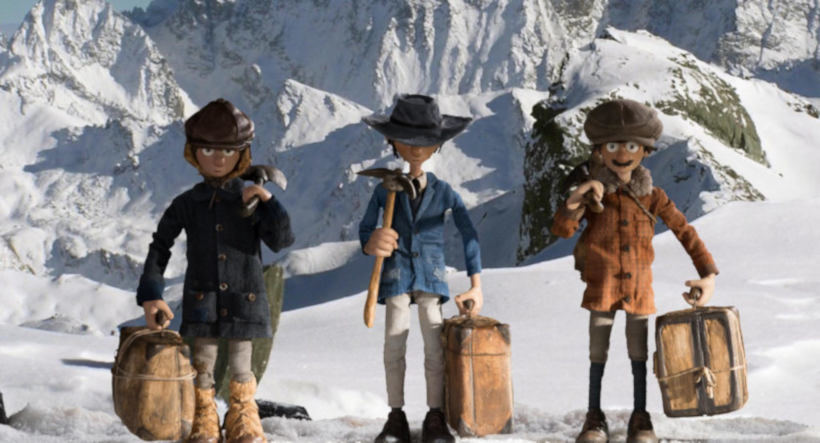
No Dogs or Italians Allowed
It seems that the inverse situation applies in TV series and specials, in which national funding is lacking. "You do have development funding, but when you come to produce, there is neither tax credit nor tax shelter scheme -nothing". Which subsequently means that the regional funds from Région Romandie and the public Swiss TV have to be sufficient, which is not always the case. Since there is no specific Swiss TV funding for animation series, money must be sought from various but still related resources. "We've done TV series, but small ones, around 130-150 minutes in total. "Les enquêtes de Maëly"s by Jean-Marc Duperrex, currently in production, is a 26x11 minutes series ; other series, such as Marcel Barelli's "Ralph et les Dinosaures", are on the 26x5 minutes scale. Co-productions of TV series and specials (especially with France, whose budgets are higher) are always a headache and a long procedure.
Yet this won't stop people from creatively investing in the Swiss film and animation industry. "I think we are a country where you have a larger number of producers. For example, in Romandie we have around 200 producers", Burlet states. Yet most of them are preoccupied with personal projects, and almost no one is exclusively producing animation -apart from Nadasdy Film. "We don’t have a lot of producers in animation because we don’t have a lot of money in animation," Burlet will definitely notice. "In France, an animator or head of animation has quite a pretty good salary in comparison with a teacher or a nurse. Here it is the reverse. It’s quite hard to live as a producer with a structure, with a secretary, etc., and doing only animation. It took me a long time to arrive there and have a real salary and a real structure to live off this work".
Nadasdy Film is currently on board with Claude Barras (My Life as a Zucchini) new stop-motion animation feature in development, "Sauvages". "It’s about a young girl who lives with her father in a small city in Borneo, Kalimantan; one day, a small orangutan baby arrives in the plantation where the father is working, and the guard of the plantation kills the mother orangutan. The girl immediately hides the small orangutan, and this will lead her to go to the forest where she has never gone before".
Both exotic and ambitious, and with an array of main characters, the 80-minute animation feature has a much bigger budget than Zucchini (more than 10m EUR) and three co-production countries so far. Apart from Switzerland (Helium film, Nadasdy Film), France (Haut et court), and Belgium (Panique ! and Beast Animation) are on board. "The film's higher budget means we need to find more money from the market itself" Burlet explains. The success of the Oscar-nominated Zucchini may have facilitated things; the scheduled plan is for the budget to be secured by the end of 2021 (already half of it secured) -and production starting beginning 2022. Shooting will take place in Claude Barras' 2,000-square-meter studio in Lausanne for the film, in a story that aims to incorporate the indigenous Penan people of Borneo into its narrative.
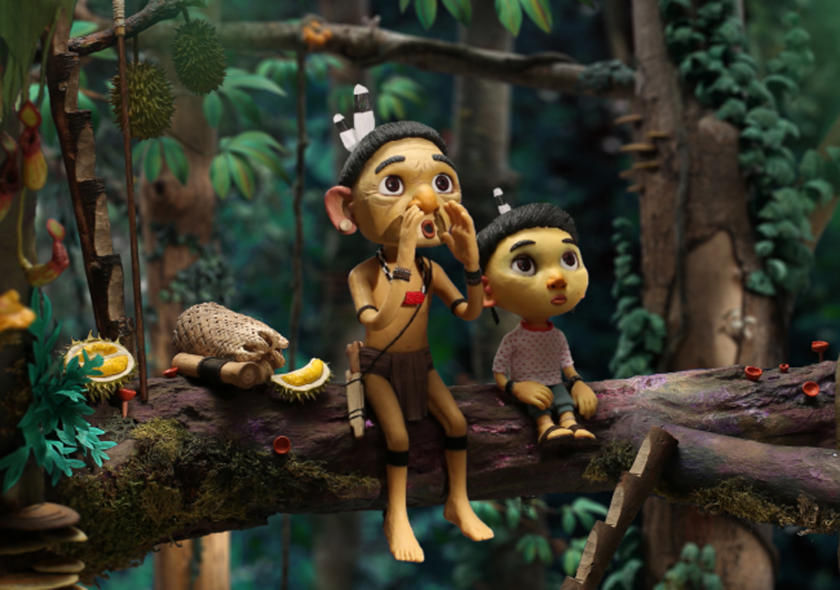
Sauvages
Feature films get their exposure at festivals, theaters, and VOD. Yet, short animation is almost exclusively tied to the festival world. And, whereas the Annecy Festival is bigger and more expansive, but manageable, according to Burlet, some other festivals adopt different policies. "A lot of festivals are asking for submission fees, like Sundance (80 dollars), Berlinale (almost 60 Euros). It's more and more competitive, and of course they receive more and more films -and it's more complicated to be on the selection". Granted that Swiss funding bodies award points to companies for their participation in big festivals when they apply for their next project, it is a tough game.
"We are in an artificial sector," Burlet continues. "We are here because the state wants us here. If we don’t have funding or public help, we are dead. We hope all the time that the state or the government will understand that all animation is important and good for the future, a special part of the cinema which deserves to be supported more. Every time I look at the new regulations, I say, “They didn’t change that, and I wanted that.” Yet, if I have to be honest, the situation in Switzerland is not as bad. Talents continue to come to Switzerland from all corners of the animation world, with the animation scene becoming increasingly crowded over time.
Theatrical revenues for short films are also rather sparse. Children's films and programmes are distributed in the theaters. Nadasdy Film had a North American theatrical premiere of "Le dernier jour d'automne" by Marjolaine Perreten (2019); GKIDS distributed the film before Hayao Miyazaki's 'Kiki's Delivery Service'. Apart from this, VOD platforms offer a small amount of money (in the range of a few hundred Swiss Francs per year per film) - yet this is nothing compared to the film's budget.
With all these challenges, it would seem that the producer's job is a thankless one. But not for Nicolas Burlet. He calls himself a realist, and even the mundane parts of the work (like Excel spreadsheets and accounting) are the ones that give him a sense of certainty that everything is on track. Of course, the successive successes of Nadasdy Film outputs are another factor as well, and speak eloquently of the production company's own reputation.
The Swiss Animation Portraits 2021 series is conducted in partnership with Swiss Films.
Want to read more free articles like this?
Keep this professional animation journalism effort relevant and updated. Become our patron