Shorts 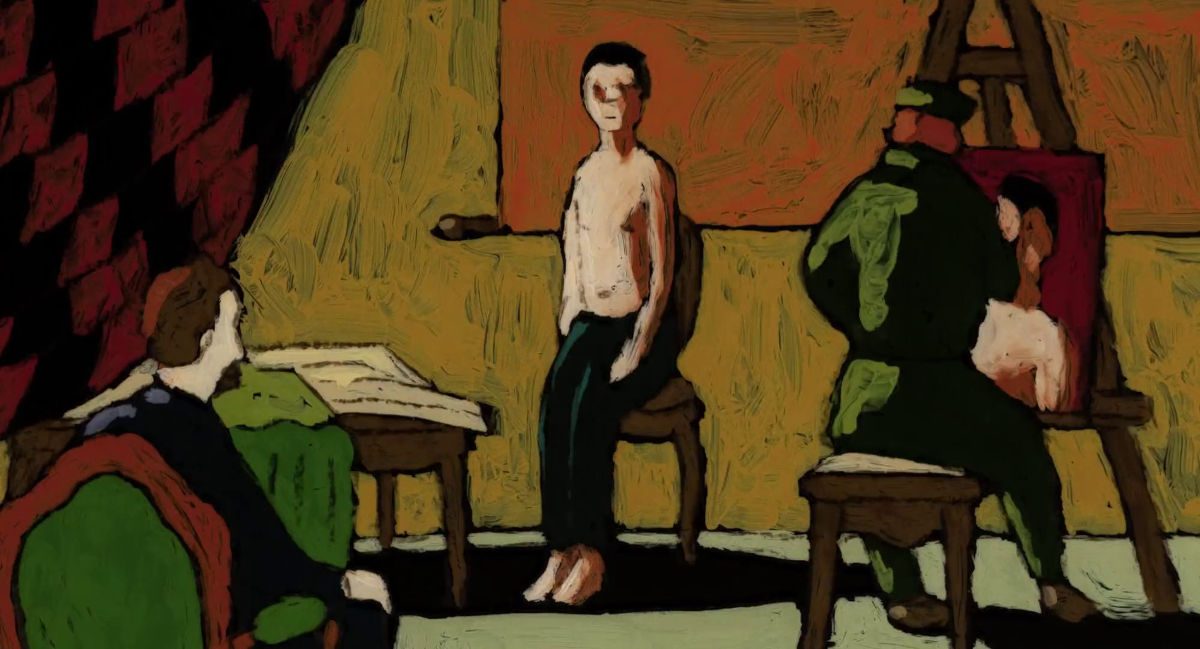
‘The Picture of Dorian Gray’ by Georges Schwizgebel (2026) Review: Animafest Zagreb
Amanda Barbour
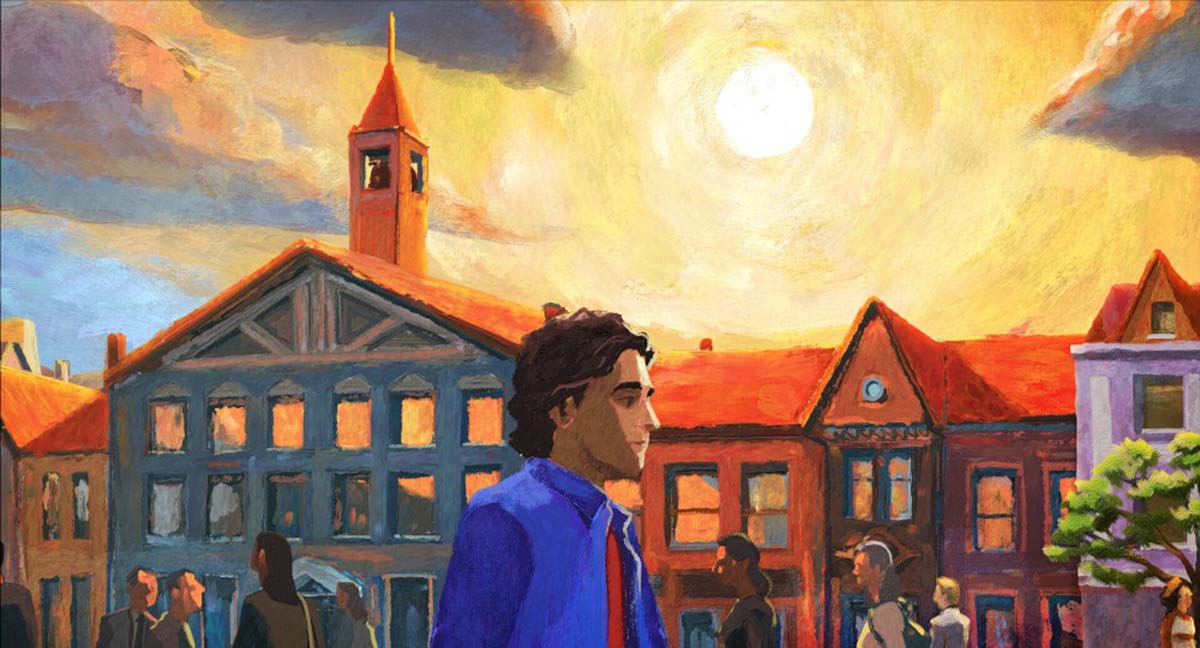
Remaking a masterpiece is an audacious act for any artist. Swiss veteran Georges Schwizgebel rises to the challenge with ‘The Picture of Dorian Gray’ (2026), presented in this year's Animafest Zagreb. The Studio GDS and Swiss television RTS co-production translates the Oscar Wilde classic into acrylic paint on acetate. As the old adage goes, “the medium is the message” and using an aesthetic akin to portraiture is effective in a story revolving around a painting.
To recap: the titular Dorian Gray sells his soul to retain the beauty of youth while a portrait of him ages in his place. Hedonism ensues, and the portrait putrifies with every sin Dorian commits. Eventually, the dandy needs to contend with his own image.
It’s worth taking a step back to consider the relationship between literature and film more broadly. Alfred Hitchcock often based his movies on books. ‘Vertigo’ (1958), ‘Psycho’ (1960) and ‘The Birds’ (1963) (among others) used popular fiction as a launch pad into cinematic history. In conversation with François Truffaut, Hitchcock asserted that he would never adapt a literary masterpiece. Their exchange went as follows:
Hitchcock: "Well, in Dostoevsky's novel there are many, many words and all of them have a function."
Truffaut: "You mean that theoretically, a masterpiece is something that has already found its perfection of form, its definitive form."
Hitchcock: "Exactly, and to really convey that in cinematic terms, substituting the language of the camera for the written word, one would have to make a six to ten-hour film. Otherwise, it won't be any good."
Schwizgebel made a six-minute film without any words. The exposition is articulated in images that waltz with Judith Gruber-Stitzer's score. Rendering Wilde’s story on a pulsating canvas breathes new life into the material. Divergent scenes bleed into the same frame. A signifier from one image becomes the seed to the next sequence, enabling the animation to unfold without the jar of the cut. Schwizgebel hopes audiences will remember, “that you can listen to images and see sounds.”
A literary adaptation without any text is bold, but compelling, and perhaps symptomatic of Schwizgebel’s approach. His confidence as an artist is reflected in the stories he tells, iconoclastic men full of hubris are recurring characters across his oeuvre. ‘The Flight of Icarus’ (1974) launched the director's career, collecting seven nominations for the Annecy Cristal and an Animafest Lifetime Achievement Award on his journey towards the sun.
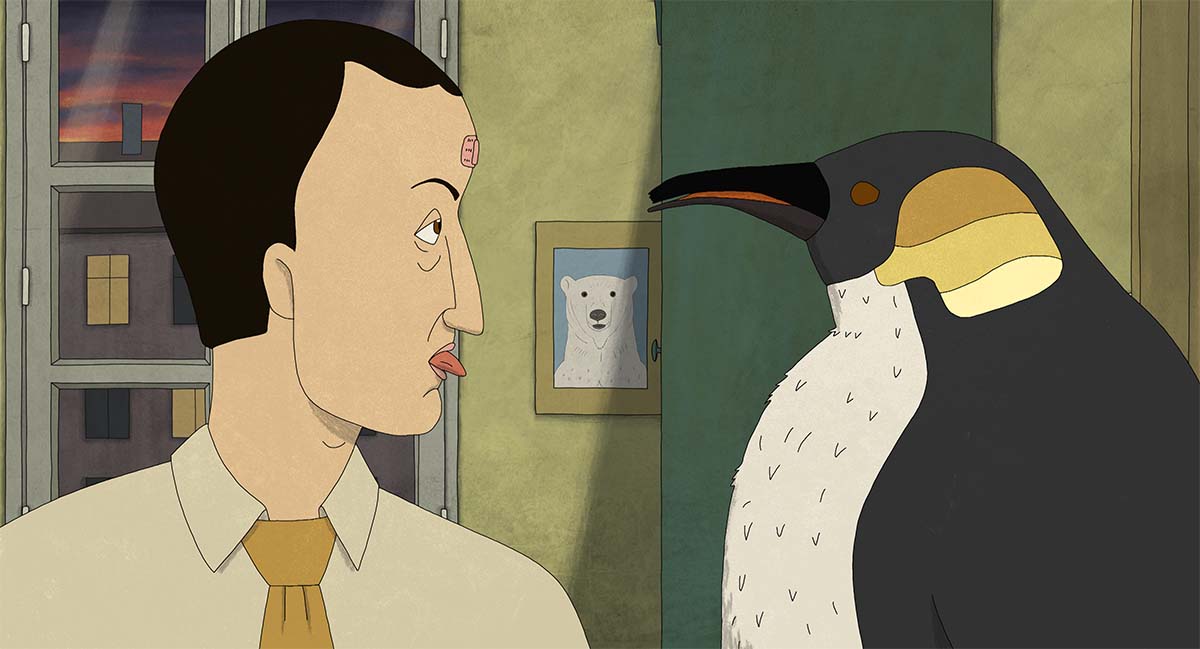
Dorian Gray’s encounter with animation has an antecedent in María Lorenzo Hernández’s 'Portrait of D' (2003). Restored in 2025, Hernández foregrounds the creative kinship between Wilde and Bram Stoker. Dracula and Dorian have a lot in common. The occult prolongs their youth, yet a mirror does not yield their true reflection.
Read More about 'Portrait of 'D'
While Hitchcock and Truffaut make valid points around a masterpiece being in its final, definitive form, there’s certainly a counterargument imbued in an image’s ability to evoke immortality. Andre Bazin described a mummy complex as being at the origin of painting and sculpture, with portraiture preserving life after death. Photography freezes a moment in time; it embalms its subject.
Schwizgebel is attuned to these dynamics. His 2023 animation ‘D'une peinture... à l'autre’ (‘From one painting… to another’) is bookended by two paintings of the same subject, created half a century apart. Times change, but images from an epoch do not.
The audacity to animate ‘The Picture of Dorian Gray’ is therefore vindicated. It honors its source material by fleshing out the different dimensions of its subject. It enables audiences to experience the words viscerally, through an audiovisual symphony that’s less a reprise and more a reimagination of the 1890 Gothic horror novel.
Watch 'The Picture of Dorian Gray' trailer:
‘The Picture of Dorian Gray’ by Georges Schwizgebel screens at the 2026 Animafest Zagreb festival (in competition).
contributed by: Amanda Barbour
Read More About:
Related Articles
Get Our Weekly Indie Animation News
Have an animated short film?
Get it featured on Zippy Frames. We present, interview and cover independent animation shorts of every animation technique.
Zippy Frames is the premier online animation journal promoting European and Independent Animation since 2011
Zippy Frames
Quick Links