
Shorts


To Live From The Depths of Another: Review of III by Marta Pajek
ZF Team
Although most people in the world know Polish film through the works of Krzysztof Kieślowski and Andrzej Wajda, this discourse might be changed sometimes in the near future. Maybe it is finally time that the spotlight is taken by somebody/something else, and the best candidate just might be Polish animated films. Although
Poland has a long history of animation, the number of animated movies in the programs of the Warsaw Film Festival is rising in the last decade and other local festivals (Krakow, ZubrOFFka, StopTrik) also present just how strong this part of the film industry is getting. Maybe the best argument for this might be this year’s edition of the Cannes Film Festival, where out of 25 films, in the official selection, there were four animated works, and two of them (“III”, “The Other”) were from Poland. The one that stuck with me, personally, was Marta Pajek’s “III” which was part of this year’s section of Cannes Shorts.
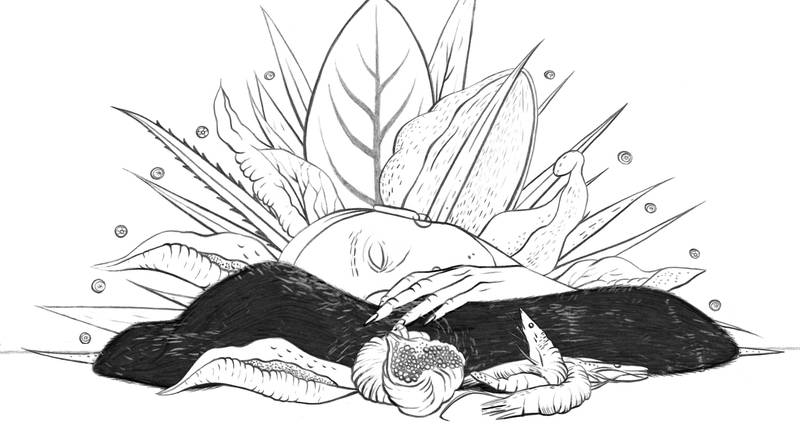
The thin black line is moving across a white screen. Soon it starts taking shape to the extent that we know the first figure in the film, the hall of some institution. Soon, we see the protagonist, a woman in a thick jacket, entering the waiting room. A middle-aged man is sitting in the room. As two people approach each other, they begin to remove their clothes, discover the endless layers of the other and start applying them to themselves. How many others affect us? How many layers of other people's personalities have been inflicted on our lives? Can we ever remove all those layers from ourselves? How do we really look, mentally naked?
III is the part of the trilogy Impossible Figures and Other Stories. The director Pajek started her triptych two years ago, trying to experiment with stories about perfection, self-realization and the trap of holiness. The director also has a desire to portray the role of the woman as a "three-dimensional" figure. The common thread of all three works is certainly pencil animation that plays with the concept of an impossible figure, shaping one animated body from another, an already existing body.
Pajek injects into her work a toxic intellectual revolution of social truth. “III” simultaneously shows feminist ideas of freedom of physical activity and examines the psychological aspects of property and influence on others. It is also visible that film plays with the position of power, placed deep down inside the patriarchate, as well as the question of whether there is individualism and how to be equal to the individual in a sexcentric society. The transition through visual minimalism and decolorization (fewer moments in color) is progressive through the trilogy, which brings a progress in the style of drawing as well as the whole animation.
A strange plant that is constantly growing (in the background of a waiting room), expanding its network could play more than one symbol in the context of this film. Is it an image of spreading our knowledge of the world, in contact with others? Is it a disease of accepting ideas and positions that we play in society? The feeling of our sexuality, our primal instincts? Or is it possible that it shows a return to nature, as the only source of happiness and equality? The question remains open for all those who have the opportunity to see this film. Overall, III is a short animation that succeeds in imposing big social questions while artistically impressing and playing with fun psychological concepts.
Watch 'III'
Arman Fatic is a Bosnian film critic/journalist currently based in Maribor, Slovenia. He is a writer for several websites/magazines across the Balkans (including Ziher.hr and Sni.ba).
Want to read more free articles like this?
Keep this professional animation journalism effort relevant and updated. Become our patron