
'anyone lived in a pretty how town' Poetry Animation Short: Interview with Daniel Kreizberg
ZF Team

NY-based, German-born filmmaker and actor Daniel Kreizberg has crafted stories that foreground very humane, empathetic characters. His previous animation short, 'Tahlequah the Whale: A Dance of Grief' (2023), has the orca mother Tahlequah carrying her newborn baby (after its sudden death) across the Salish Sea, based on a true story.
His second animated effort, 'anyone lived in a pretty how town' (2025), in collaboration with MeinArt Animation Studio (Lithuania) and STUDIO New York (US), is a three-country co-production (with Monaco also participating). The 2D animation, a combined poetry, animation, and musical effort, comes from the eponymous 1940 poem 'anyone lived in a pretty how town' by E.E. Cummings, which details the lives of citizens in a nameless town.
anyone lived in a pretty how town / (with up so floating many bells down) /spring summer autumn winter / he sang his didn’t he danced his did.
Women and men(both little and small) / cared for anyone not at all / they sowed their isn’t they reaped their same / sun moon stars rain - E.E. Cummings
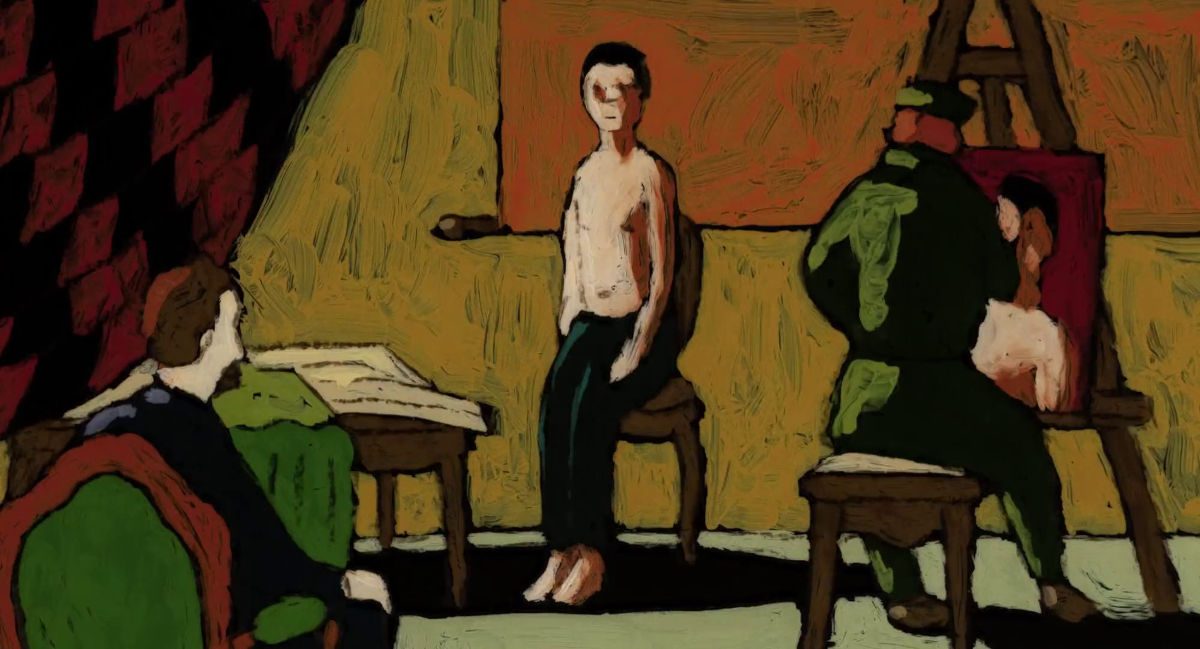
The story is told in a painterly manner (E.E. Cummings was also an oil and watercolor painter), and is matched with the late conductor Yakov Kreizberg's 'The Lark Ascending' piece (Yakov Kreizberg being the director's father). The prominent anthropologist Jane Goodall narrated the film and became its voice. We asked Daniel Kreizberg for more information about this painting, poetry, and music concerto match.
ZF: How did you come up with the E.E. Cummings' 'anyone lived in a pretty how town' poem?
DK: When I first encountered this poem a decade ago, it touched me deeply; it’s musical and rhythmic, charming and hypnotizing. I’ve revisited it often over the years and found more meaning every time. With so much going on under the surface, so many double meanings, it’s intentionally opaque at first. But eventually it opened up a world inside of me, and I realized that his lyrical elegy is as relevant now as it was in 1940, with its Modernist critiques of an increasingly conformist and alienating world really resonating today.
ZF: You have directed animation films before, but what clicked for you in making this an animated film as well?
DK: Many people are familiar with Cummings’ written works, but few know of his extensive catalogue of oil and watercolor paintings. These dreamy, almost fragile works are a gorgeous – but sadly overlooked – cornerstone of his legacy. This convinced me that his perhaps most beloved poem had to be brought to life through a short film conceived in the poignant style of his visual art. Our film is composed of original illustrations inspired by the world he was creating in both his poetry and paintings.
ZF: How did you manage to enlist Jane Goodall in your film? Her narrative brings a welcome gravitas, but also a warmth there
DK: We knew early on that we wanted a voice with warmth, wisdom, tenderness, and musicality. Although she has lent her voice to other projects in the past, this was of a different nature. Having seen my previous animated short, 'Tahlequah the Whale: A Dance of Grief,' she generously agreed to narrate this one, and truthfully, it is hard to imagine any other voice having done so. Her presence in our film brings to life Cummings’ story of love and connection, and her voice lights the way toward greater consciousness. We’re honored to have been among her final projects and eternally grateful for having shared this project with such a magnificent spirit as hers.
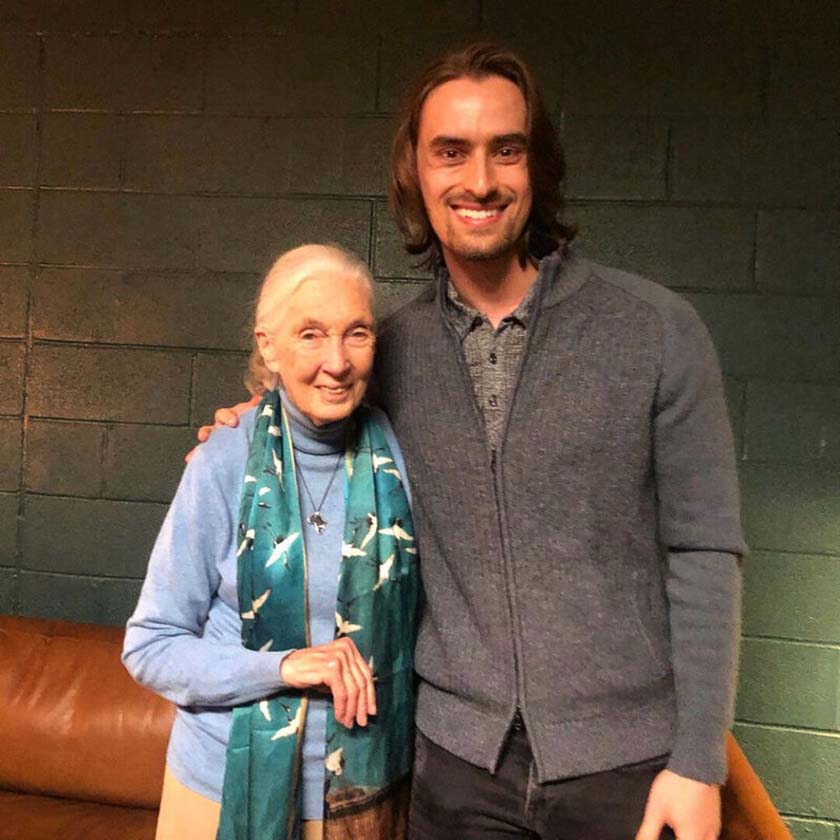
Jane Goodall and Daniel Kreizberg
ZF: How did you work with STUDIO New York and Meinart Animation Studio? The film has a distinctive, painterly style
DK: I worked with Meinart Animation Studio on my last short film, 'Tahlequah the Whale,' and approached the STUDIO New York to join us for this project in 2024. We spent roughly 18 months meticulously crafting hand-drawn digital animation that emulates Cummings’ artistic style while creating the feeling of watching paint strokes brush across the screen. This distinct visual approach brings analogue techniques to life through animation, with each frame containing the artist’s touch. The STUDIO handled the majority of the development and animation, while Meinart contributed cel animation for the characters. It took a great deal of technical coordination for the animation's kinetic quality to be cohesive and achieve the intended effect.
ZF: The musical orchestral piece has a special affinity for you. Please tell us more about it.
DK: 'The Lark Ascending' is an orchestral tone poem composed by Ralph Vaughan Williams, and this particular rendition was the final recording of my late father, the maestro Yakov Kreizberg. The recording is so evocative of him: its rhythms were his rhythms, its colors and textures were his, and I felt his presence throughout the entire production. Moreover, each music line of his recording seems to support each line of the poem in a symbiosis that is truly special. Together, the two works deepen each other in a mystical way, ultimately in tribute to Cummings, to Jane, and to my father.
ZF: Is it the question of the transience of things that captures the film's essence or something in addition?
DK: Like Cummings’ poem, the film’s themes and meanings are meant to be layered and shifting, and by definition never fully resolved. But perhaps most personal to me was exploring what endures in our world – the human spirit – rather than the transient, superficial elements overemphasized in modern Western societies. In many ways, it’s a film about the legacies we leave behind and the lives we touch. I see art as an opportunity to engage with audiences around the world, communicating a perhaps spiritual message to create a transcendent experience. I hope that this comes through in 'anyone lived in a pretty how town,' which seeks to emphasize the significance of that which is both intangible and everlasting, and to bring us back to something deeply human.
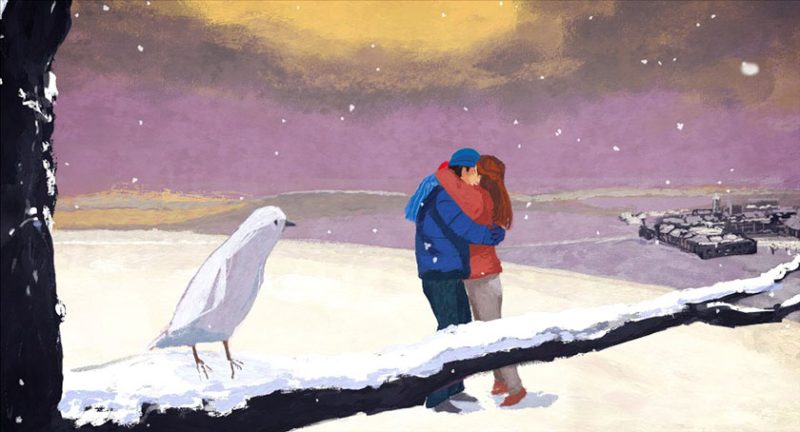
anyone lived in a pretty how town
Film Review (Olivia Popp):
E.E. Cummings’ 1940 poem 'anyone lived in a pretty how town' has been brought to life anew in a colorful short film of the same name by Daniel Kreizberg. While the poem is read by famed anthropologist Jane Goodall, who passed in 2025, the film is also accompanied by 'The Lark Ascending,' a gentle woodwind-led orchestral piece by English composer Vaughan Williams.
With digital animation inspired by Cummings’ own oeuvre of oil and watercolor paintings, the filmmaker turns the well-known poem—notable for its unusual punctuation and syntax—into a more tangible manifestation of quiet, small-town life. He makes the poem more literal, visualizing “anyone” as a man and “noone” (no one) as a woman with their simple pleasures: they love each other, get married, and eventually are buried side by side once they pass.
With the town's vivid pastel colors, the residents’ faces are obscured as if to suggest a peaceful anonymity and that this story could take place anywhere. As life moves on, more and more people turn to their phones and into a self-enforced solitude, letting the industrialized and over-technologized world consume them. The film closes on a bittersweet note, suggesting that we could take a leaf from the books of anyone and noone, pushing us to embrace the humanity in ourselves, above all.
Watch the 'anyone lived in a pretty how town' trailer:
Contributed by: Olivia Popp - Vassilis Kroustallis
Read More About:
Related Articles
Get Our Weekly Indie Animation News
Zippy Frames is the premier online animation journal promoting European and Independent Animation since 2011
Zippy Frames
Quick Links