

Reviews
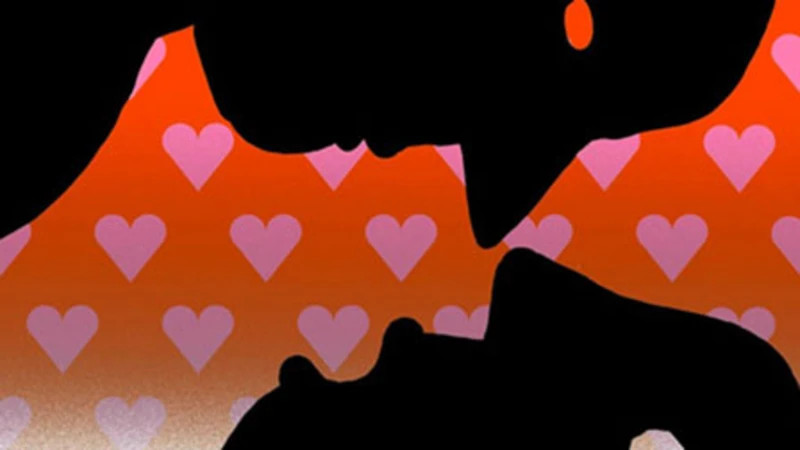


'Goodbye Mr. Christie' (2010) by Phil Mulloy: Film Review
Vassilis Kroustallis
It fails to be a Christ namesake. In the first of his Christie's animation features trilogy, 'Goodbye Mr. Christie' (2010), followed by 'Dead But Not Buried' (2011) and 'The Pain and the Pity' (2013), Phil Mulloy pushes human cynicism to its eschatological ends. He gives one of the most beloved a*holes in the history of the animation medium.
Mister Christie, like all characters in the Phil Mulloy universe, is just a black puffy silhouette with holes in the eyes and head (so we can penetrate them and check the background behind them). He loves to do things properly, English-like, teaching his son Terry when it is the right time to kill (and when not). Unbeknownst to him, his wife, Mrs. Christie, is seduced by Ramon, a French sailor (whose accented voice is much more computerized than all the other characters together - think of Cher's "Believe" autotune). Ramon ('up and down, Mrs. Christie') manages to seduce, with the help of the ambient music, Mr. Christie as well ('up and down, Mr. Christie') - on national television. Then, chaos ensues -that even the piercings of Terry's girlfriend, Tracy, won't even manage to contain.
Mulloy parodies the Paolo Pasolini route ('Teorema) of sexual availability and uses it as an ethnic weapon for multiculturalism to impregnate 'pure' Britain -no wonder that Mr. Christie looks for a tunnel to Australia ('where they speak proper English') as a last resort. Yet, instead of sexual ecstasy, we have a bloody aftermath -blame it on the church, the nuclear family, and G*d itself.
Watch the Goodbye Mr Christie trailer
Bergmanesque hommages (a spider as the God emblem from 'Through a Glass Darkly') quickly turn into animated equivalents (a fly who will not be killed, no matter how many times everyone tries). So, the adventures of Mr. Christie and his extended family include rape, murder, and a media hungry for blood. No wonder that the world is about to come to an end.
Shot placement makes this end-of-the-world talk highly symbolic; faces seen from their right profile, conversing with each other or strictly facing the screen, like Ozu puppets with hollow eyes and mouths. They will not move into space, yet their inaction becomes more tragicomic when something of importance happens. Mulloy is not a moralist, and he does not use humor as a safety valve; he observes carefully, he puts his characters in place, and then he fires at them with situations like there's no tomorrow.
Which accounts for the unstoppable dialogue lines in his series films (and 'Goodbye Mr. Christie)'. The characters, restrained in their spatial positions in the shot placement, and having no interesting ideas of their own, spit out survival modes, coupled with middle-class conservativism, until something terrible happens to them, which they still face stoically (and make the whole thing a bitter comedy instead of a tragedy). Sometimes, Mulloy breaks the fourth wall as well (his comments about the green palm trees against the orange background are an example). At other times, he becomes the arch narrator, adding section labels to his scenes. Yet he always keeps the shooting bullet rhythm pace in control, making this 77-minute silhouetted, cynical-minded film an essay on world destruction, when your ego is bigger than your cohabitation needs. 'Goodbye Mr Christie' is, of course, irreverent, but it is also educational, in the best way dark comedy (and especially animated dark comedy) films are. Goodbye, Phil Mulloy.(1948-2025)
Vassilis Kroustallis
Want to read more free articles like this?
Keep this professional animation journalism effort relevant and updated. Become our patron
Read More About:
Related Articles

Zippy Frames is the premier online animation journal promoting European and Independent Animation animation since 2011
Zippy Frames
Quick Links