Organic Disharmony: Contemporary Abstract and Non-Narrative Animation at Fest Anča 2026 (GoCritic! Review)
ZF Team
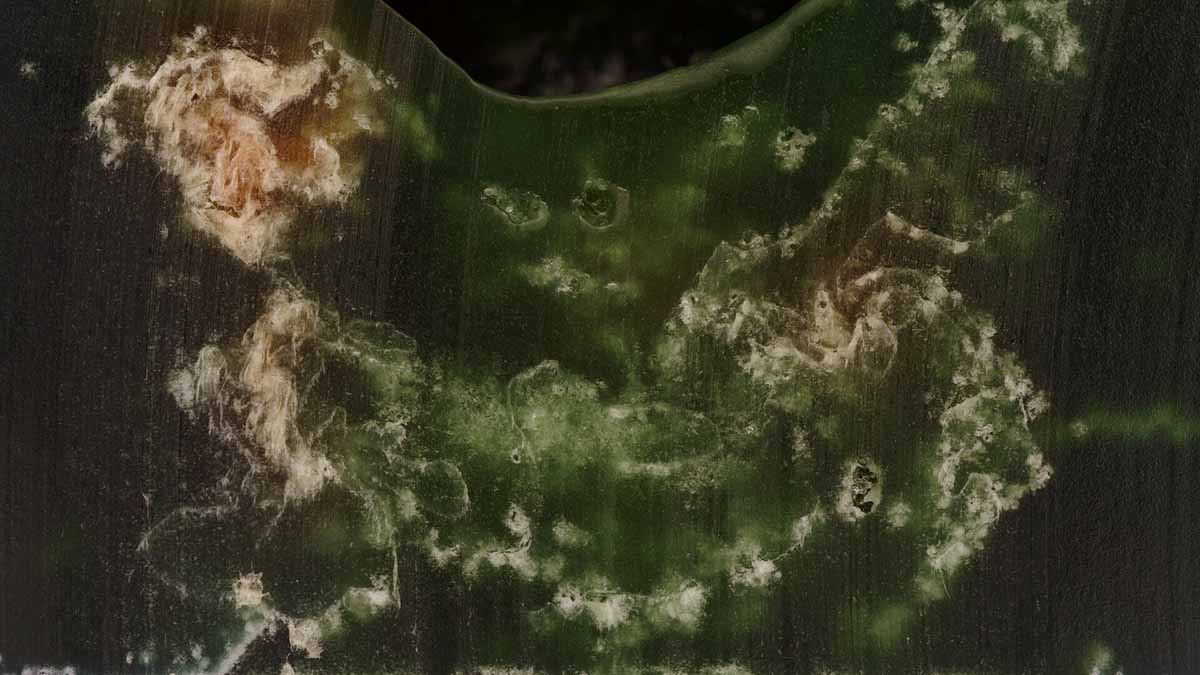
Non-narrative animation is organic. It flows seamlessly from one film to another, as if creating a single interconnected body. It grows like a plant, spreads like a fungus, and transitions like states of matter – from liquid to solid, then to gas. And this is how ‘Contemporary Abstract and Non-Narrative Animation’, the non-competition section at this year’s Fest Anča, presented itself. Consisting of eight short films from all around the world, it introduced audiences to a realm where words and linearity are replaced by soundtrack, visuals, and pure immersive atmosphere.
The section opened with Lewis Heriz’s ‘Bentwaters Frequency Test’ (2025) – a two-channel 16mm experimental work that plays with its form through cellulose film, sound signals, and abstract visuals. It is difficult to describe exactly what unfolds on the screen. Forms appear and disappear, the sound is at times inaudible, and a rhombus-like object resembling a UFO emerges from nothingness. It acts as an open invitation for the viewer to embark on a deeper journey.
The experience intensified with the next short. ‘Mushrooms’ (2025) by Theodora Pfeffermannová is a slow-burn, bio-organic experiment. While the plot is simple – the eponymous mushrooms grow and transform – the experimental quality lies in the techniques Pfeffermannová employs. Hand-drawn roots stretch through the soil before morphing into sculptures made from white clay. It is at this point that the short develops into something resembling a narrative – despite resisting one – where biomorphic shapes and characters, usually not perceived as living organisms, display an overwhelming strength and power.
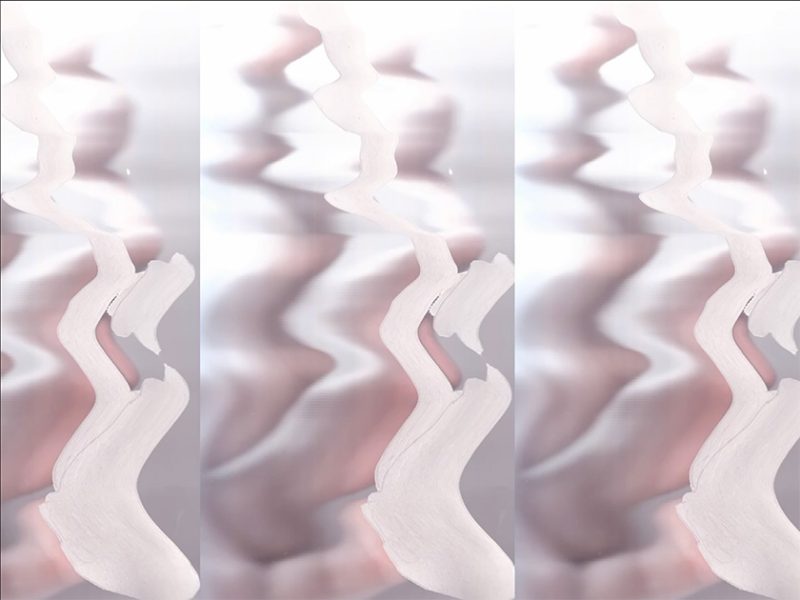
Mushrooms
The same experimental play is pursued in an eight-minute work by Maï Calon, ‘That Which I See’ (2025). It starts simply, with green embroidered lines moving across aida cloth, only to quickly metamorphose into leaves and entire tree crowns. This meticulous needlework suddenly gives way to what looks like computer-generated 3D branches – stark and leafless, as if winter has arrived. From this, the perspective shifts again, placing the viewer inside the tree, as if observing its inner anatomy. This hidden world reveals itself to be full of termites, baroque-like music, and brown plasticine-like mud.
The idea of nature-inspired exploration continues with Marvin Hauck’s ‘States of Matter’ (2024), which is a strata-cut animation made entirely from wax. Solid masses appear as if submerged in paraffin; they expand and contract while the surrounding bubbles grow and burst. This chemical-like illusion is intensified by organ music, raw wax-cut imperfections, and shifting colors. All this combined creates a hypnotic effect, luring the viewer into the unknown and inviting sensory immersion into various states of matter.
The section closed with Steven Subotnick’s ‘Impromptu’ (2025), a hand-drawn animation created with five boards. Here, geometric figures and lines – like puzzles being assembled by a child – constantly change their positions to the rhythmic sounds of an orchestra. The colors are kept in a natural palette – from browns and oranges through to yellows and greens – recalling the iconic body-painting background from Gotye’s 2011 music video for ‘Somebody That I Used to Know’. Its ever-shifting patterns evoke a hypnotic, almost meditative rhythm, which brought the program to a quiet yet deeply satisfying conclusion.
Rather than presenting eight separate works, this section gradually revealed itself as one continuous organism. Each film seemed to grow out of the previous one, borrowing its textures, rhythms, and fascination with transformation before evolving into something entirely its own. Despite using various animation techniques, the films seem to follow the same belief: that characters or dialogue are not necessary to communicate or tell a concrete story. Instead, they rely on movement, materiality, and sensation, constructing their own abstract narration. In doing so, the program became less of a collection of shorts and more of a meditation, inviting the audience to do exactly what many viewers did at the screening I attended: sit on the floor of the screening room and immerse themselves in the experience.
contributed by: Magdalena Nieświec
Read More About:
Related Articles
Submitting your film to festivals? Get a festival roadmap for your animated short: the right festivals and pitching events, matched to your film. Festival consultancy →
Get Our Weekly Indie Animation News
Zippy Frames is the premier online animation journal promoting European and Independent Animation since 2011
Zippy Frames
Quick Links