
Fest Anča: Slovak Competition of Animation Shorts (GoCritic! Review)
ZF Team
This year’s Slovak Shorts Competition at the 19th Fest Anča in Žilina brought together six animated works premiering between 2024 and 2026, several of them international co-productions with Czech, French, and other partners. Lasting from five to 27 minutes, the selected films spanned subjects from personal memory to social anxiety to hypothetical near-futures, making for an ambitious and creative program.
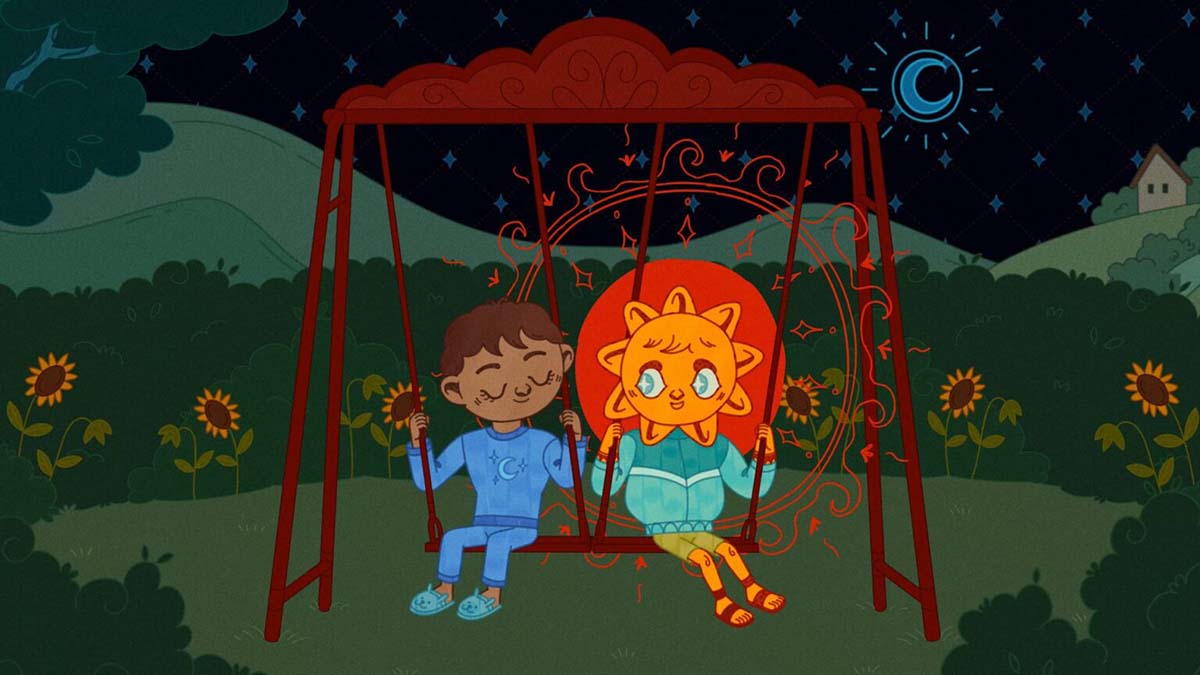
It began with the Czech-Slovak ‘Eeny, Meeny, Miny, Moe!’ by Andrea Szelesová, in which wordless visual imagery turns childhood otherness into cosmic mythology. Set in a mythical playground floating above Earth, the story centers on Yios, the child of sun-god Helios, who struggles to keep his father’s solar crown under control: when it emits powerful light, the result harms his playmates (young gods, monsters).
Despite possessing divine qualities, Yios’ thoroughly childlike features – a round, sunny-bright face with a soft fringe of hair and wide, star-flecked turquoise eyes – give him a wondering, shy expression. This is in contrast to the snake-like green locks of Medusa, she of the petrifying gaze, whose central framing marks her as the kids’ group leader.
It’s Medusa who cruelly pranks Yios into a sudden fall from the clouds, crash-landing on the playground of an ordinary boy. It’s there, far from all the celestial creatures who have cast him out, that Yios finally finds someone willing to see him plainly, the first step of a gentle journey toward self-acceptance.
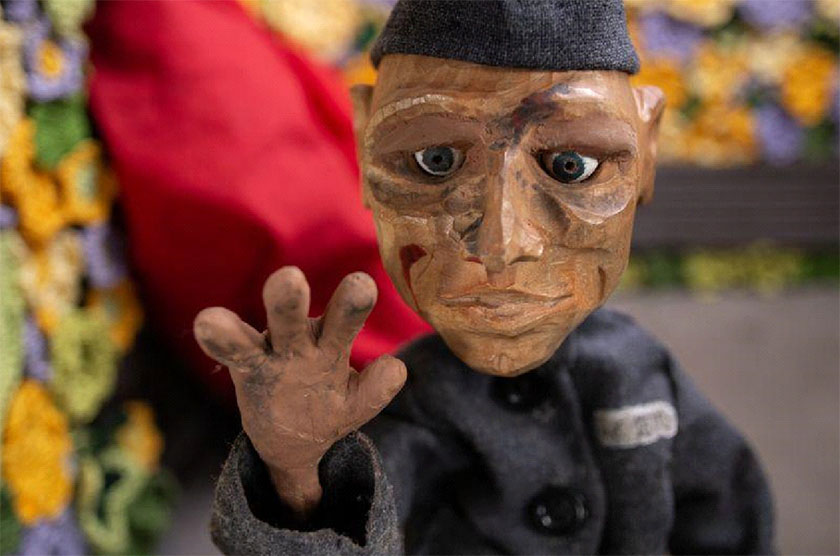
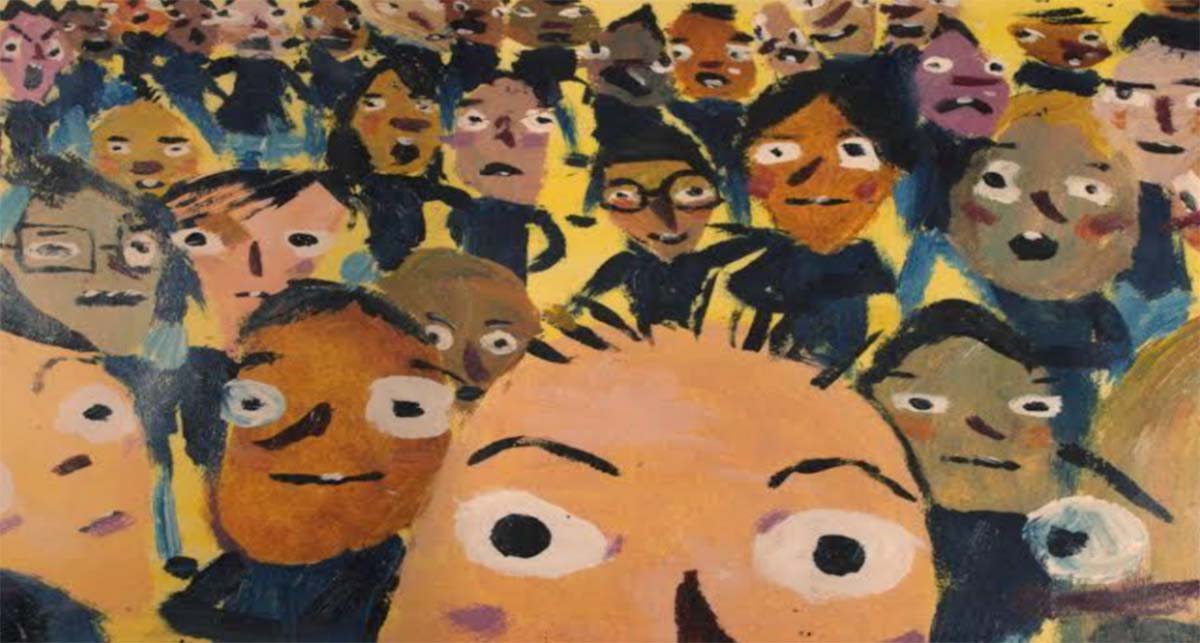
If Szelesová’s film emphasized the importance of inclusion and mental health (in a film aimed at kids and adults alike), Šarlota Ema Horáčková's ‘The Sign of Power’ shifts the program into darker shades. It follows a political prisoner enduring an oppressive “red power” regime, clinging to sanity through memories of his late daughter and their botanical journal. Through the director’s choice to depict the character’s imprisonment and psychological unraveling via fragments of nature and memory – colorful, vivid dreams of his daughter, pressed leaves, and half-remembered sketches from his journal – Horáčková composes a fragile and sentimental counterweight to the prisoner’s secluded isolation. It is a film about holding onto hope through private, internal gestures of resistance, those that remain present in the mind in a way that enables the prisoner to mentally “escape” from the dark, corrosive confines of a prison cell. Overall, ‘The Sign of Power' is not a movie that softens its content but chooses to linger on grief and fear rather than offer much solace to its viewers.
The Sign of Power
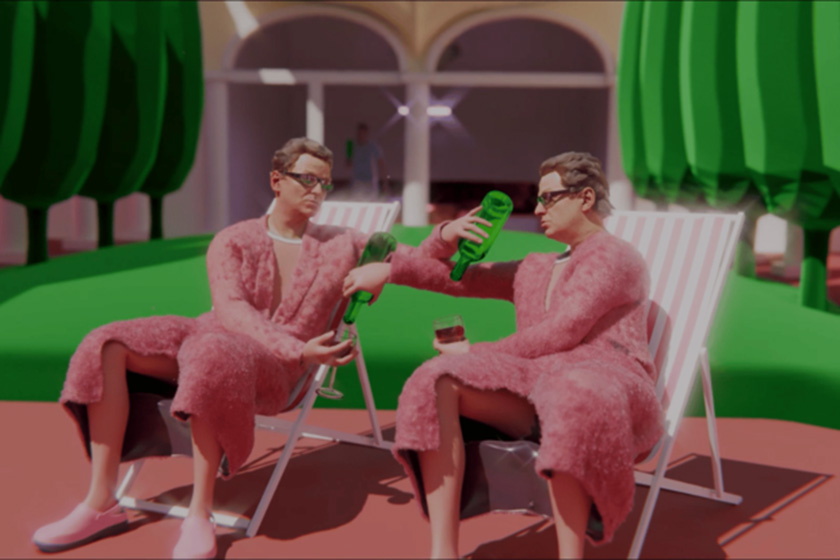
The program's tonal range widens further with Šimon Mészáros’ ‘Quantum Jump’, which abandons realism altogether for an abstract and surreal odyssey in the shape of a sealed, luxurious residence populated entirely by clones – wealthy, idle duplicates that perform everything in complete synchronization.
In this surreal zone of “quantum entanglement”, where the action of one clone is immediately repeated by another, the film opens with one clone-pair relaxing around a swimming pool while a second one is sketching inside it. A servant version of the protagonist discovers the sketcher and tries to rescue them; a seemingly stable and self-contained part of an expensive villa falls into a mysterious rupture that disintegrates into abstraction as reality begins to break down.
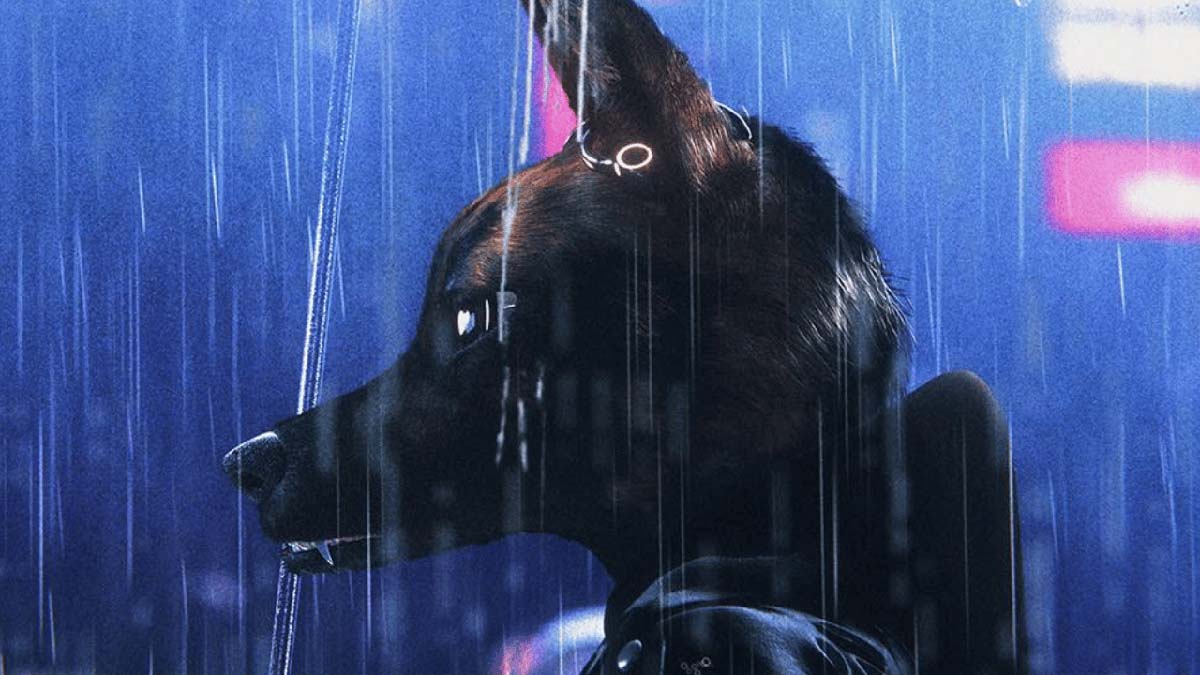
Mészáros shows this decay formally and narratively through the gradual disintegration of his 3D animation into abstraction and through the splitting of the character into several versions of himself in a cyclic loop. What emerges is the ruin of an artificial world, pointing to some underlying method of control. In just 10 minutes, ‘Quantum Jump’ manages to encapsulate a whole world of conditioning and the discovery of the self within oneself.
Quantum Jump
Through the lens of animation, this year’s Slovak shorts competition at Fest Anča reveals a shared willingness to use the medium as a powerful creative tool. Storytelling carries a distinctively personal touch, shaped by each director’s vision, cumulatively emerging as a genuinely compelling program.
contributed by: Fortunata (Tino) Manenti
Want to read more free articles like this?

Keep this professional animation journalism effort relevant and updated. Become our patron

Read More About:
Related Articles


FIND THE RIGHT FESTIVAL

Zippy Frames is the premier online animation journal promoting European and Independent Animation animation since 2011
Zippy Frames
Quick Links