
To Be Surprised in Sixty Seconds: Extremely Short Films at Fest Anča 2025 (GoCritic! Review)
ZF Team
We have all heard of Ernest Hemingway’s six-word microstory: “For sale: baby shoes, never worn” (in fact, wrongfully attributed to the famed writer, as the phrase first appeared years before), and we can agree that it is hard to tell a meaningful story in just one sentence. What if we take away the words and replace them with images? How many pictures would it require?
The Extremely Short Section of Extremely Short Films at this year’s Fest Anča proves that just under 3000 frames completely suffices. By observing this program of 37 films that rarely exceed the two-minute mark, we can attempt to uncover the secret to good short-format storytelling. The variety of the shorts doesn’t make this task any easier: there are punchy comedic bits, experiments with different media, dreamy musings on the meaning of life – most of which succeed in exciting the viewer. Part of the success is in the programming itself. Jakub Spevák and Ema Nemčovičová curated a diverse and entertaining selection that alternates between moments of laughter and contemplation. This intuitive emotional rhythm confidently leads the audience and challenges it to imagine the unimaginable.
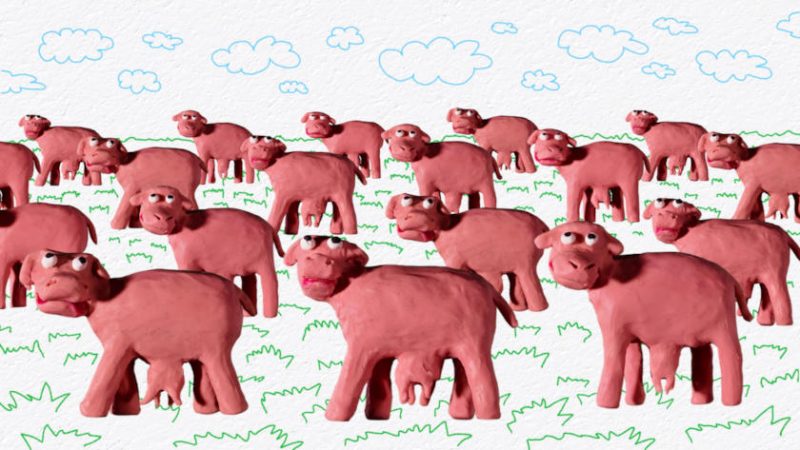
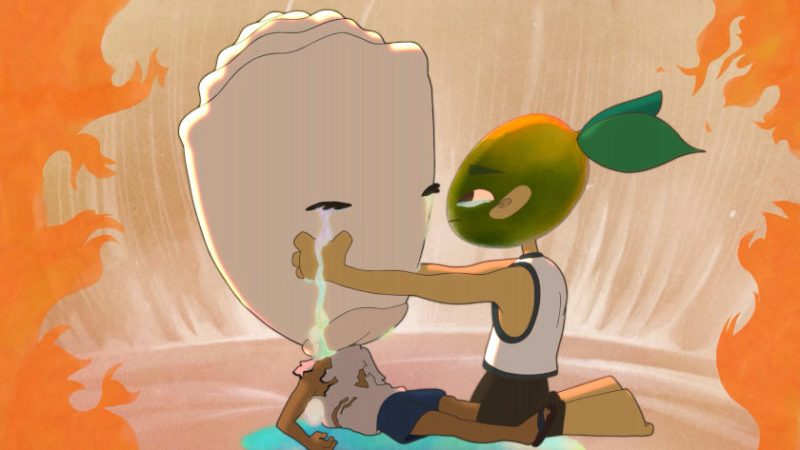
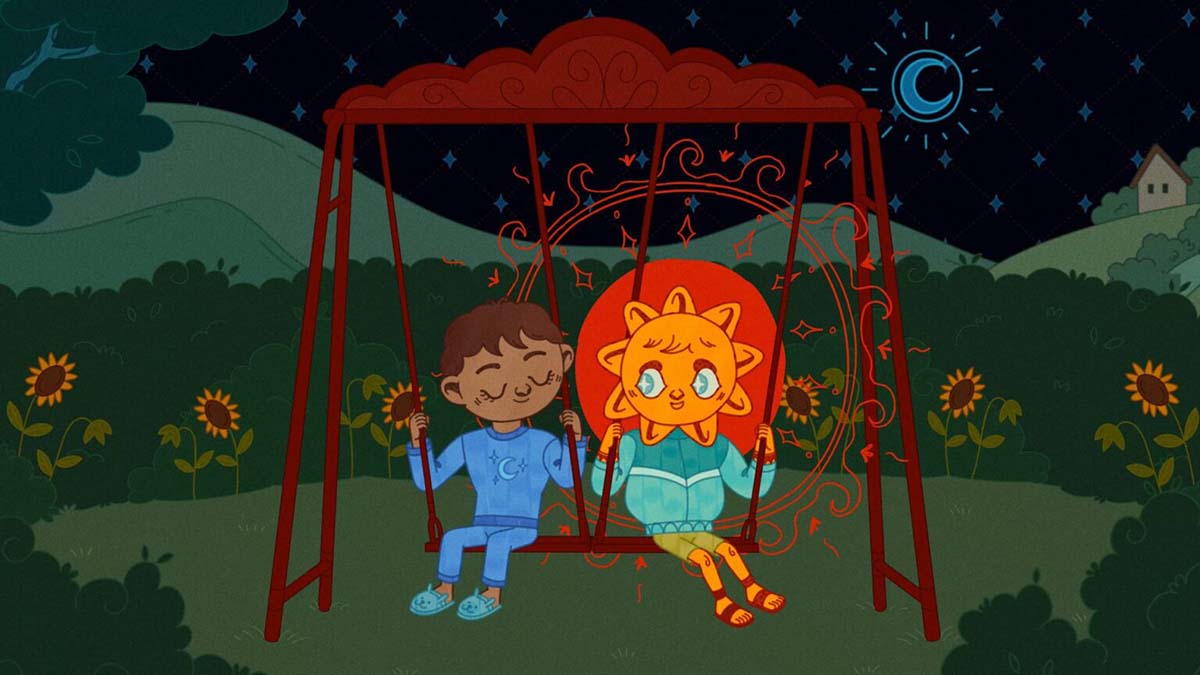
Some of the shorts are not afraid to dive into social and political subjects despite the time limitation. ‘Heads Full of Life’ by Teo Nalani calls for compassion and attempts to depict the anxieties of discovering your gender identity. The idea of gender continues in Zoe Sweeting’s ‘Hair Tie’, which also touches on family and acceptance. Alina Sivets’ ‘Cows’ concentrates on animal cruelty in the meat production industry. All of these examples effectively convey their messages without relying on flashy slogans and melodrama.
Heads Full of Life
The films in the Extremely Short program differ in style as much as in topics. The short form gives the filmmakers room for experimentation with otherwise time-consuming methods of animation. In the selection, we see 3D, cut-out, stop-motion, and scratches on 35mm film side by side. While the utilization of different media and types of animation can be impressive, it shouldn’t be the focus of the entire film. In ‘Don’t cut off the film strip!’ Botond I. Tobai has chosen the difficult technique of animating on filmstrips, but only when we do some research do we find what his motivation is. Using film restoration software, Tobai explores the conflict between creation and destruction, but with not enough time to delve into this subject, the film doesn’t live up to its full potential.
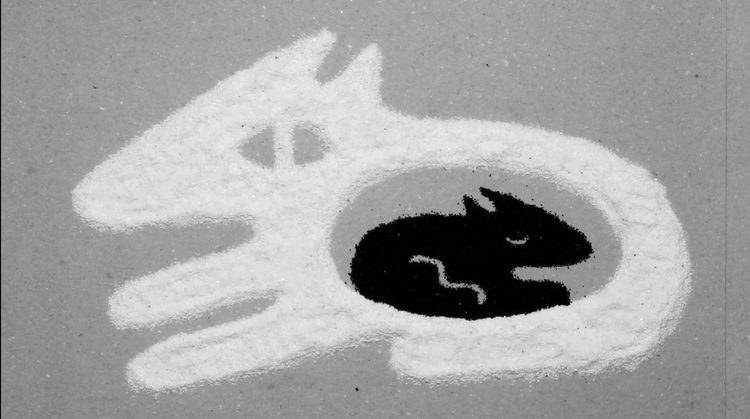
This is a problem for a few more of the shorts in this section, and although they display amazing skills and complex techniques, they sometimes tend to suffocate in their one- or two-minute time slots. Such is the case with ‘Claws’ by director Nim Longley. Cut-outs and collages flash onscreen as a cat and a bird are caught in a hunter-and-prey cycle. The film is dynamic, and its vivid colors and smooth transitions create a stunning vision; however, it feels like it’s missing a resolution. Nina Bączyk finds a solution in her monochromatic ‘In Motion’. Her masterful sand animation depicts a white and a black wolf and follows a similar structure to ‘Claws’, with one exception: she has chosen to end the film with a loop, expanding on the idea of recurrence and duality.
In Motion
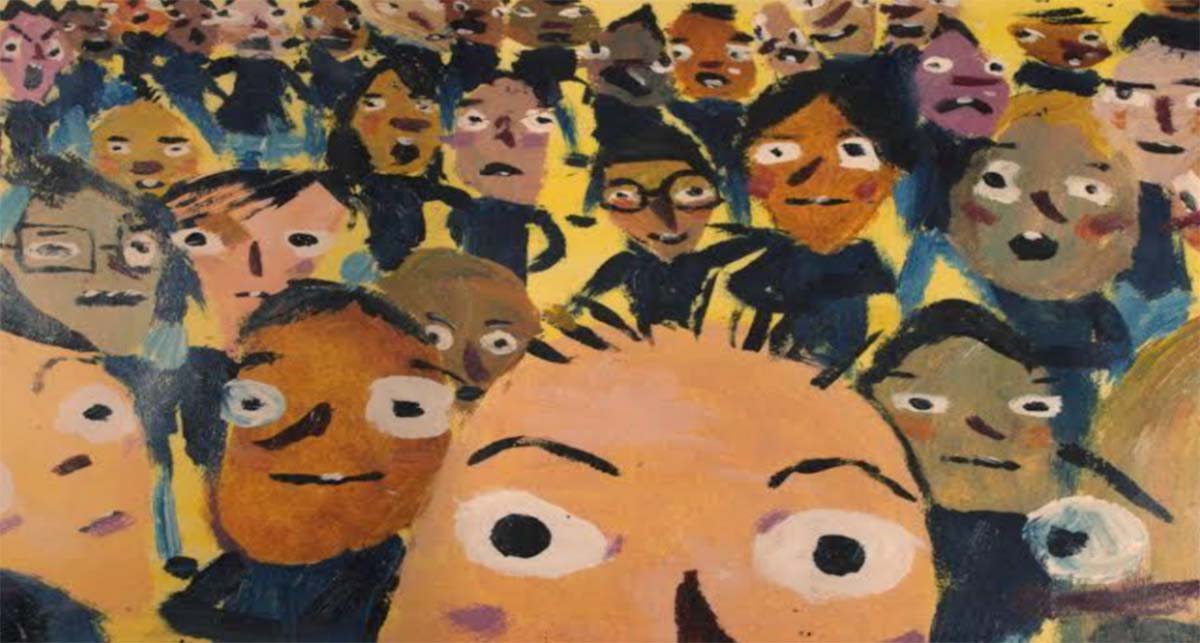
The answer is in the simplicity of the idea. Films that avoid convoluted narratives and follow a more straightforward structure are the most effective, especially if some humor is sprinkled in. Laura Boráros’ ‘Telephone Game’ is a take on a familiar childhood game: instead of delivering his pickup line directly to a woman he likes, a man starts a chain of miscommunication that ends catastrophically. The concept is clear, and Boráros’ heavily stylized characters and sloppy paintbrush lines convey the meaning without burdening the viewer.
‘I Saw You’ by Barbora Vanická uses a similar approach. The short is essentially a single punchline, concisely developed in a single minute of runtime. A man spits on the ground, but the elderly woman nearby spots his transgression and chases him to punish him. Barney Thomas Fagan’s ‘The Joke’s Butt’ and Victoria Young and Niels van der Donk’s ‘Barry’ bring it even further – they are almost anecdotal, and their exaggerated 3D graphics and bright colors set the mood right from the start, declaring: don’t take this film seriously. Yet comedy is not a requirement – for example, ‘Long Distance’, Michael Frei’s minimalistic pixel animation about a traveling fly delivers its twist without expecting us to laugh, yet the concept leaves a mark on our memory.
The key is the element of surprise. If a story feels too familiar, there is a risk of boring the audience. But we are anything but bored while watching the Extremely Short section. We are amused, confused, inspired – and exactly this is the purpose of cinema, no matter the length.
contributed by: Andy Stoeva
Read More About:
Related Articles

Submitting your film to festivals? Get a festival roadmap for your animated short: the right festivals and pitching events, matched to your film. Festival consultancy →
Get Our Weekly Indie Animation News

Zippy Frames is the premier online animation journal promoting European and Independent Animation since 2011
Zippy Frames
Quick Links