
Building a new Jordan animation from University of Petra: Interview with Tariq Rimawi
ZF Team
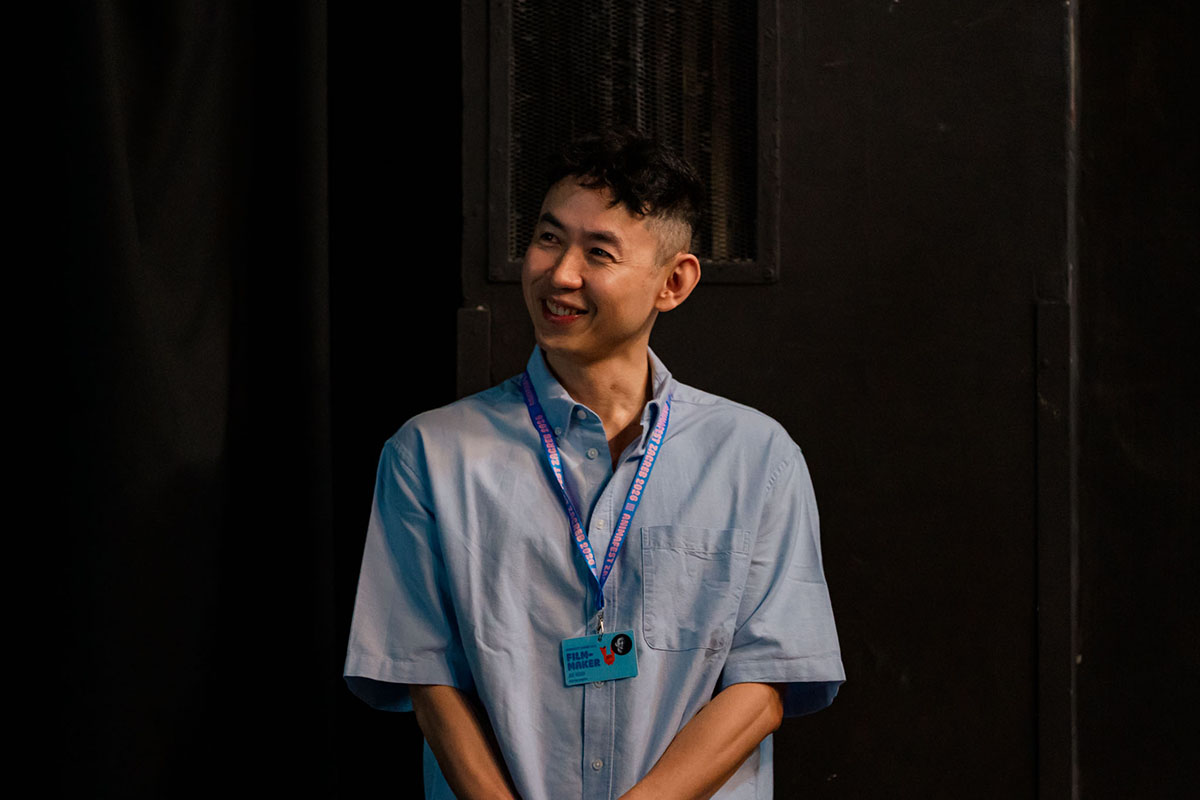
On October 15, the second year of the four-year bachelor’s degree program Animation and Multimedia Design - held within the Faculty of Architecture and Design- starts at the Amman-based University of Petra in Jordan. Experienced Jordan animator and filmmaker Tariq Rimawi leads the four-year course.
Zippy Frames interviewed Tariq Rimawi about his aim to rebuild a Jordan animation industry from the University of Petra and his view and aims on the Arab and Middle East animation industry.
Tariq Rimawi (1980, Kuwait) received his first degree in graphic design at the Jordan University of Petra in 2006. Two years later, he received a scholarship to study animation at the Newport Film School in the United Kingdom.
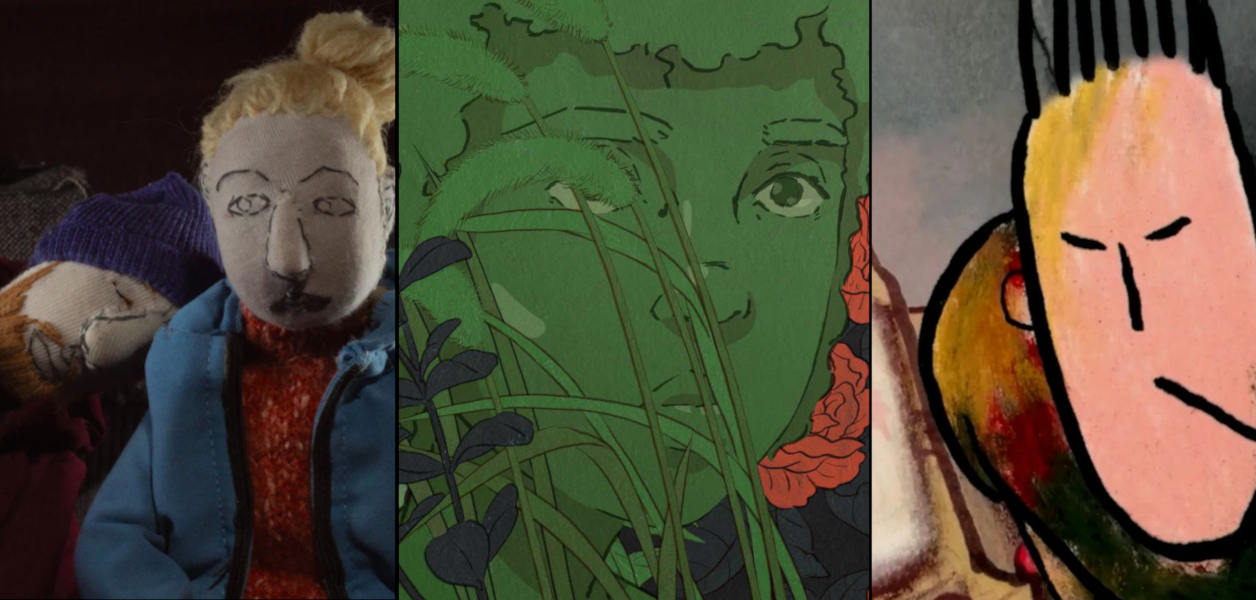
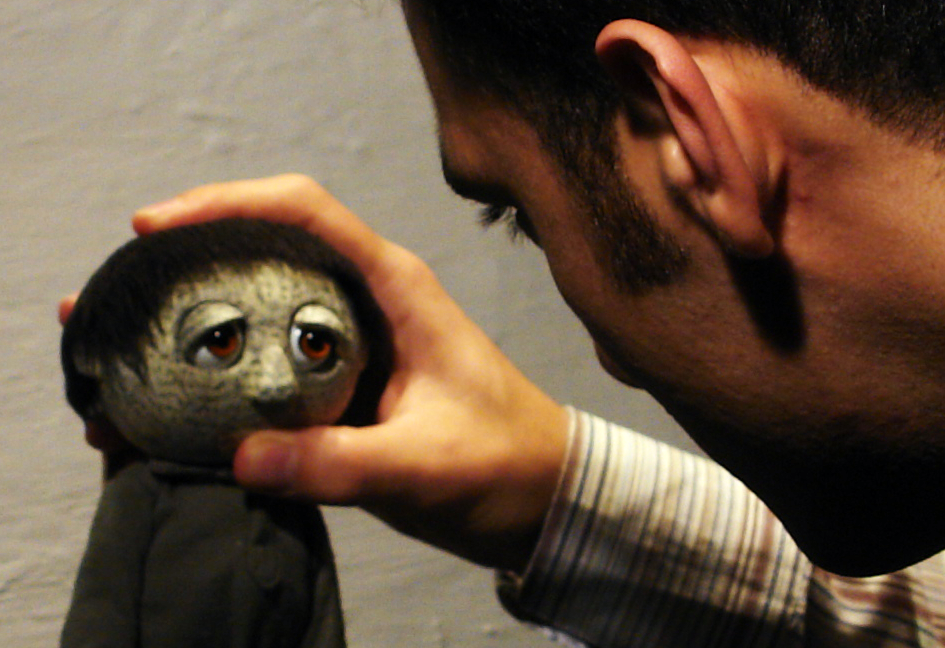
The Jordan animator finished his PhD in animation at Loughborough University, supervised by Paul Wells. In 2010 Tariq Rimawi graduated with 'Missing', an animated short which received 12 awards and was shown at over 100 animation festivals worldwide . In 2013, he finished his second short animated film 'Growing' in collaboration with Ma3mal612, and in 2016, he finished his third film 'Surprise' in collaboration with Cultural Recourses. 'Surprise' was selected to Animafest Zagreb in 2017.
PS. How did you get involved in the degree program at the Jordan University of Petra (UOP)?
TR. As soon as I finished my PhD. I came back to Jordan and the University of Petra. The board of UOP asked me to establish an animation department, because in Jordan, we have very few institutions that teach the art of animation. On the other hand, most universities focus more in teaching computer design and computer programming.
PS. The curriculum at UOP is much broader. It exposes students to a range of animation and multimedia design, including the process from pencil to pixel, 2D and 3D animation, Character design, environment design, and various multimedia forms.
TR. Yes, we are laying the groundwork for our students to learn the basics of animation, including anatomy drawing and frame-by-frame drawing. At this moment, we are creating a lightbox studio for classical 2D animation, it will be the only studio in Jordan of this kind. It is my belief to teach our students the best of animation, also in CGI. The plan of the degree program is to teach character design, graphic design, 2D, 3D, mobile applications, game design, motion graphics, and infographics, classical and CGI. Students can express their needs in the four-year program for the graduation project. They can do whatever they like and follow their passion.
PS. Do you have aims for the curriculum?
TR. For the curriculum I have looked what they do in the UK, USA, and Jordanian universities, and as I have learned at Newport Film School and Loughborough University in the UK, I also visited some institutions in the US such as New York Film Academy, School of Visual Arts, and UT Dallas to learn more about the American education system in animation course. In addition to that, I was at Nanyang Technological University (NTU Singapore) in Singapore when I participated in the Society of Animation Studies conference (SAS) in 2016. Yes, I use the production and success of my first film, Missing, too, in my curriculum to teach the students how to make short stop-motion films. The aims for the curriculum is to provide to the students a verity of different techniques and styles of animation in order to make interesting animation projects in the future.
PS. In the information of the degree program I read that it must ‘meet the needs in Jordan and the regional market and aims to enrich the domestic and regional marketplaces to become an important part of the creative industry in the Middle East’.
TR. That is correct. Most of our students come from Jordan, Iraq, and the Gulf Area, such as Saudi Arabia, the Emirates, Kuwait, and Oman. After graduating, they will go back to their home countries to help build up their countries' animation industry. In the countries named before, there are animation programs, but only a limited schools teach animation. But our university is highly recommended in the region and has a high reputation; The UOP is the first institution to obtain the Quality Assurance Certificate from the Higher Education Accreditation Commission in Jordan. The graduating students at my department will show what we can do: if the students choose to do CGI, there are a number of studios in Jordan and in the Middle East where they can work with this type of animation. Some of them will find work in the game design industry in the region, like in Jordan. King Abdullah II of Jordan supports the game design industry and animation to become a platform for the region (news article 1 and article 2)
PS. Also, Saudi Arabia recently announced it will invest heavily in the entertainment and gaming industry, I read.
TR. Yes, you are right. Jordan, Saudi Arabia, the Emirates, Lebanon, and Egypt are the top countries for the game and animation industry in the region. Syria used to lead the industry before the war. Indeed, it was one of the capitals of animation. We hope to collaborate with universities from Arab countries and to exchange European students in the future through the European Erasmus+.
PS. How do you look back at the first semester of 2016/2017?
TR. We have a very good number of 50 students, who all have lots of creativity. The first year was to build a foundation, in this second year they start to do animation, drawings, learn to use Adobe programs such as Photoshop and Illustrator, basic software programs, and mobile applications. At the end of this semester, we will produce some clips made in classical and 2D/CGI animation.
PS. Your first film 'Missing' is made in stop motion, a form of animation not used much in Jordan. Do you teach stop-motion during your four-year bachelor’s degree program?
TR. Yes, among other forms of animation.
PS. The animation industry in Jordan became unstable, you mentioned to me. Many animation studios closed down or stopped making animation and are focusing on e-learning or gaming, like the former large studio Rubicon, which was involved in animating Pink Panther and the 3D featured film version of Postman Pat in 2014. Rubicon recently closed a deal to work on a full-length football game in co-production with the Japanese company Yasu.
TR. The owners and animators at studios in Jordan have no academic background in animation. They just saw it as a hobby or something they liked, used their own creativity and high skills in drawing and animation, and started their studios. To build a strong Jordan animation industry, we must start by equipping universities with the resources to produce a large number of graduates skilled in various animation techniques, thereby supporting the animation studios. That will only take the industry and increase the level of animation in my country to a higher level. It will also bring variety and creativity, something we are missing right now. A strong question is why Jordan does not produce animation for the international market. Most of our storytelling used to target the Arab audience, and I think this is not right. We have to target the domestic and international audience, and we have to make universal stories. We can achieve this by teaching the techniques in storytelling at Universities.
In a separate reaction to Zippy Frames, Zaidoun Karadsheh, founder and partner of the Amman/Jordan based animation studio Sketch in Motion, responsible for big Jordan animation hit TV series and featured films like Halwasat, Sehetak bel Denia, acknowledges like Rimawi the Jordan animation industry is getting slow for big series like Al-Masageel, as the Gulf region are cutting budgets, especially TV stations.
PS. How would you define the current status of the Jordan animation industry?
TR. Like Zaidoun Karadsheh, I also see cuttings on budgets in our region at TV stations, but that is also happening in Europe and in the rest of the world. The current generation is building a history for animation in the region. A recent success is Bilal, the first featured 3D animated movie in the Middle East, made by a Saudi producer, Barajoun Entertainment. The story is by Ayman Jamal, with a screenplay by Alex Kronemer, Michael Wolfe, Yassin Kamel, and Khurram H. Alavi. This movie was shown in the competition at Annecy in 2016. Many people in the Arab region bought cinema tickets to see this film. It brought back trust for animation coming from the Middle East and Arab filmmakers. The future, I see, will also come from the new generation of Jordanian animators, who are in my four-year program at the University of Petra. We hope to be a part of building a strong future in animation in Jordan.
PS. From 2012, Jordan used to have the yearly animation festival JoAnimate, but it stopped. One time, you were a jury member at the festival.
TR. Yes, it's really sad that JoAnimate had to stop due to a lack of sponsors. We hope that the University of Petra will recreate an animation festival in Jordan in the future. Right now, animation has a place at the Jordan Karama Human Rights Film Festival, organized by Ma3mal612, which holds a special animation category this year.
The 2017 edition will be held between 5 and 10 December in Amman. In 2016, the German animated film 'In the Distance' by Florian Grolig won the Karama Feather Award. In 2015, this award for best animated film was given to 'Dinner for Few', made by Greek/USA animator Nasos Vakalis.
PS. Many Jordanian animators are independent, like Ahmed Saleh, Sandra Dajani, Mahmoud Hindawi, and you. I read that independent filmmakers do not receive governmental funding. What is their future?
TR. Yes, that is correct. However, we need to focus on the feature films from Jordan to be seen in cinemas in order to grow this industry. Currently, a team is planning to write a first feature film. As a filmmaker myself, I can share the news that my film 'Surprise' was bought by a TV station in Poland, but we also need distributors from Jordan to show our works in the Jordanian TV channels, in the region, and the international market. Most Jordan animators use YouTube and Vimeo to express their shorts.
contributed by: Peter Schavemaker