
There's a Tiny Border Between Utopia and Dystopia: Interview with Ana Nedelković and Nikola Majdak Jr.
ZF Team
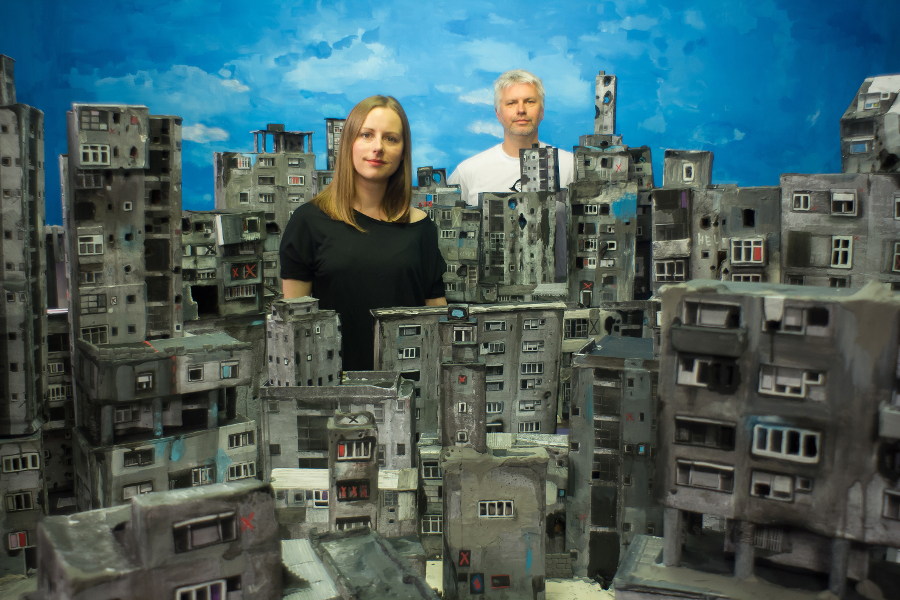
They were first heard internationally when they won the Cristal Bear at the 2013 Berlin Film Festival. Serbian animation directors Ana Nedeljković and Nikola Majdak Jr. used their pink puppet rabbits to tell a highly politically charged story of democracy and its abuse in their Rabbitland. Winning over 15+ awards and participating in more than 80+ festivals, the film has been one of the highlights of contemporary Serbian animation production.
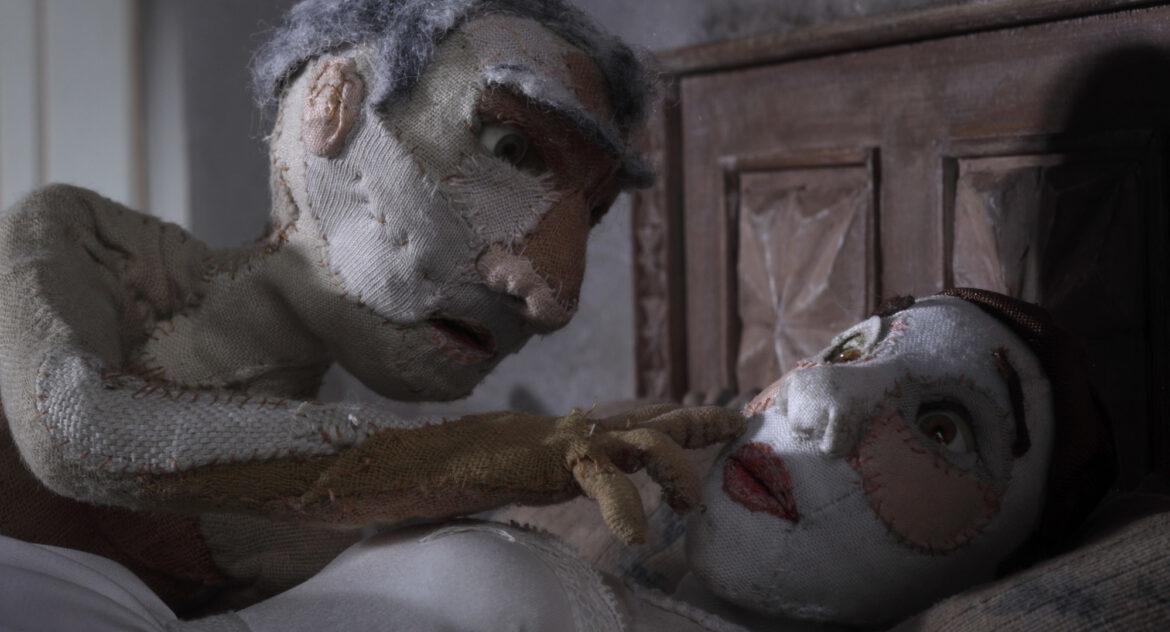
Their new stop-motion film, Untravel, started from personal experiences and the 1990s wars that broke the former Yugoslavia apart; for a long period, as its directors state, it was very difficult for its citizens to travel. However, the stop-motion film is not just a documentary about the 1990s Balkans: it is rather self-described as a film about (local) patriotism, tourism, and emigration, the three critical topics in our society, as its directors state.
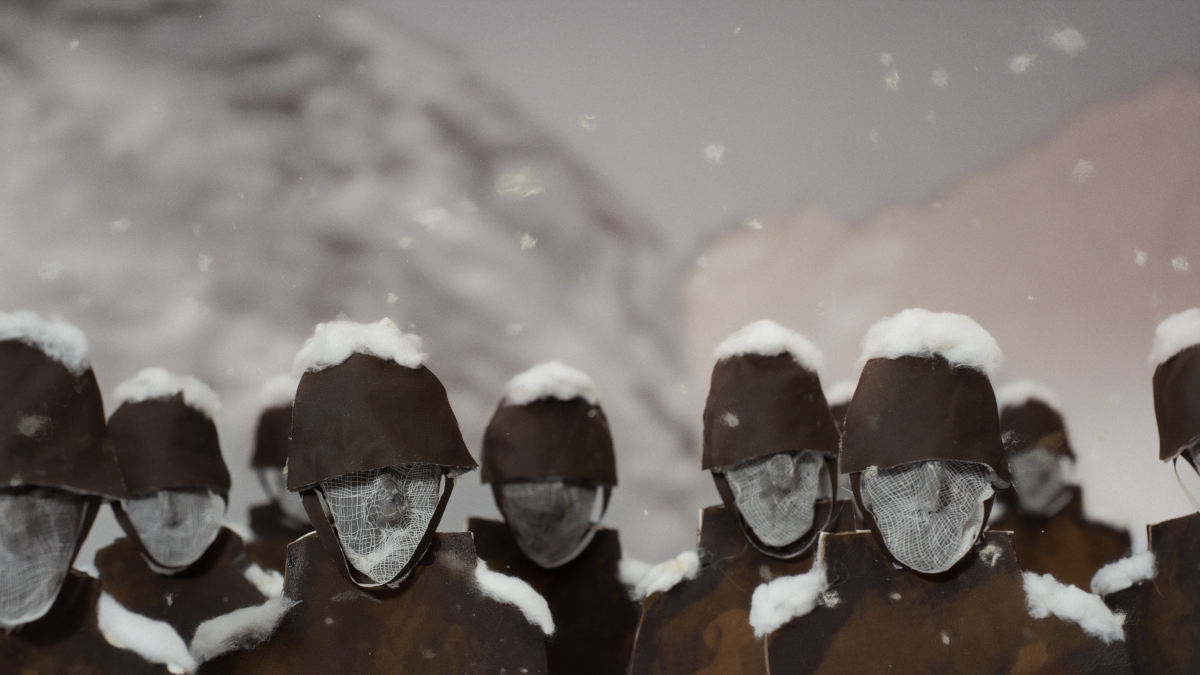
The girl lives in a gray, isolated country, enclosed by a huge wall. She has never traveled anywhere, but all her life she has dreamed of leaving forever for a perfect world called “Abroad.”
Once more selected to premiere at the 2018 Berlin Film Festival, Untravel is a co-production between Serbia (Baš Čelik / Jelena Mitrović) and Slovakia (Your Dreams Factory / Eva Pavlovičová, BFILM / Peter Badač). It was selected at the competition programmes of both the 2018 Annecy and Animafest Zagreb festivals, and now continues its festival tour -next stop, the Sarajevo Film Festival. We spoke with Ana Nedeljković and Nikola Majdak Jr. at Annecy Festival.
ZF: How did the project get started?
A.N. After the success of Rabbitland, I wanted to make a film related to my personal experience: living in Serbia during a problematic period (war, crisis), when a complex visa regime was instituted. I was 13 years old; up to my late 20s, I was not able to travel anywhere. I experienced all this as a personal problem. It was as if I had something to do with it -and I was ashamed of it.
During this entire period, I had the same dream: I traveled for the first time in my life, got on a cheap travel bus, and stayed in a hotel. But when I opened the room windows, there was nothing out there. My dream was only the starting point, of course: our aim was to present a story of living in an isolated country and the relationship between personal and political borders.
N.M. During our film production, refugee movements from Syria were also in the news. We wanted to make sure that it's the story of other people around the globe as well. Serbia was located on a key Balkan route that runs from East to west; working as a cameraman on documentaries myself, I've seen many people moving from one place to another. We wanted to dedicate Untravel to people who are traveling for a better future.
ZF: You have a way with words in both Rabbitland and Untravel. Alphabet letters are written in strange ways, and word and phrase repetitions occur. Tell us more.
A.N. There's a very logical explanation. The official language of both Untravel and Rabbitland is Broken English. This is the language we are used to speaking all the time, and characters use it with a lot of different mistakes, etc. We really want our films to have a direct impact on our audience. We are thinking of our film from the beginning as either a big or small screen; our audience has to be hypnotized. Small puppets are real behind the screen.
ZF: Was the film's length always fixed?
A.N. From the beginning, we were confident that it would be around 8-10 minutes. What was very tricky was the end of the film, which initially was different than the one we now have. It started with the girls building the wall with the sentence "it's important to preserve Utopia from whichever side of the wall you're in", but this was more hermetic. Furthermore, Donald Trump was elected at that period, with his own plans to build a wall; then, we were suddenly afraid that 'real world' situations would definitely be stronger than our film. We could have used it as a real-world reference, but we didn't want to just comment on the contemporary situation. Reality is a better scriptwriter than we are. So, we changed the ending.
ZF: How was the allocation of responsibilities between the two?
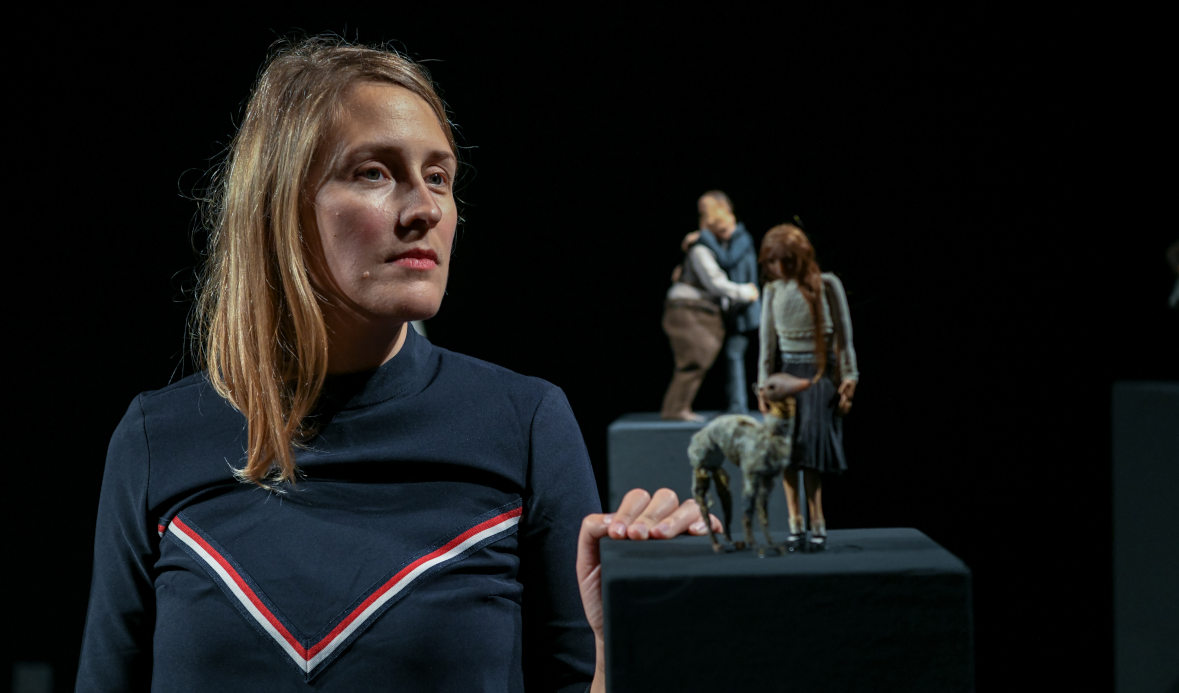
N.M. We are co-directing and co-animating. Ana is making the story and creating the puppets, and we develop the story and animate the puppets together.
A.N. I'm a visual artist and I graduated from the Faculty of Painting of the Faculty of Fine Arts of the University of Arts in Belgrade. I never had any experience with animation, but I made drawings and gallery installations. Seven years ago, I met Nikola at a party, and told him I'd love to make animation. I had already, by that time, the puppet rabbit characters and the Evil Girls developed. We found a way to bring them back to life, and I learned a great deal during that process.
ZF: You investigate media culture a lot in your films. In Rabbitland, it was TV; in Untravel, you expand to social media (Facebook, etc).
NM. Actually, both in Serbia and in Dubai (where I used to live), there is always a warning stating "This content is not available in your country", and this practice grows more and more. The Net will be gradually closing itself.
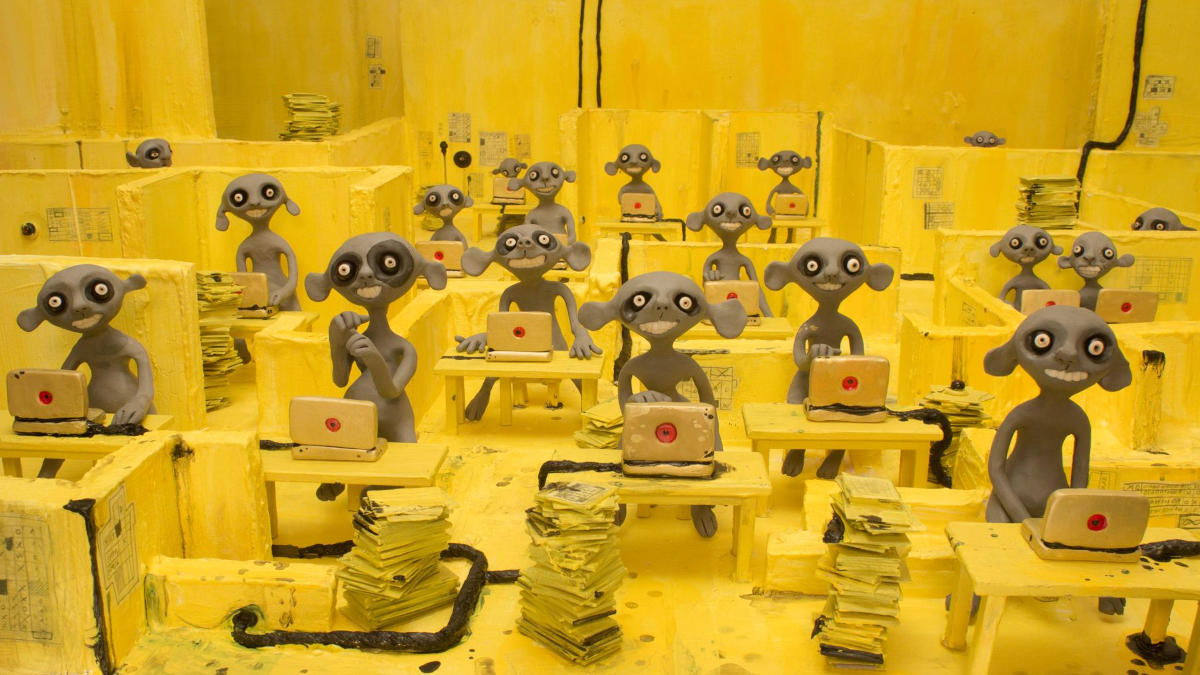
AN. All those social networks and computers are part of our everyday reality. If we want to discuss public space, politics, or brainwashing, we need to include all our realities, both the 'real' ones and the others that appear on screen. If we are thinking of contemporary dystopian countries, all slogans that appeared in previous dictatorships could now be interpreted as 'like' or something similar.
ZF: What impressed me was that all those signs of technological advance were side by side with the total ruins of a country/homeland.
NM: The sets and the ruins were from our neighborhood, a 10-minute walk from the Belgrade center, just behind our studio. We made photocopies and cardboard, and Ana started painting them.
{gallery}stories/galleries/untravel{/gallery}
AN: I am obsessed with how Belgrade looks, a love-and-hate relationship. What fascinated me during my childhood were the colors. You have gray, gray, and more gray. In our films, we work in general with few colors, it's our own way of storytelling. Before we start shooting, we need to have the precise meaning of every color in the film. In Rabbitland, it was pink with a juxtaposition of gold and gray: cute-looking rabbits living in the worst dystopia. In Untravel, there's only black, white and gray -with red and blue as additional colors. (Also, the colors of the Serbian flag - red, blue, white- even though there are many more countries with those colors). Red marks the intense moments in the travel, and blue is for the sky.
ZF: What are the reactions to the film in Serbia?
Belgrade Documentary and Short Film Festival, and we won the Grand Prix there. We discovered two types of reaction, coming from people from Eastern Europe and audiences from 'more developed' countries. Eastern European audiences have recently faced political challenges, and they perceive the film as a means to escape their own country. On the other hand, audiences from 'more developed' countries experience the film more as a search for a personal identity outside the political borders.
ZF: Why does your main character in Untravel look like the Evil Girls in Rabbitland?
AN: We wanted to make two different but connected films, Untravel and Rabbitland. Untravel could be understood as a form of prequel to Rabbitland; it talks about the childhood memories of Evil Girls and the place they grew up, before they escaped. Afterwards, they got both crazy and powerful, and had all the space around them to play in the middle of nowhere, where they created Rabbitland.
ZF: Would you try another medium apart from stop-motion?
NM: Perhaps something experimental, but we'd like to stick to puppets.
AN: I'm happy with that. I really like the fact that I'm 40 years old, still playing with plasticine, and people (from time to time) give me money for this.
ZF: Do you work with the same composer?
NM: Yes, we do. Dušan Petrović is a friend of ours, a rock musician, but also composes experimental and world music. For Rabbitland, we presented him with the concept of a very industrial, dark situation. He saw the film and wrote the score; we only made minor changes. This also happened with Untravel: his music is very affective.
ZF: Why are you using narration? Would you think of actually giving voice to your characters for any of your next projects?
NM: When I was a kid, we used to watch National Geographic documentaries with voice-over narration on savannas, lions etc. We are making documentaries of our civilization in animation. It's a little bit tricky because sometimes people can be depressed watching documentaries. But the very same thing in animation might get a different response. People say, "This is our lives: this is what's happening to us." But we're not putting up the message in front of the audience, we just open up the space for the questions.
We don't explain things with narration; we want to get into our audience's brains. And English suits us as a language. But not subtitles - the audience loses the magic of our film. News broadcaster Maša Mileusnić has a voice we really like. We first used her in Rabbitland, even though we were looking for a male narrator. But then Ana suggested a woman narrator, Maša, an accomplished news broadcaster, who has a certain irony in her voice, even when she tells horrible news (she eventually left her TV job after 20 years of work).
AN: Many times, we are presented with the question of why we use narration, for, supposedly, in animation, you have to present everything via character movements, metamorphoses, or something similar. However, words and voice are very important to us for communicating things. Our references come mostly from documentaries and live-action feature films. For our next project, I think it's time for us to let the characters speak in their own voices.
ZF: Both of your films were in the competition section of the Berlin Film Festival, and Rabbitland won the Crystal Bear (Generation 14Plus). What are your thoughts about it?
AN: Definitely, a great and very useful experience regarding the film's future festival life. Yet, the best thing was the big audience and the intense discussions afterwards. Berlinale to us is not about the red carpet and big parties (these are also to be expected). However, the festival also addresses very important social and political topics, and the audience is equally willing to discuss these issues. What we are most interested in is communicating with the festival audience through our film.
ZF: Do you think that Eastern European animation somehow needs to go 'faster' in its development? Do you feel you have to fight harder than your Western colleagues to get your own voice heard?
AN: That's a very important issue for the entire region. It's true that the animation scene has to move faster, and, of course, lower budgets are involved. But we need to discuss longer-term strategies. Quite a lot of people see their career as moving from one animation studio to the next one, and then abroad in order to get better pay. But I really think that this region has a very strong potential in auteur cinema, and its enhancement should become a long-term strategy. Not just to develop the industry.
ZF: Some people would say that auteur directors like to work online, and that would be a problem for any such implementation. What would you answer that?
NM: We already collaborated with Slovakia in Untravel for both script and character development in the pre-production stage. But it is not up to us, really; the bigger question is political, and goes up to the EU, which has already classified the region as 'low-capacity' production. Also, the term "Eastern' by itself carries negative associations, which are meant to reflect the uneven perception of both national states and art. We don't want to be perceived as 'exotic' countries. Of course, there are short and feature film EU funds for animation. But, on the other hand, our region has many right-wing politicians, whom the EU is supporting. We made Untravel to spread information and to communicate the situation with its existing problems.
ZF: Is this the end of the puppet journey, or will there be more installments?
NM: We have a trilogy: democracy, travel issues, and ultimately, the economy. Economy is the biggest and most important element that mixes differences around the globe. With a big economy, there's always corruption, poverty; all problems start with this.
AN: It has a cute title, it's called Money and Happiness.
ZF: What is happiness for you?
NM: Friendship, a bottle of wine, and a little bit of cheese.
AN: There's a tiny border between Utopia and Dystopia. Most of the dystopian places were created because somebody tried to define what happiness is for all its citizens, and tried to apply this to everyone. Happiness for me would be to create your own place, where you can live in a normal and truly creative way. With artistic freedom and freedom of expression.
CREDITS:
Untravel /Film by Ana Nedeljković and Nikola Majdak Jr.
Stop motion animation, 9’20’’ (2018)
Producer: Jelena Mitrović (Baš Čelik)
Co-producer: Eva Pavlovičová (Your Dreams Factory) and Peter Badač (BFILM)
Editing: Milina Trišić
Music: Dušan Petrović
Sound design: Vladimir Janković
Final sound design and sound mix: Aleksandar Protić
Narrator: Maša Mileusnić
Want to read more free articles like this?

Keep this professional animation journalism effort relevant and updated. Become our patron

Read More About:
Related Articles
Vassilis Kroustallis
Zippy Frames is the premier online animation journal promoting European and Independent Animation animation since 2011
Zippy Frames
Quick Links