

Shorts 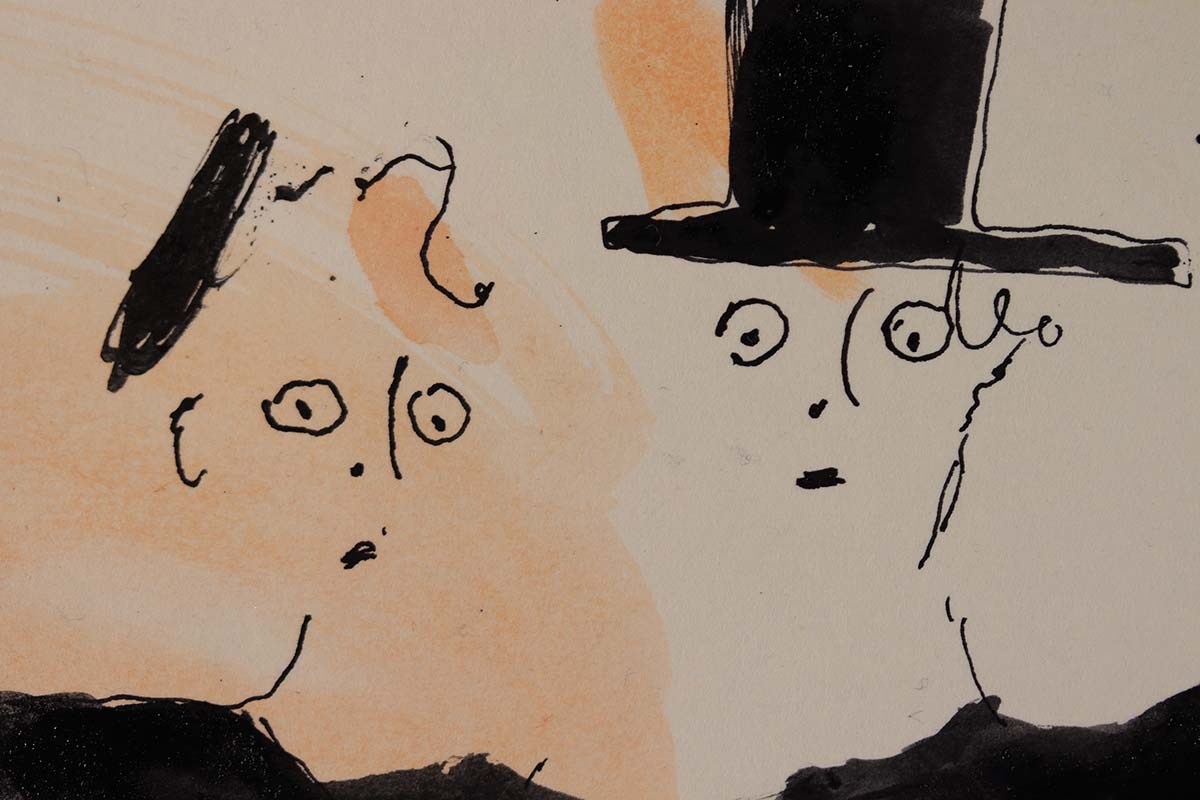
'Daughters of the Late Colonel' Oscar-Qualifying Animation Short: Interview with Elizabeth Hobbs
Vassilis Kroustallis
BAFTA-nominated UK animation director and artist Elizabeth Hobbs (I'm OK, The Debutante) continues her festival success with her 2026 animated short, 'Daughters of the Late Colonel'. Based on Katherine Mansfield's short story 'The Daughters of the Late Colonel' (published in 1920), the film presents two middle-aged sisters who seem at a loss after the death of their domineering father (and colonel). Things will turn out to be more interesting -and funny- in the 9-minute film on handling patriarchy, which had its world premiere at the Directors’ Fortnight, Cannes (May 2026), and has been to a number of festivals since -including Melbourne International Film Festival (Australia) and the Imaginaria Film Festival (Italy), which qualified 'Daughters of the Late Colonel' for the 2027 Oscars.
We spoke with creator and director Elizabeth Hobbs about her work.
The Interview
ZF: You read Katherine Mansfield's short story The Daughters of the Late Colonel a few years ago. Why did you decide to revisit this short story? Also, you have experience in adapting short stories ('The Debutante' was one). Do you think they offer good material for animated shorts?
EH: I adapted Katherine Mansfield’s short story 'The Daughters of the Late Colonel' from 1920. The story has many themes which resonate today, such as the way that women are controlled within families and institutions, and the particular bond between siblings. In making my previous film 'The Debutante', I also worked from a short story that was written by Leonora Carrington. Adapting an existing story is really brilliant; you have the limitation of the original text, which is useful, but you are also building on all the thought and care that has already gone into the construction of the short story, so it really is a privilege.
ZF: The military and the Church are two institutions often marked as oppressive; yet here, it seems they often contribute (not in a good way) to what the two main characters are even supposed to think. Is that what you had in mind as well when making the film?
EH: The daughters are very much controlled by their father, and when he dies, they’re not sure who will even tell them what to think. In the film, the question might be answered by a friendly parson, but luckily they muster the courage to decide what they want, or in this case, what they don’t want. When I was animating the film, the parson grew bigger and bigger by chance, so I let him go; he became really overbearing, and the daughters responded. Katherine Mansfield didn’t have much hope for the daughters in her original story, but in the process of drawing frame by frame and animating alone, I had plenty of time to think and to expand on the original themes in a way that suited the medium of animation.
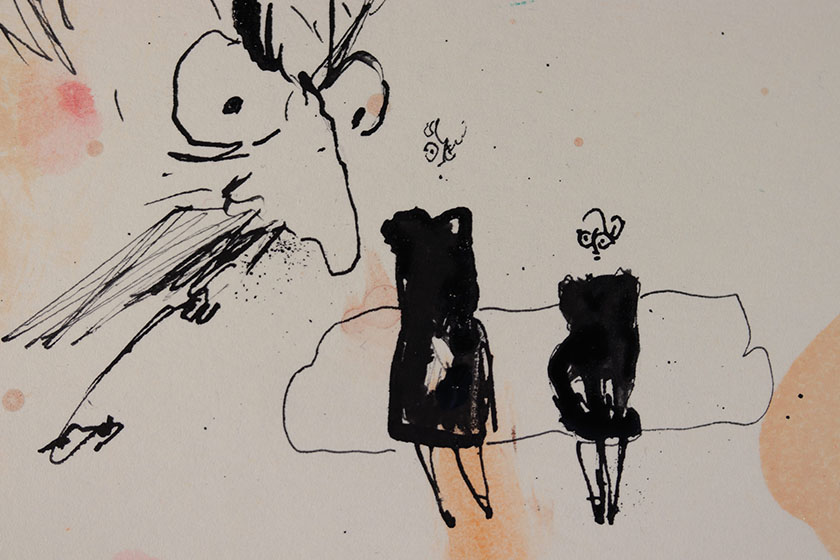
Daughters of the Late Colonel by Elizabeth Hobbs
ZF: You seem to have a lot of fun with vivid color splashes everywhere. Of course, you animate on paper, but I assume it should be a controlled process -yet the outcome is fluid on screen. How do you accomplish that?
EH: I animate on paper with ink and paint, and I work fast and small (the drawn frames are around 7cm wide), but I animate each shot or scene many times so that I can choose the best version. Often I try to limit the amount of detail in the frame, or even reduce the animation or movement if I feel the sound or the score is doing the work. In my practice, I like to try to do more with less if I can.
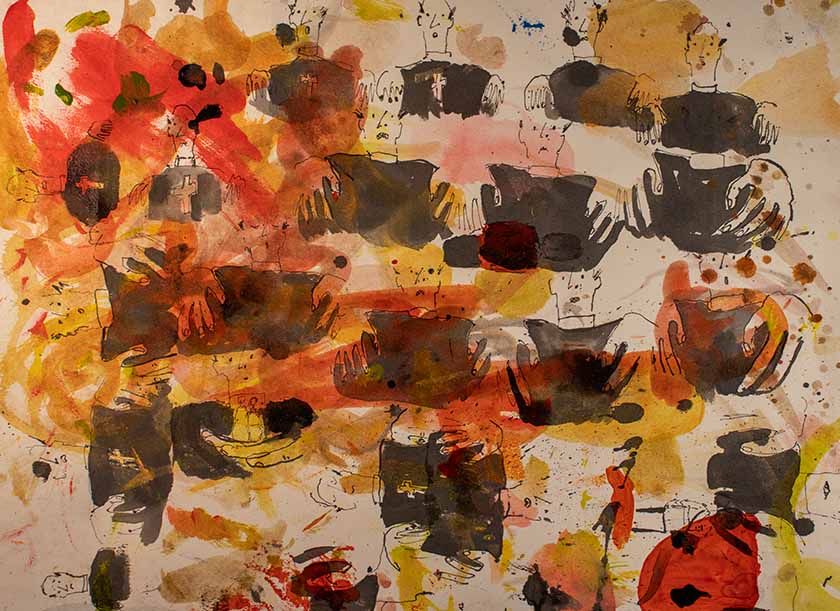
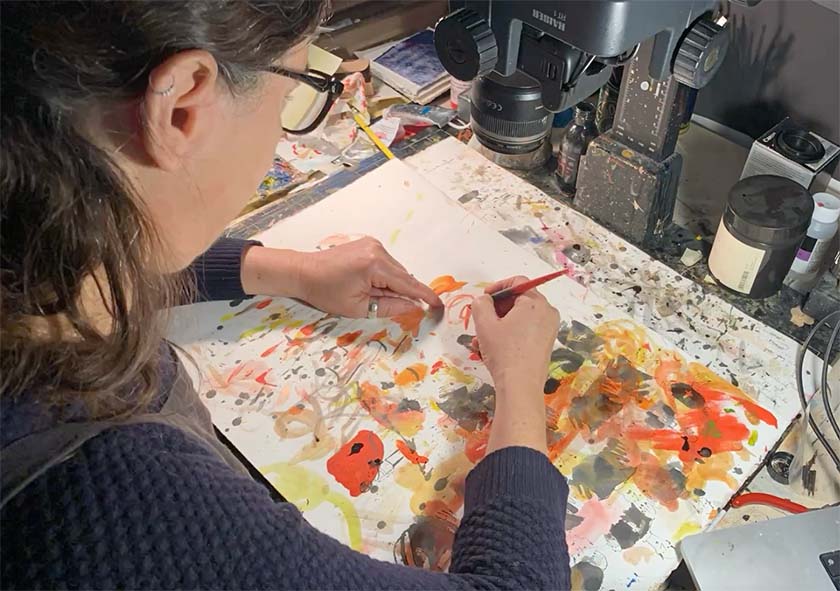
Work behind the scenes
ZF: You cannot make a good comedy (even a subversive one like this) without music in the right places. Tell us more about the soundtrack and the musical instruments in particular.
EH: Composer Hutch Demouilpied was very thoughtful about the connections to the author, the place, and the institutions in the narrative. We collaborate from the very beginning; she sends little samples of her musical themes that the editor, Mark Jenkins, can cut together with the early animation in the timeline. She is a trumpet player, and in this film there are some beautiful and funny bugles and trumpets working hard on the Colonel’s behalf.
ZF: Some animation directors leave out the written word in their films, but you endorse it (at least in some of your films). How did you select your lines from the source text here? Did some lines come to you as absolutely needing to be there from the start, no matter what, or was it a big process of negotiating what to include and what to leave behind?
EH: A lot of the humour in the story comes from what the daughters and the Colonel say to each other, so I felt it was really important to keep the dialogue. The spoken lines also provide rhythm that can help us to advance through the story. Additionally, what they say communicates a lot about their characters and the time in which the film is set.
ZF: 'Daughters of the Late Colonel' is a fun film to watch, but only because the women become strong enough to overcome abuse, mansplaining, and harassment. It's amazing that, even though it's outdated, you still feel it's relevant (even if the details change). Did you have any personal relationship to the material that you can narrate?
EH: In terms of a connection to the themes of the films, I do have a father who was a military man (although he definitely wasn’t shouty or controlling) and a sister who I am very close to. We were also educated in a religious institution, so there are definitely some relationships I can connect to in the film.
ZF: Complete the phrase. Comedy is….
EH: Comedy is very effective in helping to communicate serious themes, and it’s also so important to laugh together. I find great joy in making the work, and I hope that comes across in the finished piece.
Watch the 'Daughters of the Late Colonel' Trailer
'Daughters of the Late Colonel' is a film by Elizabeth Hobbs, produced by Animate Projects Productions Limited, Phil Davies Films Ltd, and Fabian&Fred GmbH.
Read More About:
Related Articles
Have an animated short film?
Get it featured on Zippy Frames. We present, interview and cover independent animation shorts of every animation technique.

Zippy Frames is the premier online animation journal promoting European and Independent Animation since 2011
Zippy Frames
Quick Links
