
Shorts


'The Looking Game' Animation Short by Ann Upton
ZF Team
What is your media attention in animation short films and how you can trust a narrator? Ann Upton and her 'The Looking Game' animation short (completed during the RCA film studies in the UK) asks those questions and maximizes them to a degree, going from the ideas of machine learning to Miro collaboration boards and beyond.
For the film's online release, Irish-born Ann Upton talked to Zippy Frames and guided us through the process of making the film and, also, the conceptual underpinnings behind it.
ZF: You mention that the whole film was initiated by the online Miro collaboration (visualizing) platform and thoughts on machine learning. Which came first, and how did the whole process start?
AU: It started when I attended a lecture on labyrinths. It made me think of the cursors on a Miro board, representing the attentions of collaborators, treading paths across the screen. I thought that if you drew the paths, it might look a bit like a maze from above. They also made me think of eye-tracking visualisations, documenting attention in real time. On a Miro board, a collaborator’s cursor is labelled with their name, and sometimes this label blocks out some piece of information from an observer. With all those ideas in mind, I spent a day making a short concept piece, testing the form and ideas that are still embedded in the finished film. The connection to machine learning started when I included a generated voice in that concept piece. I became interested in ‘operational images’ and ‘empathy for machines’ when I began exploring the work of Harun Farocki.
ZF: Machine learning and AI are vast topics to condense into a short animation film; however, you focused on the distinction between looking and seeing. Can you explain what that difference means to you?
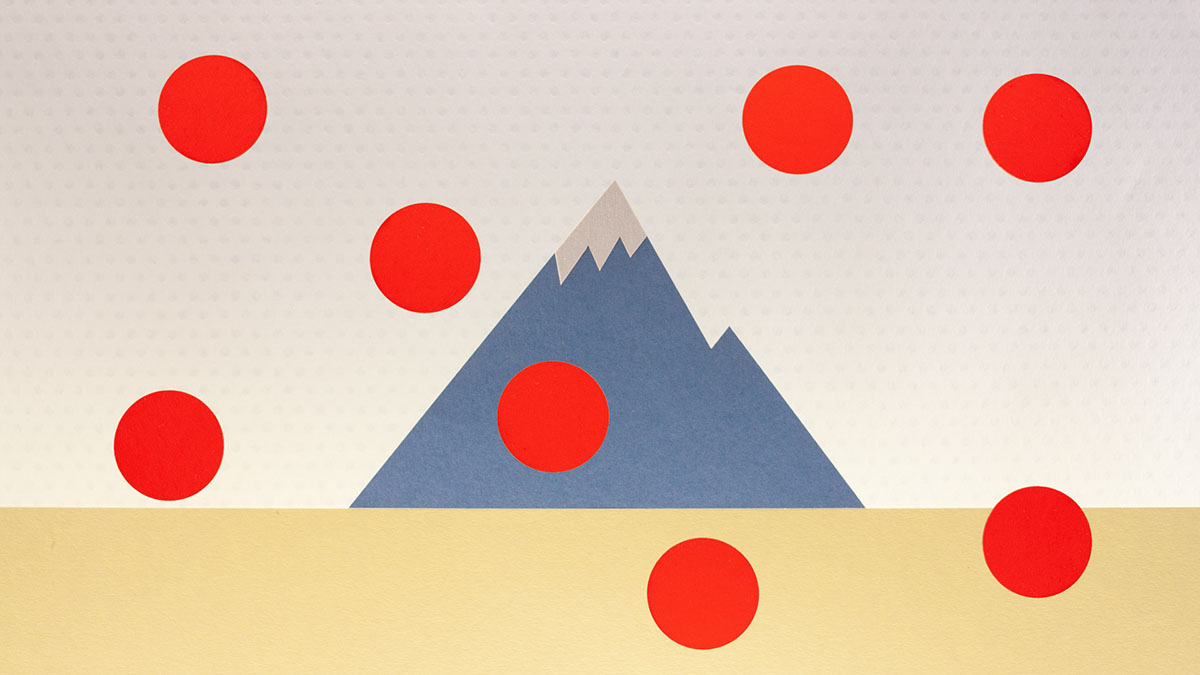
AU: Again, it’s about obscuration. I’m interested in animated films that inhibit the view of the audience. 'Nod. Wink. Horse.' by Ollie Magee, is a great example. I wanted to call direct attention to that idea in the film. The red dots block the audience’s view as the narrator asks if they can see.
It’s also about attention. We consume media so passively now. Over the course of the film, the red dots start to fall away, indicating that the fictional audience has stopped playing the game and is sending their attention elsewhere. It makes me think of the viewer analytics on Vimeo, where you can see how much of your film people watch. It’s kind of interesting that the average watch time on the film is 65% or something, as if the film predicted the attention span of its own audience.
ZF: In an animation short that goes around technology, you decided to use paper cutouts instead. What was the impetus for that, and any additional details you wish to share about the making process (design, animating, editing)
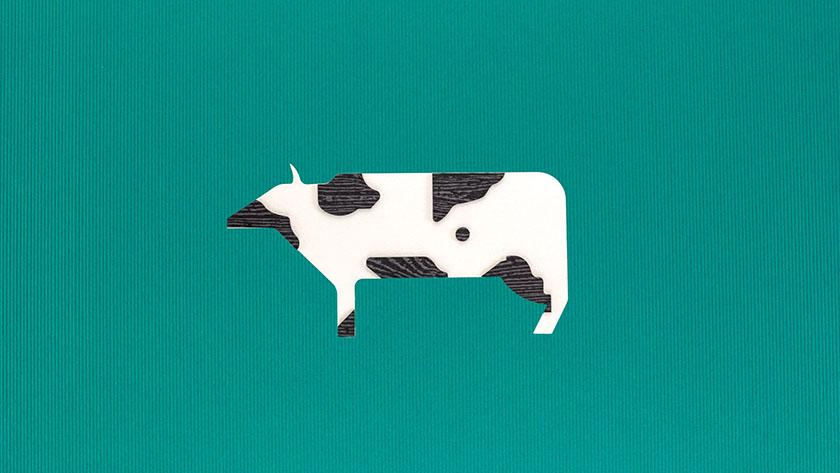
AU: The paper cutout execution was always there, since the concept piece. I often work with paper cutouts, so maybe it started with a familiarity. The more I worked on the film, the more I appreciated the incongruity. It’s a kind of comedy to create such a contrast. It makes no sense for an eye-tracking interface to be made in this way. It’s perfect. It also speaks to my interest in structuralism. I’m interested in revealing the fabricated nature of film, and a medium like paper cutouts draws some subtle attention to that. When the narrator says, ‘this is a mountain,’ you might find yourself thinking, ‘well, no, it’s not.’
'The Looking Game' by Ann Upton
ZF: Narration is very important in the film. Did you make alterations in the script, and how did you guide your actor and narrator?
AU: It took months to get the script right. Then one morning, I woke up and had the whole opening of the film in my head. When I'm so focused on my writing like that, it's when I look away that it all clicks. When I had a complete draft, I made it into an animatic, but kept editing the script while playing with visuals. I made about 8 versions before I was happy. Working with Victoria was incredible; she is an utter professional. In one of my college presentations, a classmate remarked that what I really needed was a sexy yoga teacher as the voice. My lecturer said, ‘That's funny because I have a friend who's a sexy yoga teacher and a voice actor’. We did over 40 takes. I directed her to mimic the intonation of a generated voice, with some more emotion peaking through at specific moments.
ZF: This is an RCA student film. What were the limitations you had to face, if any? Did you have people who helped you along the process?
AU: I had a great experience at the RCA and never would have made a film like this if I hadn’t gone. So many lecturers and technicians advised me in putting this together, but I have to mention my personal tutor, Carla, who was so encouraging. My biggest limitations were a lack of budget and time. We only had a couple of months to develop and produce our films. I ended up making something that’s pretty minimalistic in its approach. It doesn’t even have that much animation in it. In a way, those limitations shaped the film into what it is - maybe I would have made something completely different under different circumstances.
ZF: The 'faux interaction' between the audience and the media permeates the whole film. Is this something that intrigues you in general, and would you like to pursue it in a future project? Or, perhaps, you have a completely different project at hand in the future?
AU: I became really intrigued by that idea when making this film. The reciprocal nature of film means there is no film without an audience. When I finished the film, I felt I’d only scratched the surface of that notion. I’m working on a new short film called ‘Philip’ that plays with some similar themes and ideas. Its form mimics an eye test in a way, with the narrator receiving feedback in the form of audio queues. The film deals with topics like memory, trust, and intellectual care. The film’s form is always what comes to me first – it’s the thing I’m most fascinated by. I have other ideas that don’t deal with this interactivity, but they’ll be driven by some other experiments in form.
Watch 'The Looking Game'
About Ann Upton
Ann Upton is a filmmaker and lecturer from Waterford, Ireland. Challenging film form, she plays with operational images, semantics, psychophysiology, non-human emotion, and interactivity. Her film, 'The Looking Game', completed during her MA at the Royal College of Art, imitates eye tracking, obscuring the audience’s view. This ‘investigative animation’ explores an audience’s response to faux interactive media. It received the Visionary Award at the Polish Festival Animator in 2024, premiered at Ann Arbor, and was acquired by the BFI. Ann was selected as a Tier 2 artist in AEMI’s development program. Her work is supported by the Irish Arts Council and Culture Ireland.
Want to read more free articles like this?
Keep this professional animation journalism effort relevant and updated. Become our patron
Read More About:
Related Articles
Zippy Frames is the premier online animation journal promoting European and Independent Animation animation since 2011
Zippy Frames
Quick Links