
"The Story of Artistic Vision Through Animation": Interview with Tina Ohnmacht, MA in Animation HSLU Coordinator
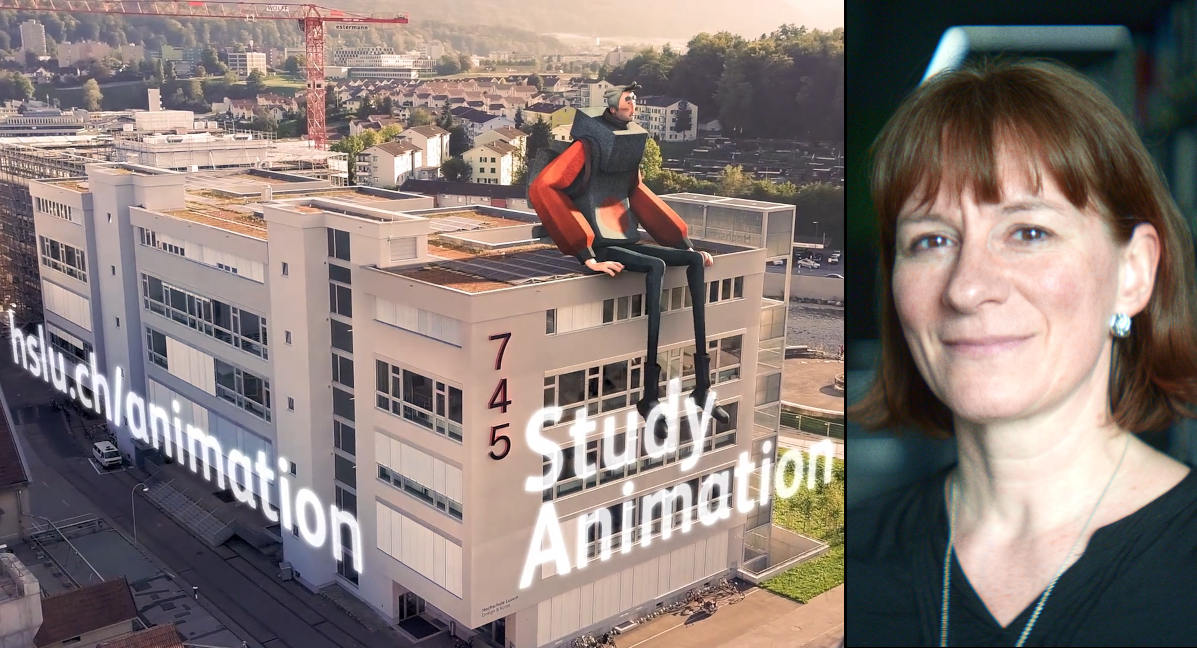
Lucerne School of Art and Design (Hochschule Luzern - Design Film Kunst, HSLU) and its animation department have established themselves as both a Swiss and international hub for animation studies. Some names do come to mind easily: Michael Frei, Marina Rosset, Dustin Rees, and numerous Swiss artists (check, for instance, our Swiss Portraits 2022).
More recent graduate names include the Latvian Anete Melece (The Kiosk), the Swiss/Italian Eleonora Berra with her stop-motion 'Mosaic' (2022), and the Colombian Pedro Nel Cabrera Vanegas with his 2023 animation short 'Tapir Memories'.
Lucerne School of Art and Design has also been a strong presence at major film and animation festivals, receiving the Best School prize at the 2021 Animafest Zagreb; it also participated in the Annecy 2022 Swiss festivities, as part of the celebration of Switzerland as the festival's focus country.
With the new academic year application of the international MA in Animation (entry year: 2026-27, deadline to apply 5 March 2026), it is fitting to hear the particulars of this programme. Prof. Dr. Tina Ohnmacht, coordinator for the Master Animation at the Lucerne University of Applied Sciences and Arts since September 2022, talked to Zippy Frames.
ZF: You describe your MA programme as the programme "where innovative storytelling, cutting-edge production techniques, and fresh creative ideas". How do these all translate into manageable actions and initiatives?
TO: In their first semester, students receive introductory lectures in narration, scriptwriting, storyboarding, and design, followed by one-on-one mentoring sessions with the teachers. This is a very intensive process in which students work, sometimes simultaneously, on storyboard, designs, and script. This usually results in the first versions of the script, storyboard, and first designs. In the second semester, this process is continued, followed by lectures on producing and budgeting, and the creation of a first project bible - called dossier in Switzerland - which corresponds to the Swiss funding regulations. This process of developing their projects is complemented by some theory seminars and practical workshops where the students work in teams and can improve their skills. During their second year of studies, students work on their projects individually, supported by our team of mentors regarding both the technical pipeline and artistic expression. For this, we work with in-house lecturers, but also with guest mentors - professionals from the animation field.
ZF: What is the history of animation teaching in HSLU? Can you outline some major stages?
TO: Animation as a BA programme was officially set up at HSLU in 2002 by Gerd Gockell, an experimental animation filmmaker. From the start, it has focused on skills training in all techniques (2D, 3D CGI, and stop-motion) with a strong link to the industry.
In the MA, students build on their skills, improve them, refine their animation language, and work on expressing their visions and ideas with animation. We collaborate closely with the BA, while offering more individual support for the MA students.
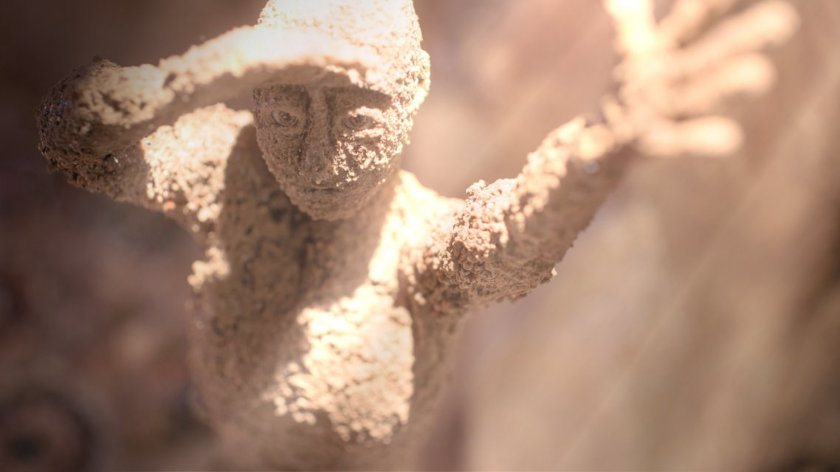
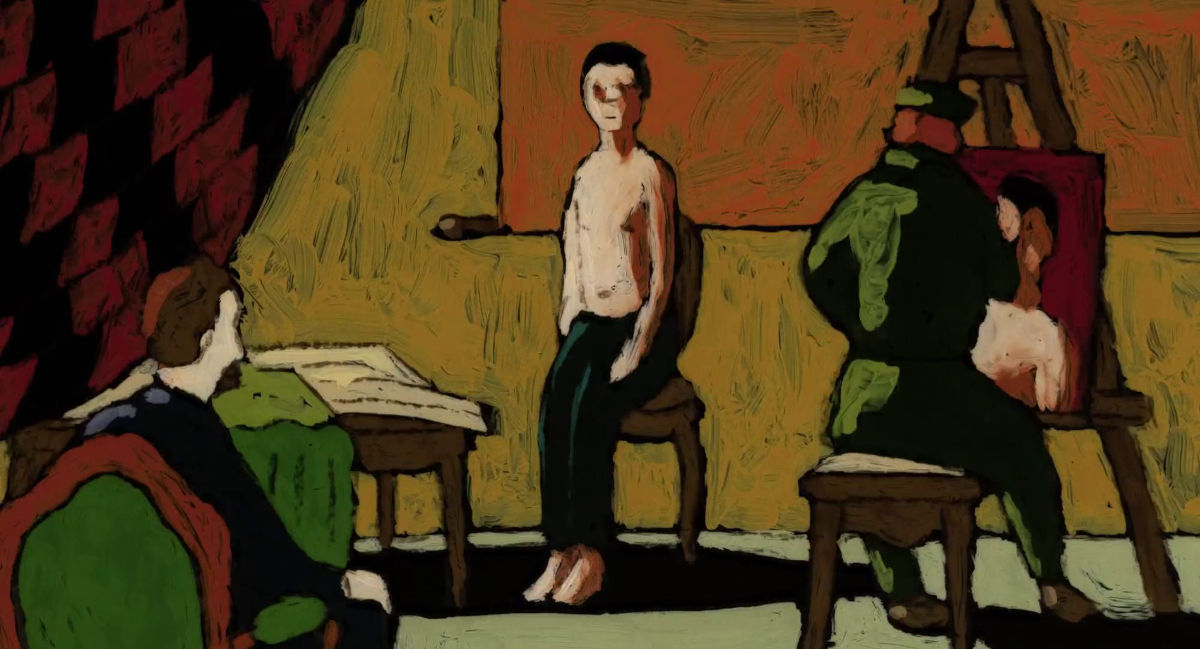
Mosaic by Eleonora Berra, a HSLU 2022 animation film
ZF: HSLU has a lot of success in the recent indie animation circuit. Many Swiss animation artists have studied in the school, and they don't look alike. Do you actively look for diversity in the application selection/curriculum with interdisciplinary subjects / diverse techniques in animation, etc.?
TO: There is no „animation lucerne“-style you see in some other schools, and we are actually proud of that. I think it is due to the fact that we value all the different animation techniques, and that we work with renowned animation artists from Switzerland and Europe who come from very different backgrounds and traditions, like Irina Rubina, Maja Gehrig, François Chalet, Špela Čadez, Anja Kofmel, Ursula Ulmi, and many more.
ZF: What is the relationship between theory and practice in the MA programme? We see lecturers and teachers coming from both the academic world and the indie animation circuit?
TO: The focus is clearly on practice, mirrored in the credit points for the practice modules, but informed by reflections on history and theory, and practical workshops. Students do have to write a Master's Thesis, this is the main theory focus, complemented by two theory seminars in the first semester, and some practical workshops in the second semester.
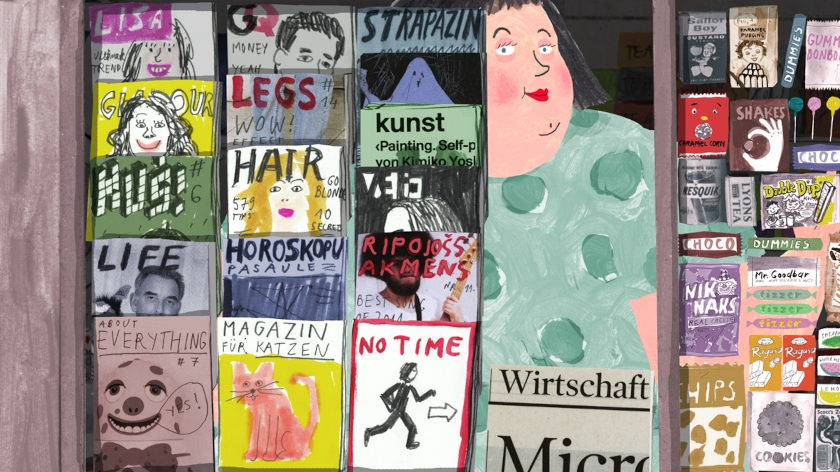
The Kiosk by Anete Melece (2013), a HSLU animation student project
ZF: How open are you to international applicants, and are there any provisions for scholarships for prospective students?
TO: We have very international classes at the moment, with students from South America, different countries in Europe, and Asia - and I think this is great, students profit a lot from the diversity in skills and artistic visions. We teach in English, and while some basic knowledge of German is nice to have, it is not necessary for the studies. Unfortunately, HSLU does not offer scholarships for international students.
ZF: What are the students' obligations when they enter the programme? Do they have to make an MA film(s) as part of their MA studies requirement, and how is the supervision process in this case?
TO: Students are selected based on their motivation, their interests and skills reflected in their portfolio, and their idea for a project. This project can be a short film, which is then produced during the two years of study, or any other animation-based project, like an installation, or a concept for a series, which leads to the production of a pitch deck and a trailer, or even a more technical project, like creating assets or production designs for other projects. Students can also apply as teams or team up to produce a joint project during their studies.
ZF: Can you tell us some practical facts, like tuition fees, full vs. partial study, and whatever you think applicants should know?
TO: Lucerne is a very beautiful town on Lake Lucerne, and very close to the Swiss Alps. Our department, Design, Film and Art (DFK), is located in Emmenbrücke, which is a 10-minute train or 20-minute bike ride from Lucerne center. It is located in an old textile industry area called Viscosistadt, and one of its great assets is that we offer very well-equipped workshops (wood, metal, textiles, media&photography, 3D printing, traditional printing, digital printing) that are open to all students at HSLU DFK - even outside their projects.
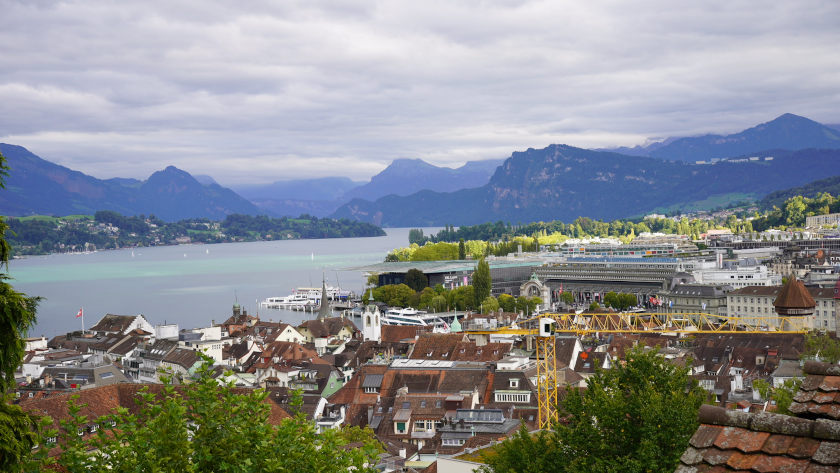
Lucerne, Switzerland (c) HSLU
The MA Animation offers a full-time (2 years) and a part-time (3 years) scheme. Part-time students usually study Mondays and Tuesdays during their first year; this is when the theory seminars and workshops take place. In their second and third years, they attend project-related classes and mentorings held from Wednesday to Friday. We try to stick to this rule, so part-time students can work half of the week.
HSLU offers housing for international students; however, you must apply separately. For the application, inscription, and diploma, students pay a one-time total fee of 620 Swiss Francs, plus 200 for a field trip to an international festival. The tuition fee per semester is 1.538 for international students, and 1.038 for Swiss students.
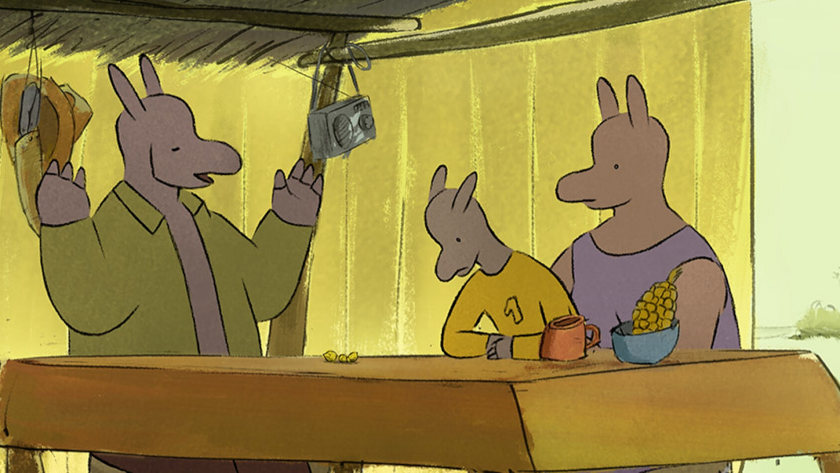
Tapir Memories by Pedro Cabrera Vanegas, a HSLU 2023 animation film
ZF: What is your overall view of the programme as Head of the MA Animation for the years to come?
TO: The MA Animation at HSLU is for everyone who wants to become an animation director, filmmaker, or other animation professional who takes responsibility for their own vision - who wants to express their story or artistic vision through animation. Over the past three years, we have substantially grown to double our size, and are now taking 10 students every year. While in the past, students had to make their own film, we now have diversified both with respect to the format of projects, and we very much encourage teamwork. One of the main things you can get during the MA Animation is a network of fellow artists and animators, both your fellow students and the lecturers and guests we bring in. We will continue this tradition, working with professionals as mentors and guests who talk about their own experience and share their skills with the students.
More info about the MA in Animation at HSLU. Deadline to apply (academic year 2026/2027): 5 March 2026.
Want to read more free articles like this?

Keep this professional animation journalism effort relevant and updated. Become our patron