
Anifest Teplice 2012: Report
ZF Team
The 11th AniFest International Festival of Animated Films took place in Teplice, Czech Republic, from 26 April to 1 May 2012, with a particularly strong focus on puppet and stop-motion animation. At the centre of the programme was a celebration of the centenary of Czech animation master Jiří Trnka. His films were screened from original 35mm prints in a retrospective curated by Michaela Mertová of the Czech National Film Archive. The festival placed Trnka's legacy in an international context through a historical programme of British stop-motion curated by Paul Wells and presentations by major puppet-animation practitioners.
Oscar-nominated British filmmaker Barry Purves, AniFest's honorary president, discussed his methods, while clay-animation pioneer Will Vinton, Czech director Michal Žabka and Slovenian filmmaker Špela Čadež presented their approaches to puppet design. Studios associated with internationally significant stop-motion production—including SE-MA-FOR, MacKinnon & Saunders and Laika—were also represented.
Beyond puppetry, AniFest presented a broad survey of contemporary international animation. Its feature programme included Jean-Loup Felicioli and Alain Gagnol's 'A Cat in Paris', Jean-François Laguionie's 'The Painting' ('Le Tableau') and Marcell Jankovics's monumental 'The Tragedy of Man'. An Estonian animation retrospective highlighted filmmakers including Priit Pärn, Ülo Pikkov and Kaspar Jancis, while the international short-film competition included Damien Nenow's 'Paths of Hate', work by Bill Plympton and Grant Orchard's Oscar-nominated 'A Morning Stroll'.
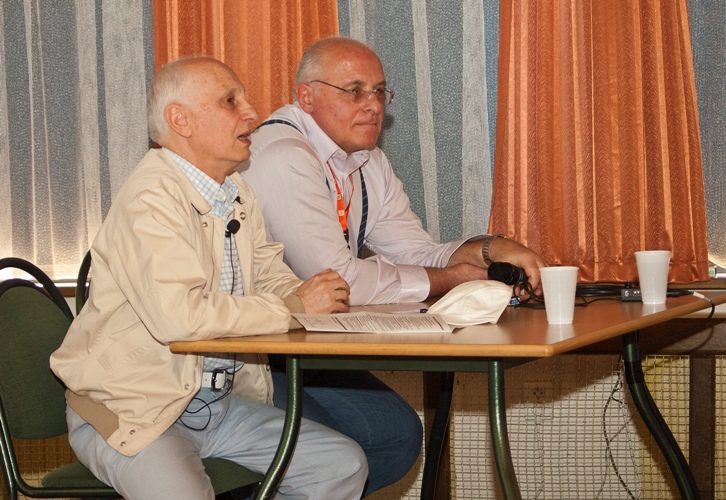
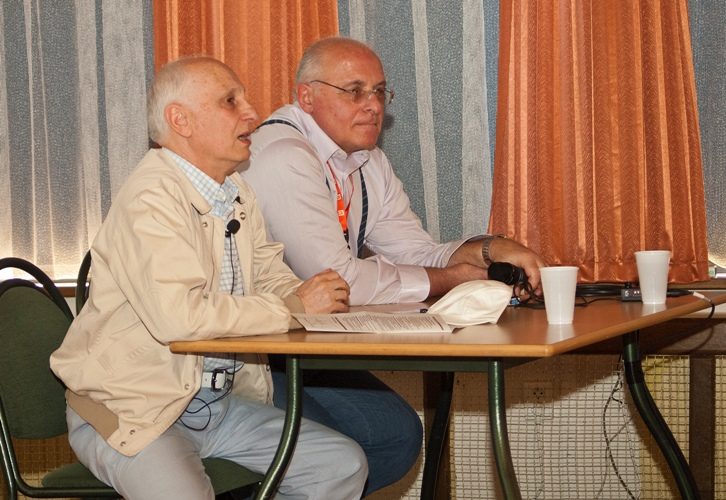
Another major guest was French director Michel Ocelot, who attended with 'Tales of the Night' and discussed his career with animation historian Giannalberto Bendazzi. Ocelot defended the apparently simple cut-out and silhouette techniques that had become central to his visual language, describing how economic limitations had helped shape his distinctive style. Their conversation also revisited the difficult beginnings of 'Kirikou and the Sorceress', whose African setting and unconventional representation initially met resistance before the film became a major European success. At AniFest, Ocelot also revealed plans for a new feature set in Paris (the later 'Dilili in Paris') at the beginning of the twentieth century, conceived as a multicultural fairy tale but incorporating darker material concerning the mistreatment of a woman by men.
The festival's extensive competition concluded with awards across several forms and lengths of animation. Agnès Patron's 'Widow Caillou' ('La Veuve Caillou') received the AniFest Grand Prix, selected from the short and student competitions. In the feature competition, Hiroyuki Okiura's Japanese anime 'A Letter to Momo' won the main prize, while Phil Mulloy's darkly comic work received recognition from both the jury and audience.
The short-film awards demonstrated the geographical and stylistic breadth of the competition. Atsushi Wada's 'The Mechanism of Spring' won the category for films under five minutes, with Erick Oh's 'How to Eat Your Apple' receiving a special mention. Stephen Irwin's 'Moxie' won the 5–15 minute competition; its unsettling story of a suicidal bear impressed an international jury consisting of Will Vinton, Pedro Serrazina, Sula Hijazi, Igor Kovalyov and Michal Žabka. Juan Pablo Zaramella's inventive 'Luminaris' received a special mention. Among longer shorts, Rudolf Šmíd's animated documentary 'The Chronicle of Oldřich S.' won the main prize, while Chao Wu's 'Chasing' received a special mention.
In the student competition, Slovak filmmaker Peter Budínský won with 'Twins', while Michael Frei's 'Not About Us' received a special mention. The festival also recognized less conventional forms: Veronika Vlková and Jan Šrámek's 'Bubi' won the non-narrative/experimental category, and Japanese animator Mirai Mizue received the music-video prize for 'AND AND'.
The edition moved comfortably between established auteurs, animation history, studio practice, experimental work and emerging student filmmakers.
Want to read more free articles like this?

Keep this professional animation journalism effort relevant and updated. Become our patron

Read More About:
Related Articles

FIND THE RIGHT FESTIVAL


Zippy Frames is the premier online animation journal promoting European and Independent Animation animation since 2011
Zippy Frames
Quick Links
