

Beyond films: on the Festival as an Experience Space: (Animafest Zagreb 2026 Report)
Mikhail Gurevich
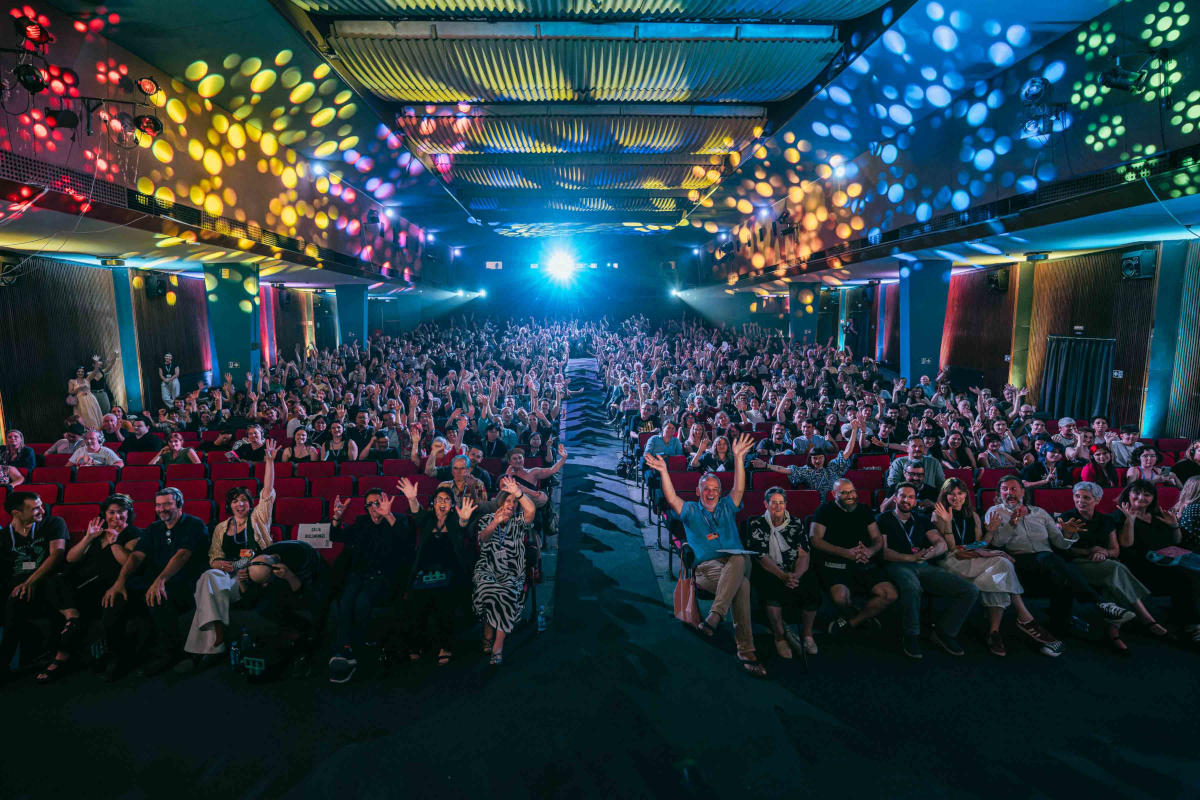
What makes a festival a festival? Or, rather, THE festival – this or that one concretely, with its own history, face, standing among others. Besides programming and related strategies, obviously, also ‘genius loci’, and with that the sheer spirit, atmosphere, and communications-encounters – you bet; on all this, though, later (and reflecting, of course, in particular on the recent Animafest Zagreb, held on June 8-13 this year).
First – on ‘substantive’ facets. We all know – not for films alone would we come here and there; and maybe even not mainly for films. And if for them still, not just for the principal, competition selection/screenings; there is always, at the festivals of the prime league especially, a healthy range of additional programs, thematic or otherwise. Selections matter – as do curators, perhaps no less so; the canvas of all the things exposed together builds the context – in its own right, important, influencing, meaning-pregnant. And then, of course, there are non-screening events: exhibits, masterclasses, talks, lectures…
Well, here we go, for starters. Annecy has a market (MIFA); Animafest Zagreb has a symposium – Scanner. I happened to be a veteran, having been there from its inception in 2014 – oh, times, oh, days past, before pandemics and earthquakes, and interminable war horrors and shame… – and then at the good half of the following ones, with my paper presented or a discussant. This time I turned out to be more of an observer, wearing a press badge for a change; still in my element – however, with a bit different, ‘estranged’ (to quote, appropriately, Russian formalists’ vernacular), or distanced, perspective. Which calls for – finally having been granted by chance an opportunity and a fitting niche – somewhat deeper introspection.
Animafest Scanner: The Character and the Keynote
With all the variety of annually introduced afresh panels/themes, Scanner, generally, inclined to be more historically/theoretically oriented, we can probably say (thus, the book, collection of papers, based on its first 5 years/editions, was titled, perhaps rather ambitiously, Global Animation Theory: ); but with a more critical perspectives as well, and attracting in all that ‘creators/practitioners’, both at the pulpit and in the audience.
By tradition, a keynote speaker’s role belongs to a recipient of an annually given award for Outstanding Contribution to Animation Studies (yet another Zagreb distinct feature of scholarly/critical regard). We heard different voices from this spot, from more ‘academic’, the writing flock proper to major figures of the festival scene, and to those who held dual perspective: the likes of late Giannalberto Bendazzi and Martin Giżycki or Marcel Jean and Chris Robinson. This time it was a turn for a guest from another shore, in every way: Amid Amidi, a co-founder-publisher-editor of CartoonBrew and an author, deeply involved in contemporary American mainstream flow, besides the rest. Naturally, his talk: “Whose History Is It?: Telling the Story of American Animation” – in essence, a story, and a rather dramatic one in a sense, of the magazine’s struggles and tribulations at the face of the industry whose works it strives to cover in earnest; a constant fight for access and free of censing pressure coverage – and for control of the message. In all that, it appears – a fight for a big narrative as such, of the present-lasting history-in-the -making. Indeed, “…you’re tough and I’m tough, but who will write whose epitaph”, in poet’s saying – that is, whose agency has an ultimate hold here. That’s a teaching exercise in, or a case study of, what should be considered not as much ‘industrial’ but a broader ‘institutional’ history. A concept, or a sub-field, still somewhat foreign, literary-figuratively, for animation criticism centered, after all, in major part on art-house/high-brow/festival-bred stuff, artistic entities or personal styles and lives in the profession
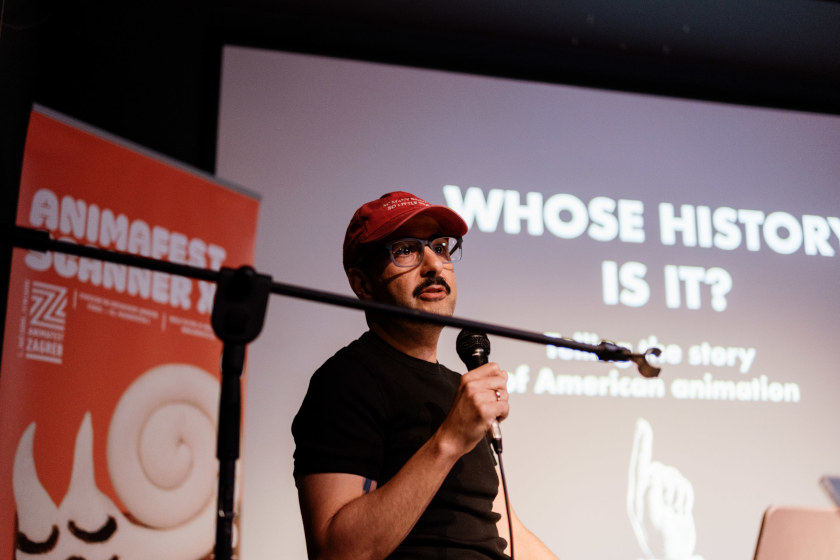
Amid Amidi at Animafest Scanner 2026
Animafest Scanner: Writing Animation History
But even so, this seeming dichotomy is being questioned, however, if not altogether bridged in today’s scholarly discourse. For the same panel, Writhing Animation History, Olga Bobrowska, a ZF colleague and besides that an involved Chinese scholar (see our review of her book here), not to mention curator’s / festival organizer’s work (StopTrik), presented a paper (co-authored with Chunning Maggie Guo) tellingly titled: “Contemporary Chinese Animation Canon: Institutions, Festivals and Transnational Exchanges in Comparative Perspective”. And there, in fact, “the specificities of the Chinese art-house film culture’s architecture” and its very “institutional framework” are interpreted through the wide-angle lens of economic, media-technological and social factors. And, amidst all the complex interactions, it appears, in this transformative exposure, Animafest Zagreb played its own significant part (being here a “main reference point” since it “has traditionally bridged Sino-Western art-house animation exchanges”).
As it did, apparently, not only in this case. Thus, another Polish scholar, Ewa Ciszewska, specifically focuses on Zagreb’s role in the “Cold War circulation of Polish animated film”. Interestingly, she incorporates the reception factors from different sources, ‘echoes’ in professional discourse of all kinds, placing and analyzing this rich material within the context of debates on the festivals as ‘knowledge-producing institutions’. A rather heartwarming idea to me – and seriously taken, adds a necessary perhaps dimension to understanding of our common experience.
There were, of course, other topics/perspectives in this extended mosaic, from, say, animation aspects of/in gaming universe (though not really my cup of tea, to be honest), to AI applications/issues (not exactly my knowledge/expert domain, alas) even if in (animated) interpretation of cultural heritage, however actualized that might be becoming. Or even a certain ‘call-for-audience-help’ – underneath the unraveling of Bruno Edera’s Unfinished History of Pornographic Animation – oh yeah, I would’ve loved to see his fantastic archive properly preserved/processed/exposed and this unique monograph finally published (and maybe even complimented-updated on the way, as Canadian scholar Aurélie Petit reservedly suggests), if only for the sake of broadening the limits/concept of animation history and cultural niche.
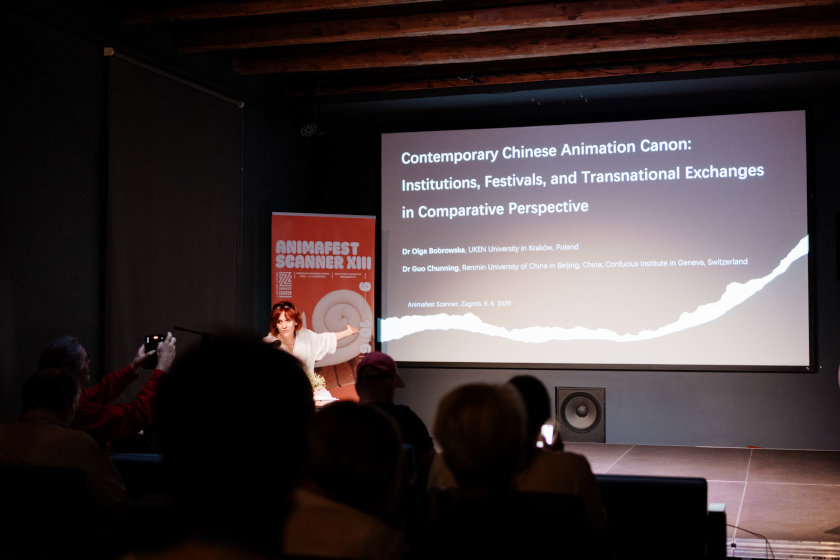
Olga Bobrowska at Animafest Scanner 2026
Creators Turn Scholars
Still more intriguing to me were cross-border, in a way, perspectives from artists/directors-turned-scholars, or trying on an academic mantel for a change, possibly opening up fresh avenues of artistic (self)reflection.
For one, meet Paulina Ziółkowska, quite a recognized award-winning Polish director (‘Oh Mother!’, ‘3 geNarrations’), Łódź Film School graduate a decade back and Filmuniversity Babelsberg later, now a PhD candidate at a top university in Mexico City (yet another mark of our trade globalization on personal-professional level). She audaciously dives in murky waters of new technologies’(possible-emerging) ‘self-awareness’. Herself an illustrator and 2D animator, with a distinctly idiosyncratic drawing style and narrative twists, she nevertheless takes on at 3D representational capacities and limitations. Ziółkowska investigates/explores/researches its seemingly inherited ‘realism’ – and in/through glitches and lapses in its patina discovers the charm and potential of ‘deconstructed 3D’ phenomenon. Intriguing indeed; and even if one can find here certain inconsistencies against the personal creative practice, then it’s quite teaching in turn.
And then, a Latvian director Edmunds Jansons, also well-known for his films (‘Choir Tour’, ‘Isle of Seals’) as well as illustration works, no less bravely immerses into rather deeply-technical musicology, of all things – reflecting more directly on his own work: research behind his recent non-narrative short ‘Freeride in C’ (2024). He explores, specifically, repetitions and loops as “an organic part of the expressive vocabulary of contemporary composers and musicians” – but also as something that can be considered intrinsic, “form-building elements” of auteur animation, which a wide range of examples, from pre-cinematic optical toys to pioneering experiments of McLaren, Rybczyński and others, can vividly illustrate.
Music In Focus
Music, as a matter of fact, was this year Animafest’s thematic accent, with a broad array of special film programs, curator’s talks and such – and, naturally, a corresponding panel at Scanner. What had especially caught my attention here – in a way as a compliment to Jansons’ presentation, giving it de facto much broader background – was a German scholar Jens Meinrenken’s paper: “Imagine the Unheard. The Radical Aesthetic of Electronic Music in the History of Animation.” He traces his theme through times and trends, from early last century ‘synthetic sound’ to modern digital acoustic design, picking up on the way expressive examples in particular works and figures – like Polish animator Piotr Kamler – indeed “exploring the extent to which contemporary animation still radically combines music and imagery”.
‘Curating Animation’
There was yet another important, and, in a sense, quite ‘actualized’, theme and panel: on ‘curating animation’; with one of the accents, to me especially involving, on forms/modes of its ‘being’, existence and place within the broader artforms and cultural practices, and in exhibition space in particular. Here I was hooked, understandably, to the paper “Expanded Animation: Curatorial Practices Between Cinema and the Gallery” delivered by none other than Paola Orlić, already former, long-time Animafest indispensable producer and its exhibits curator. Now she would put her vast hands-on experience into certain theoretical frame reflecting on the art of animation “positioned between the paradigms of the cinematic black box and the exhibitionary white cube”; and on shaping the contexts and guiding the perception – in particular, in her trademark projects that became Zagreb staples: annual exhibits Behind the Scenes, of the competition films artists and artwork, and big solo ones, honoring festival laureates, from Bordo to Kentridge and many of the greats in between. In front of the involved audience, this talk predictably turned into a vivid discussion; and so, Paola happily welcomed my questions on Kentridge's whole adventure of 2023 (see my impressions and others' impressions of that here: ?– maybe the main challenge, though fun too, was back then just to find places and collaborators sufficient for his all-encompassing interests and drive. (Apropos: a few days later, already in Prague, I happened to come across yet another great Kentridge exhibit, with fascinating ‘installation animation’ pieces among the rest – an occasional personal experience extension…)
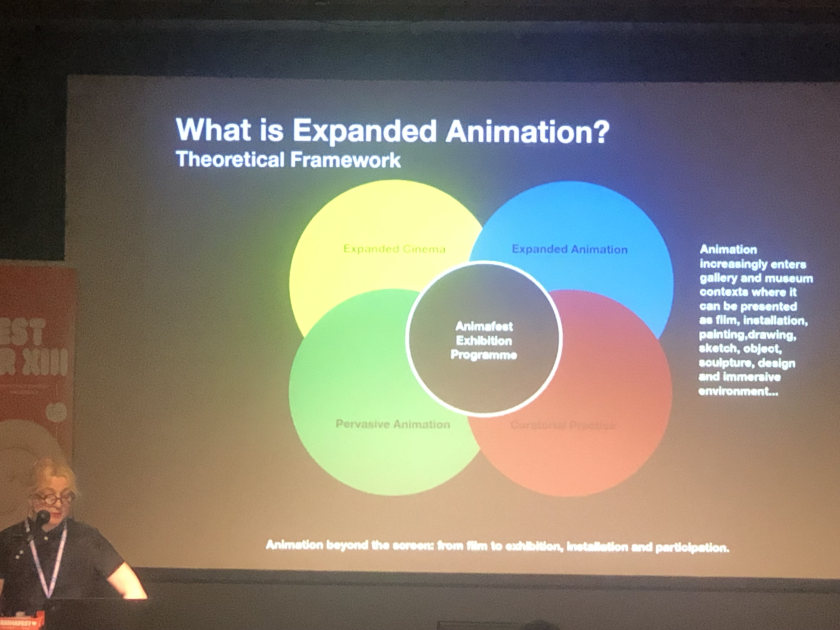
Paola Orlic at Animafest Zagreb
Animafest Zagreb: The Exhibitions, The Events
Now, to Animafest Zagreb 2026 exhibits proper – still in the same established format/canon. One, on the grand competition films, was located right in the foyer at the conference hall doors, so that scholars-artists-guests inevitably-naturally were mingling there; another, on the student program, almost next door down the street. Though not huge, but pointed, and capable of providing the promised ‘extended exposure’ and hence, enriched experience, hopefully. And then, right after Paola’s talk, appropriately, thanks to the timely lunch break, we all together went to the opening of Joanna Quinn, this year life achievement award recipient, exhibit. It showed, appropriately again, an expressive ‘exhibition dramaturgy’, that was under discussion right before, and certain ‘enhanced’ facets on top of that: besides expected drawings, with their no less expected drive and tone range, and the must-have video reels, there were also, say, strange-exiting ‘toys’, like mechanic flip-books in the boxes, labeled ‘Flip-o-Scope’. And, above all, Joanna generously posed for me against her arguably most iconic pic!
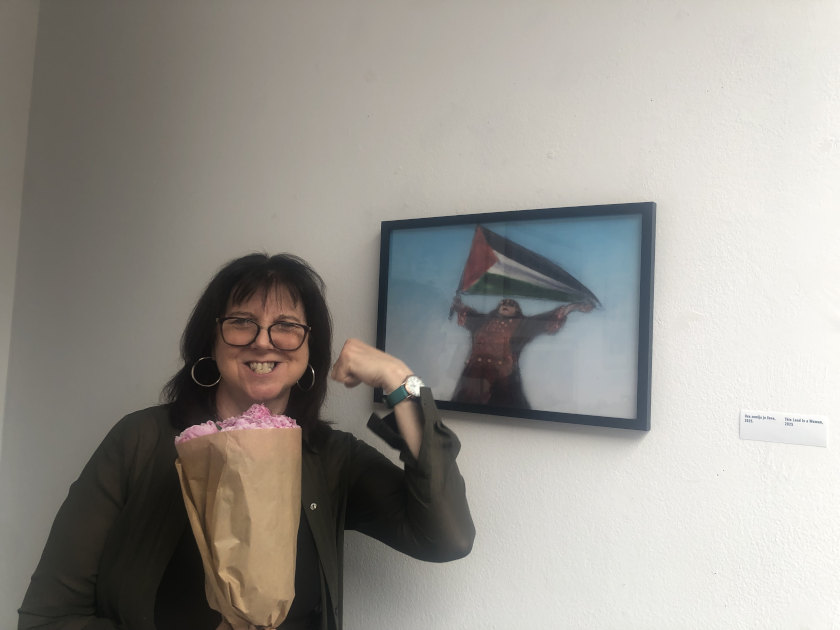
Joanna Quinn at Animafest Zagreb 2026
There was, surely, a lot more – of events-formats, let’s say, rather ‘beyond screenings’ proper, though still necessarily incorporating filmic material (as symposium presentations did too, to great measure); including masterclasses (in part covered already in ZF). Must confess, embarrassingly: have missed the most anticipated one, of Nina Gantz – just couldn’t get in, room packed over capacity! – isn’t it the testament to essential relevancy of the genre-format generally, and of a particular master, of course. But-but – here come the perks of a festival as genre-format in itself – was somehow compensated for the loss: at the closing party, in a wild place-atmosphere, we happened to hook up with Nina, sharing a chair – squeezed but pleased, like they say – and went into a lively-open chat about all and nothing, that is everything, and she gave me a wing ahead of time on forthcoming ‘making-of’ reel – which I heeded to catch, rest assured.
Oh, those late-night-into morning parties! – in Zagreb characterful backyard-backwater uniquely cozy holes – a younger flock fair, for sure; still couldn’t help but to give some a glance, yielding to sheer charisma, energy of the crowd in the musical drive and beyond… – and, but of course, would find a company of veterans as well, like indispensable fixtures Nancy Denney-Phelps and Nick Phelps among others (no need to name names, though).
And the picnic, of course, of course, not-to-miss tradition, a place and time to relax-mix on a lighter side and perhaps in more articulated mode. Remember a good number of them, off to far outdoors in fatter-calmer times or else. This year I just took a short tram ride to a park hidden in the quite quarters, and still, and even on a gloomy day that was it, as should be, another facet of the festival-as-experience.
There were other things, not to fail to mention, even if failing to catch up with all and everything. Book presentation and industry-wise talks-lectures-discussions; and more formal gatherings: for specific awards, projects and such.
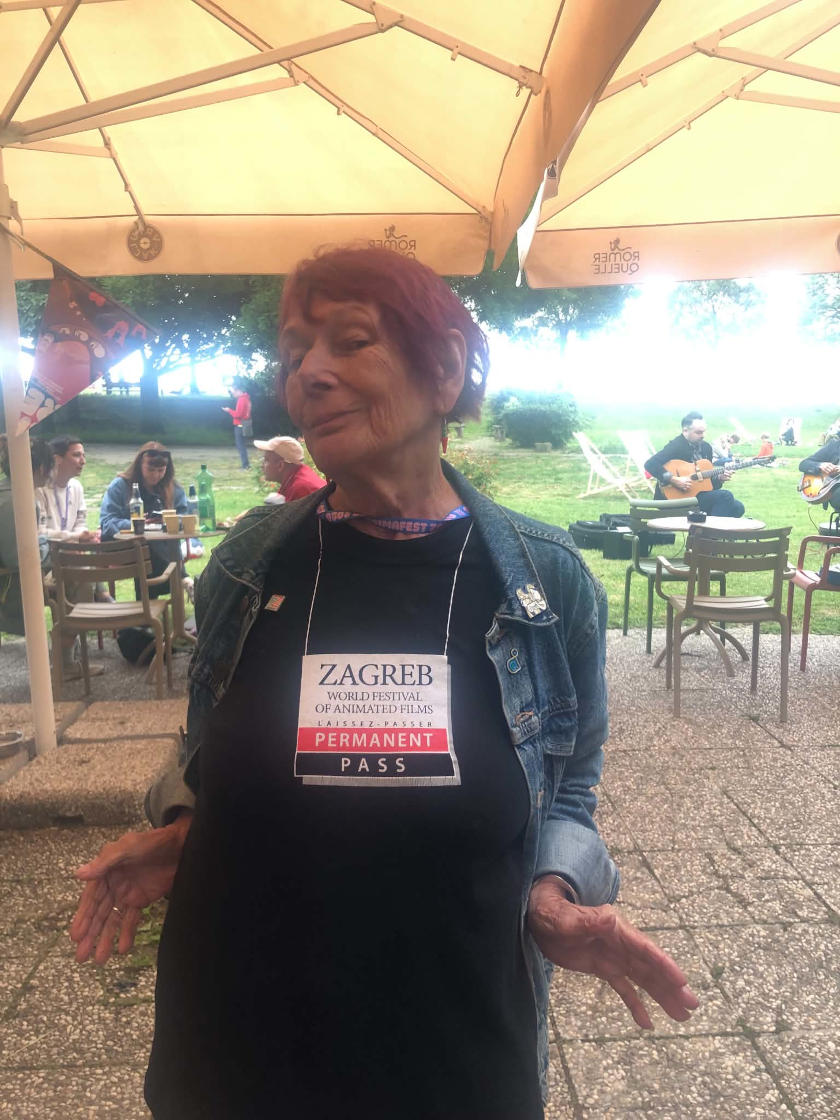
Nancy Denney-Phelps at Animafest Zagreb
Festival Social Space and Personal Touch
And also, between formats and modes, excitingly weird sidekicks, like a ‘battle’ (in rap jargon-connotations) between two festival teams-curators, of StopTrik and Supertoon Festival (Olga reminded me later of the history behind it in her enterprise, back from 2021, with Slave Lukarov and Daniel Šuljić participation), at open space by the bar, projecting at a portable screen wild image selection and shouting at the side mics with all your might, in wonderfully deliberate dissonance with the visuals. In fact, quite a liberating spectacle is it, a playful deconstruction, if you will, a remedy from many ‘prof-deformations’, I’d suggest. (Can’t miss to note: through the bar doors-windows another screen faced your side vision, with first World Cup matches, no less – confronting ‘battle’ in the real world… or what is really for real here, anyway.)
This very space was the festival hot spot, conveniently right off the exit from the main theater, after screenings or between, or instead, day and night. A meeting place and time. To hug and to converse and to argue too, over a drink or else. To make an acquittance or to embrace an old friendship. For me personally, and for the friendly-collegial circle of the past and, hopefully, present – it’s of poignant importance nowadays (not to hide from inconvenient truth): where else to reconnect face to face, all the displaced-dispersed folks on the spot.
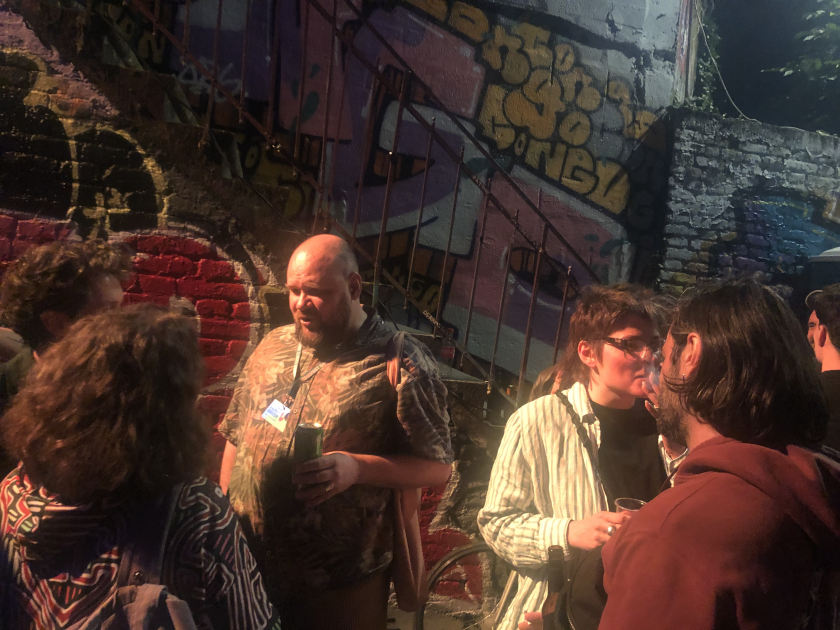
Kirill Khachaturov at Animafest Zagreb 2026
Socializing, a dry word, but for lack of a better term… shall we say: personal connection – that’s indeed the nerve of this whole endeavor. Free of all discourse in that – that’s what generates tension (should we not be afraid of that), strikes a spark, with some luck – and facilitates, if not exactly or only knowledge-, but ‘meaning-producing’ institution out of all this, by definition, patchwork.
“As long as there are authors who create and people touched deeply by their work, this festival will have a soul and a meaning”, writes Daniel Šuljić – in his, as it happens, farewell address as an artistic director. Yes, he’s leaving the ship, alas, after a long stretch, since he’s taken the helm in 2011; there comes a changing of the guard in Zagreb. We’ll have to see and wish all the luck to the newly appointed Kata Gugić and the team, certainly. But meanwhile – oh, yeah, we all will miss dear Daniel who for long personified the fest, leading humbly but steadily, as if with almost invisible gently-hard hand. And the real show finale came with surprise farewell gift and praise: a singular, one-copy book-homage, by many authors-contributors (idea, I was told, by Olga Bobrowska, with others in train, Thomas Renoldner in particular), with unique drawings and everything, and signed by many more (myself including). This must become a museum piece with time, and with honoree willing – an artefact of the festival movement, if you will. A bitter-sweet and heartfelt coda. A final framing of the experience.
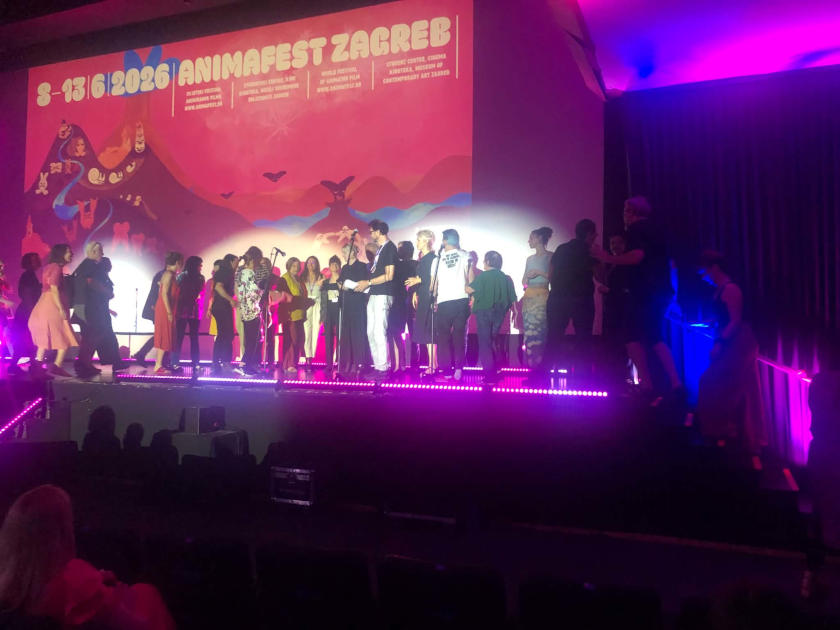
Animafest Zagreb 2026 Closing Ceremony
After all, that’s a community, you know. Within or around, or maybe beyond the institutions and even films.
contributed by: Mikhail Gurevich.
Photos by: Mikhail Gurevich, Sebastjan Borovcak (Animafest Zagreb)
Want to read more free articles like this?

Keep this professional animation journalism effort relevant and updated. Become our patron

Read More About:
Related Articles
FIND THE RIGHT FESTIVAL

Zippy Frames is the premier online animation journal promoting European and Independent Animation animation since 2011
Zippy Frames
Quick Links