
Nuno Beato and "My Grandfather's Demons": A Studio Tour
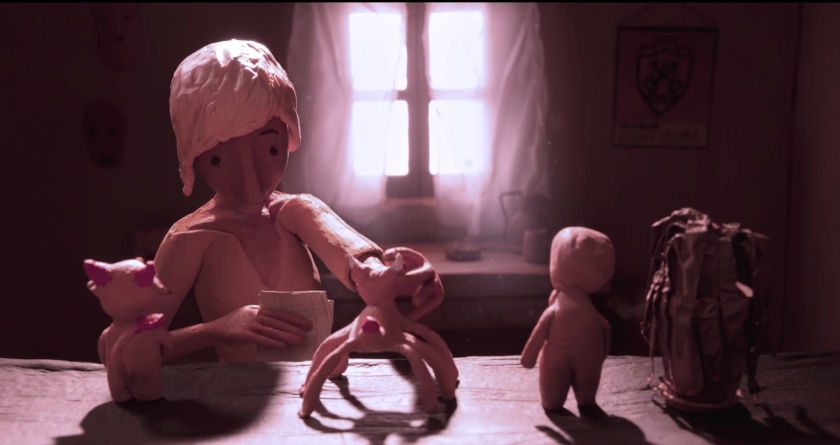
I was at Sardinha em Lata production studio, talking to its producers Nuno Beato and Diogo Carvalho. They kindly opened their doors and gave us their time to show how the production of 'My Grandfather's Demons' (previous title:My Grandfather Used To Say He Saw Demons) is going.
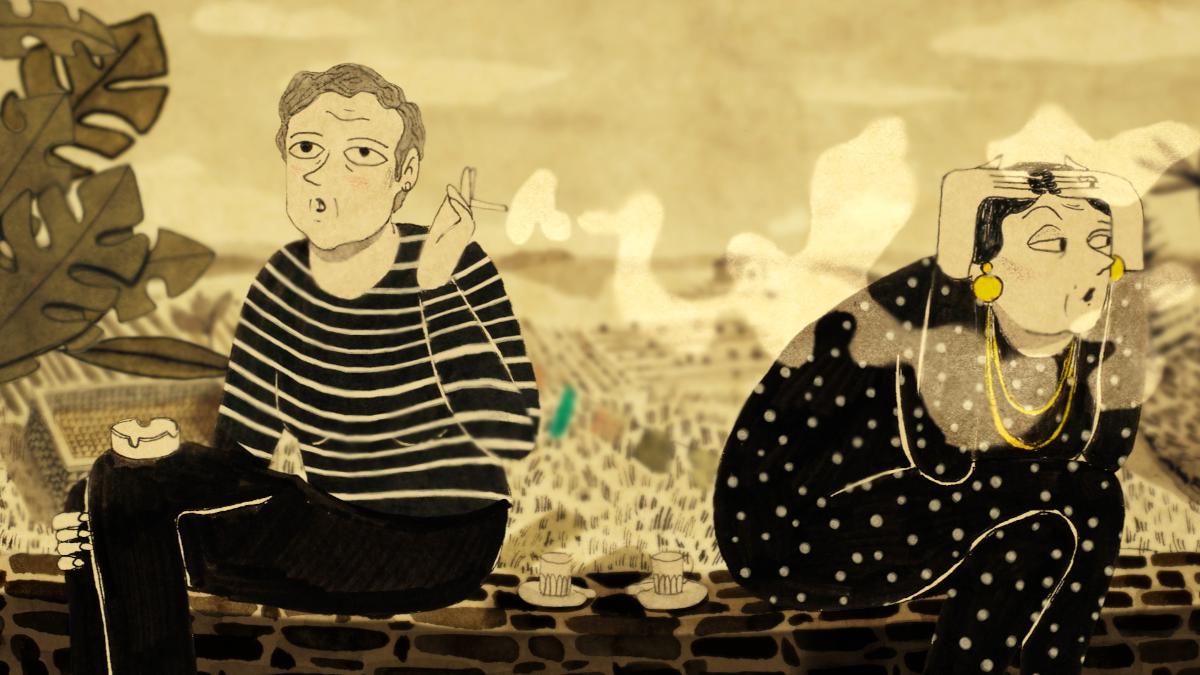
Produced by Sardinha em Lata (Portugal), and co-produced by Caretos Film (Spain) and Marmita Films (France), the 80-minute feature film tells the story of Rosa, a successful professional. The sudden death of the grandfather brings her back to the home where she was raised, only to reveal his own secrets. The film was recently awarded the Eurimages grant (380,000 EUR) for co-production funding.
Concept Film Teaser:
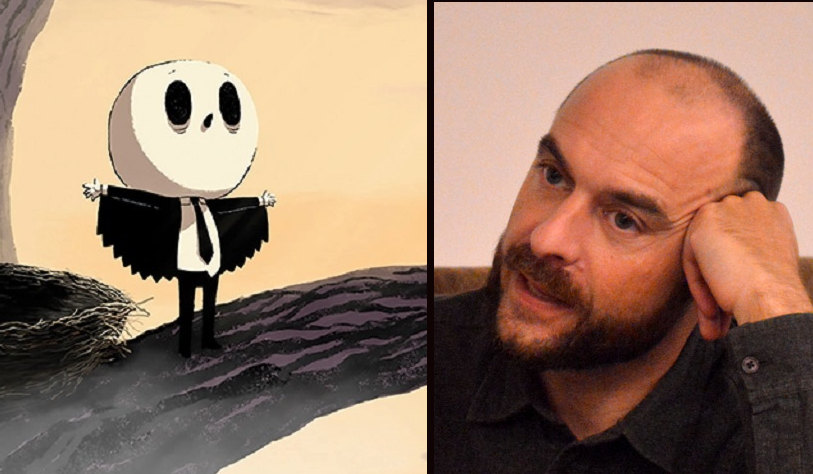
Nuno Beato tells us that the title became shorter (it's now 'My Grandfather's Demons') and less complicated. I also think the change made the title stronger.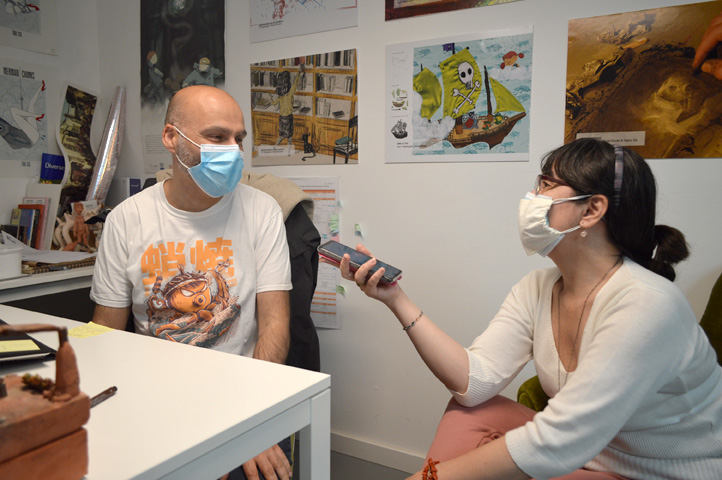
The film is expected to be released in the second half of 2022. The stop-motion sequences are produced in Portugal, while 2D animation sequences are being made in France, with animation co-producer Midralgar.
As this interview took place “on the road”, through the studio, I hope to be able to pass this spirit to the Zippy Frames readers. In his office, Nuno shows me that one of his working methods is to edit, on the timeline, all the scenes captured on the day by the seven sets of stop motion animation in the studio.
NB - I do this to understand whether the raccords are working and to approve the plans. Because of this, I can detect problems sooner and adjust some timings accordingly. And you can already see a part of this work that we have.
Watch the Making of "My Grandfather's Demons"
NB: In this montage, it is evident that we utilize different layers to facilitate the animation process. And then, of course, there is the final version. This step is more to control what is being done at the conference stage. So, if I need to, I can ask the animator to complete or redo something. Using this way of working, we finished 16% of the stop-motion animation last month - the technique that corresponds to 80% of the film.
We are now processing approximately 2,000 frames per week on average. We aim to maintain an average of 100 to 120 frames per day and per animator. We have four animators working on stop-motion, so we have about 400-500 frames a day. However, we will move to a bigger space, and we will have at least one more animator to help.
The team has to grow, but I also do not like a very big team either. Maintaining control and quality is more challenging. I prefer to work with a smaller group. It is the first feature film for me, and I feel safer that way. If it were a second feature, another animation technique, or a series, I would be less concerned with that.
We are also starting 2D animation in France, but we are still at the stage of development in this area. It tends to be faster, and there are only 16 minutes in this technique, less than 20% of the film. However, what takes time in stop motion is to build everything first - sets and characters -, to animate itself is faster than in 2D.
ZF - When working with drawings, the animator draws, corrects, then they need to do the artwork, painting, and shadows... it is a longer process than shooting in stop motion.
NB - Yes, but stop motion also has more work in post-production. Here at this stage, we also insert the dialogues to check everything. We already have all the dialogues recorded. Let's see other parts of the production.
(We left the director's office and we went to the production stage).
NB - Here, we have some parts of sets that we are finishing. We have many other sets that have already been packed. They will go to another studio where we will film other scenes.
ZF - Ah, those were the big sets I saw last year for taking big plans.
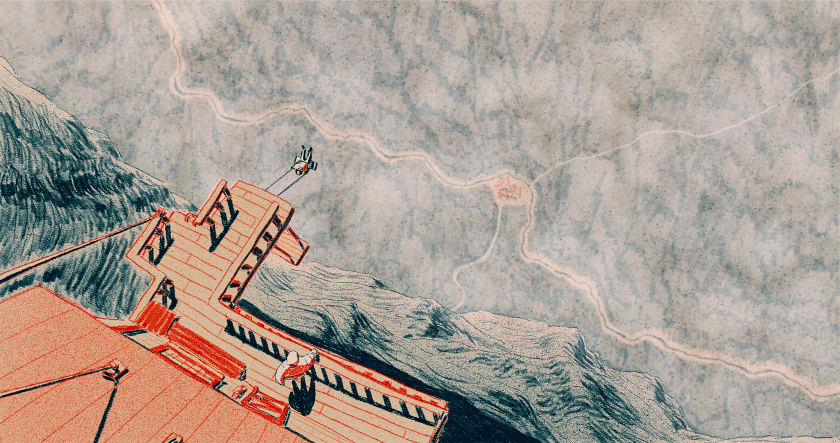
NB - Exactly, we need a more open place to shoot the exterior shots of the film. Here, we have Paula (Paula Custódio), making a copy of this part of the scenery (the top of a mountain) on another scale. Thus, often we use the chroma key to animate, and then we enter the post-production with that part of the scenario.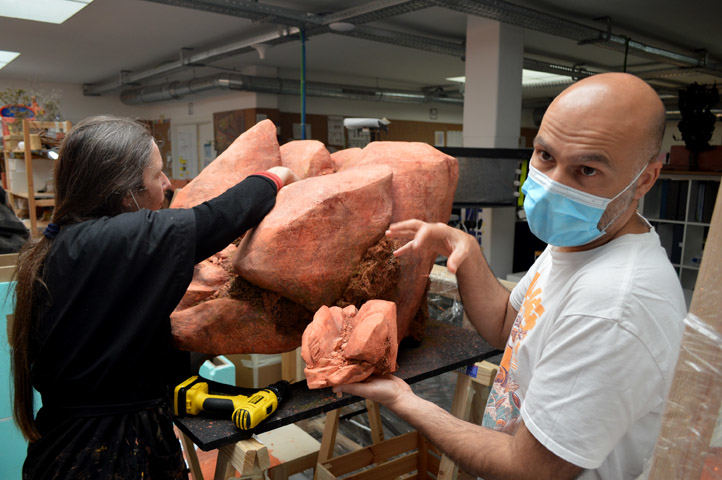
ZF - Wow, in practice, you decouple the entire process of capturing images.
NB - Yes, we use the storyboard, and we examine it on a case-by-case basis. What sets are we going to build and at what scale, as we have three different scales. Since the story takes place in the territory of Trás-os-Montes, I want to give a sensation of a big landscape, and I would have to make very, very big sets to achieve that. So, I chose to do it this way. And here is a trick that we use to create the water movements: we use a gel with a brush over this assembly with glycerin, located underneath, which resulted in a good animated effect.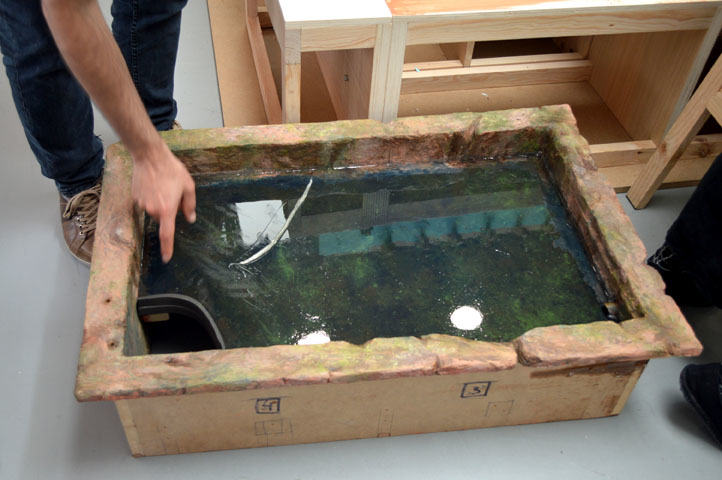
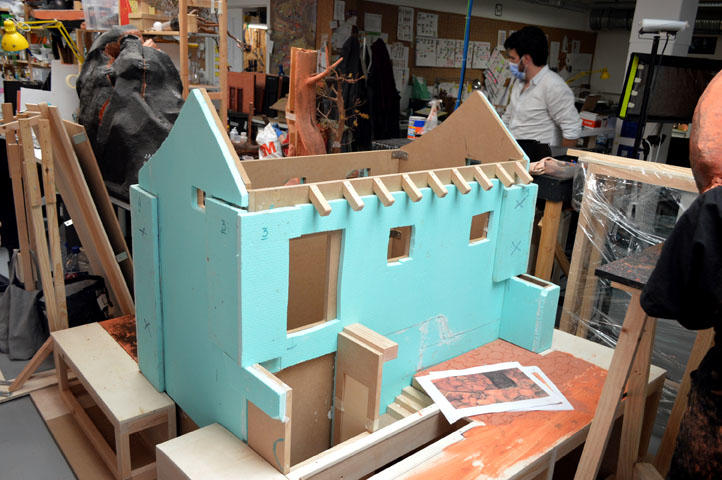
This is the bigger scale of the house, which is on my table. We haven't finished building all the sets for the film. We have the interiors but not the exteriors. But we are already filming with those that are already built.
NB - In this part, we have the puppet hospital.
ZF - I realized that (she laughs).
NB - This is where we repair the puppets, which suffer some kind of damage during the animation process. They need maintenance constantly. The puppet structure came from Spain, by Sónia Iglesias (Parrocha Studio). Here we also have the faces, which were made in 3D printing, and fit through magnets, as well as the characters.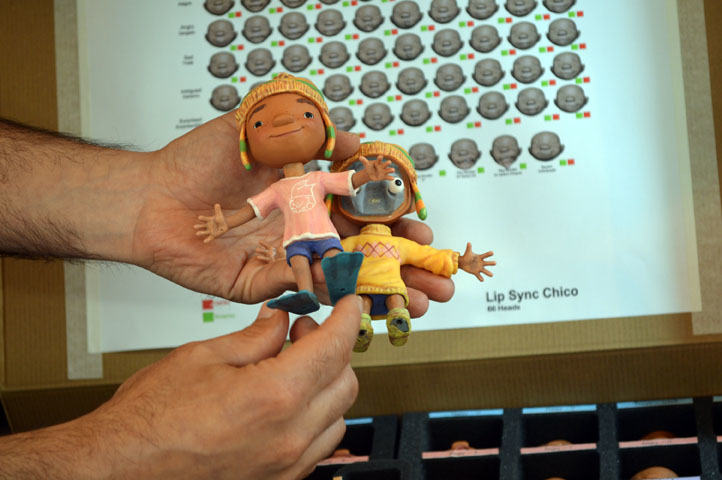
Juan fran Jacinto - We use glue to join the parts of the characters. And here's also a color reference with the original silicone, for the repair to be perfect. 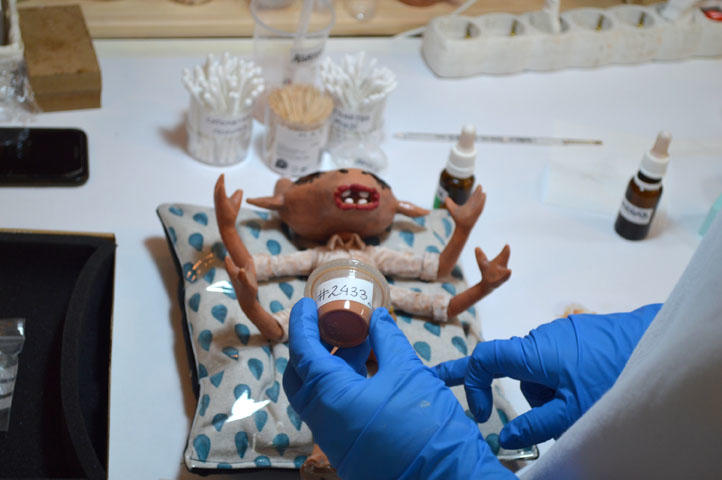
NB - Juan Fran worked at Parrocha Studio in Spain. He is here to help us with the maintenance of the puppets. Please, Juan fran, can you give us an overview of the puppet production?
Juan fran Jacinto - First of all, we need to study the characters to define well how their structures should behave. Then, we do the modeling and the molds by pieces. We make the puppet afterwards, joining its structure with the silicone and the molds that shape it.
ZF - What was the trickier character for you to create?
JFC: - The cat. He is pretty small with thin legs, and he moves a lot. So, its structure was complicated to make; it had to be very well designed because it is a puppet with very little silicone to cover its structure.
ZF - Yes, I understand. And what about the eye control? 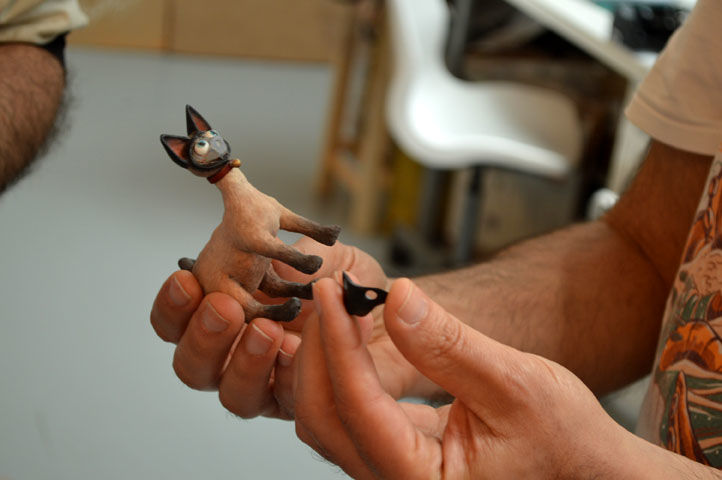
NB - We have two needles that control the eyes and another one for the pupils.
JFC - We have here a mold with a silicone cover for the character's clothes/skirt. The characters' clothes are also made of silicone. This was a complicating variable for making Rosa's molds because she has a skirt. 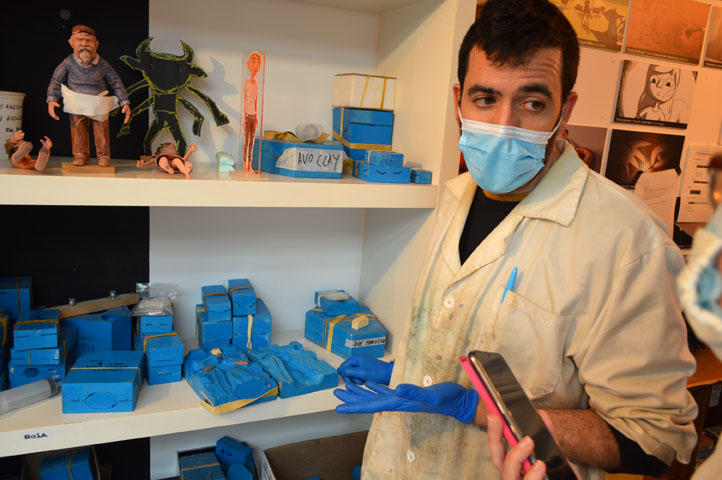
NB - There, we have the team that takes care of the rigs ... this kit of pieces looks like a LEGO (laughs). For each animation scene, we need to study what it shows, and according to the size shot, create specific support for it. 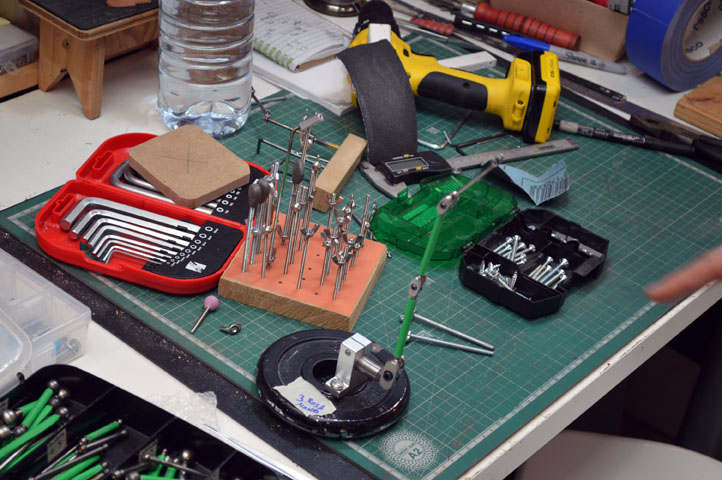
ZF - Everything is very particular, each scene, each character, each movement
NB - Yes, indeed. Here we already have a “filming board”, with the puppets and props being filmed and on what day. We all have the elements stored; after their use, they return to the closet. In this table, we have the time control, what we are filming (here we have two, three weeks) - and the entire map in another location. We have codes to indicate whether a character/object is set for filming or not. 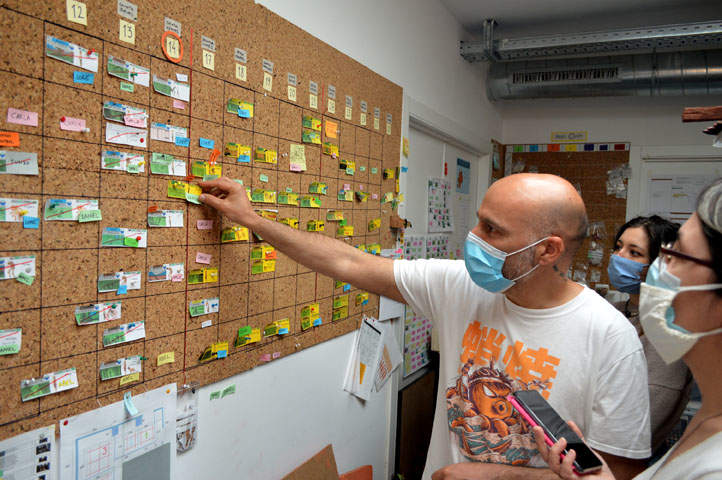
ZF - Dozens of controls over everything.
NB - Yes. We also assign the animator for each character. One can see whether the scene has motion control or not. Therefore, besides the control, all team knows exactly what is going on. And each workgroup knows how another one is working and what elements it will need to use. When assembling and disassembling an animation set, we can win or lose the track of time. So you need to have things all organized and controlled. This is the example of a prop, one of the cars.
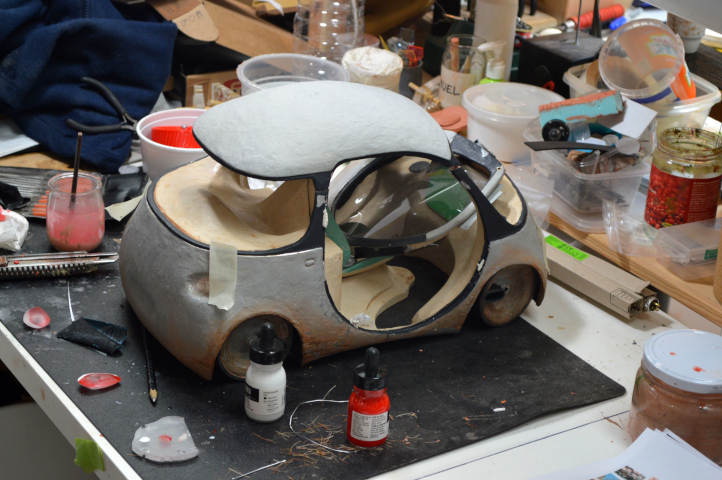
NB- It disassembles in several pieces to facilitate the capture of the characters during the filming. In that room, we have a small workshop for working with wood and metal, where we produce what is needed for filming and sets. Débora Gil da Costa is responsible for all sets, controlling the inserts, assembling, and disassembling of them. She can explain to you how this logistics works, filming and building at the same time.
DGdC - We started construction two years ago, and now we are in the final stage. We plan to finish making all sets in July, but we are already filming with what we have. We started making the sets on a smaller scale, and we had to find out what sets we would really need on a larger scale -in order to build only the indispensable ones. Sets in which we would have an animation with the characters would need to have more structure and be armed with the necessary materials. In the smaller scale sets, we have more freedom and can use Styrofoam with small sculptures.
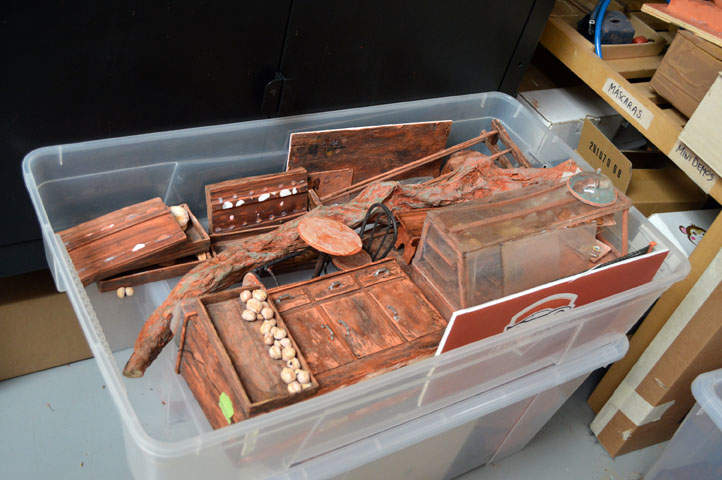
ZF - You used a lot of Styrofoam, is that right?
NB - Yes. Some of them we cut it right here, but others we had to cut it outside. Styrofoam is good for the set to be light and not heavy; otherwise, it becomes complicated to transport.
DM - And it is easier to sculpt. We then cover it with plaster and apply DAS modeling clay on top. The paintings give the idea of being terracotta to maintain the color of the land of Trás-de-Montes. We use a lot of watercolors to do that; for instance to simulate the visual of drained water, the humidity of the terrain.
NB - From the very beginning, I guided Débora to tell the story through the sets. Tell the story "that is not there". Thus, all objects that appear in the scene have a meaning. It was discussed why that object is there. Care is taken in the construction of a great puzzle so that the landscape is not just a landscape. For instance, where is the grandfather's house? We first think about where the sun sets, where East is, and where West is.
DGdC- ... the type of vegetation that makes sense, the season in which it is running is itself part of the story.
NB - There is a heavy research process here, and it does not include just building the sets.
DGdC - Another example is the letters. We wrote the grandfather's letters, deciding what type of letter design the grandfather would have; the contents of the texts were thought of as contributing to the script.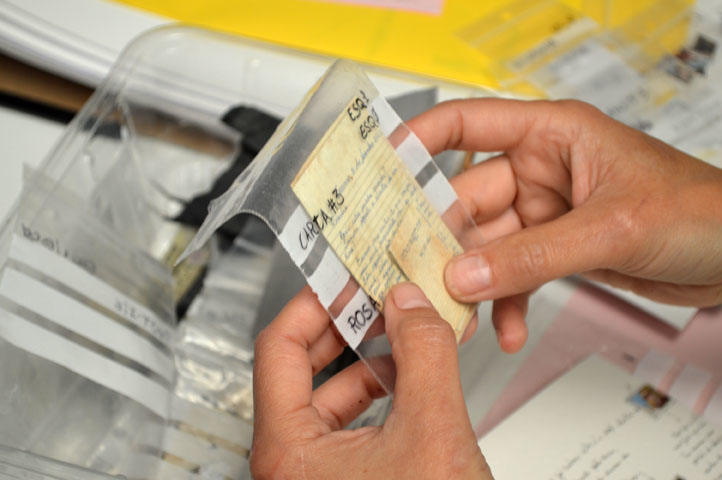
ZF - That's what I say to the script students: a good character must have depth and a backstory. They are not just what we see on the screen.
NB - (Laughter) Yes, for us, the characters are real! Like, we find ourselves thinking: “grandfather? He would never have that attitude”.
DGdC- It is the team itself over time, they are realizing the characteristics of the characters, and they make comments about it as if they were real people, such as: “oh, don't expect it to be like this”. (laughs) For the sets, we think about the reality of each scene. For example, the grandfather had masks on the walls of a room where a fireplace is. So, when the characters take off these masks from the wall, they leave their own marks there. It is the story of this house. At another moment, we went to create a set with mud, stones, and these kinds of elements. We are sculpting and thinking about how the water would flow over there, the lines that it would create ...
NB - Yes, but sometimes we even conclude that “no, I think that’s too much”, if not, we will never end (laughs). Sometimes we need to stop.
DGdC - However, the most amazing thing was choosing the plant species to put in the sets.
NB - It was a hard survey of fauna and flora, even considering the seasons.
DGdC - And we needed to create that in the three set scales; we need to reproduce the same plants in different sizes.
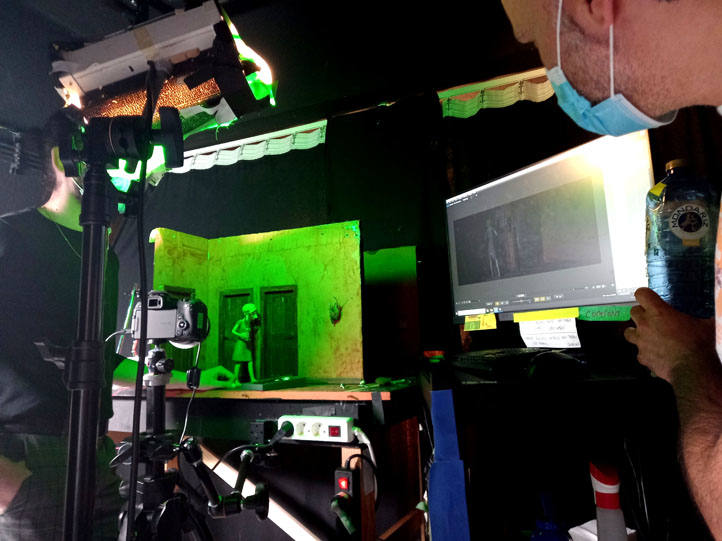
We passed through the four animation workstations in stop motion, where we had the opportunity to watch the animators working on the spot. Although it is challenging to illustrate the process itself (apart from the images below), I would like to emphasize the care and attention that Nuno dedicates to his work. For each plateau that we passed by, he always made some observations to his team.
Watch an animation test scene:
After this tour, what to talk about “The Demons of My Grandfather”? Well, I dare suppose that it can be a strong Oscar candidate... and snatch many awards, of course. For the theme and also for the technical and artistic quality it presents. I look forward to seeing it on the big screen! Without a doubt, this visit was mouthwatering!
contributed by: Eliane Gordeeff
Want to read more free articles like this?

Keep this professional animation journalism effort relevant and updated. Become our patron

Read More About:
Related Articles