'We Have to Do In Animation What Europe Is Strong In’: An interview with Draško Ivezić of Adriatic Animation
Olivia Popp
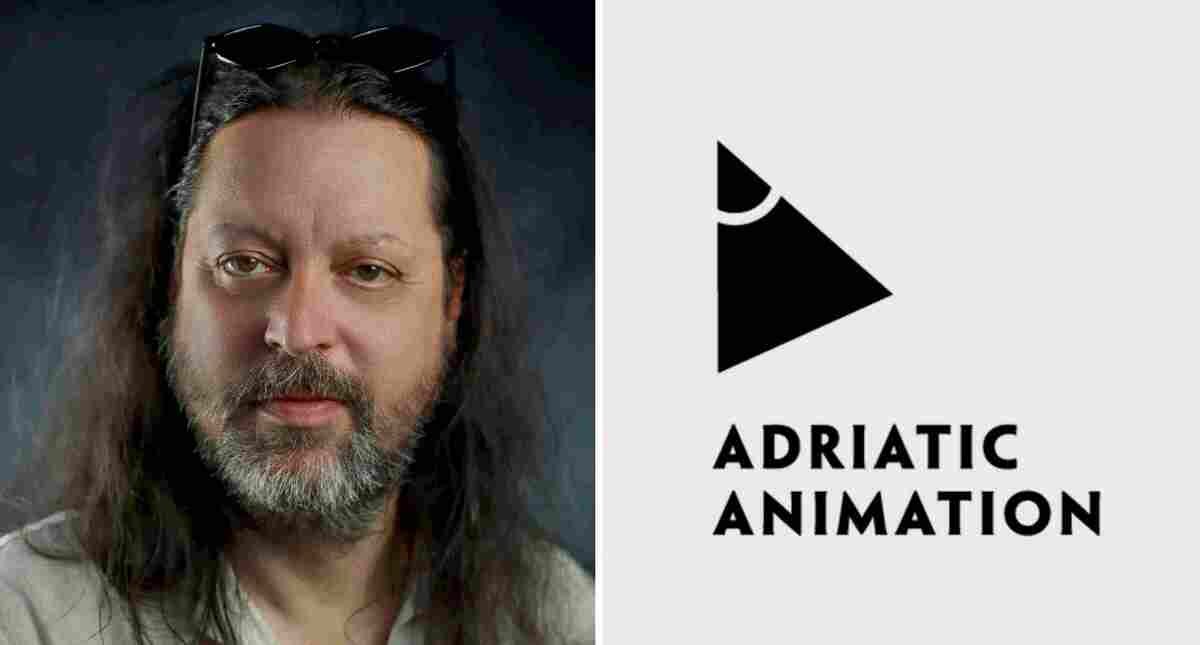
France-based, Croatia-born director, scriptwriter, and producer Draško Ivezić has developed a distinctive voice through films created with his animation studio, Adriatic Animation. The studio can count respected artists amongst its directors, including Chintis Lundgren, Laura Martinović, Lea Vidaković, Lucija Mrzljak, and Marko Dješka, alongside equally storied producing collaborators. At the 2025 edition of Anibar Animation Festival, which took place between 14–20 July in Peja, Kosovo, we sat down with Ivezić to discuss his perspectives on meaningful animated stories, moving into creating a feature, and the strengths behind humor and finding close collaborators.
ZF: How has the state of indie European animation changed since the start of your career?
Draško Ivezić: This is a difficult question because I’m an active part of the industry. For me, it’s a living thing, so I cannot know when something has changed, as it’s always changing. Trends disappear and come back. There might be a boom in Hungary, and then, all of a sudden, there is a boom in Korea. The Japanese are constantly making some crazy, interesting stuff—France as well. However, I feel like France’s 2D is a little bit in crisis. There are a lot of commercial 3D shows, but there are always these indie creators. In France, stop-motion is also becoming a thing. In Europe, I feel like what’s happening in Spain is interesting because they are making more feature films now for artistic value—previously, they were trying to imitate DreamWorks. People are slowly abandoning that idea and trying to find what European animated film is and how to brand it. If you want to attract an audience, you have to stand out.
For me, the new interesting thing was that Neon picked up Ugo Bienvenu’s Arco, which was selected for Cannes. I really like Neon’s programming and what they have done in the last five years. If they’re looking into animation, that means we are looking at an interesting future. I think we need the kind of audience that would watch Anora—I want them to watch animation too. That would be my dream. Then, we can succeed in this sort of auteur cinema, which I think Europe is very strong in, while the US has more of this “corporate cinema”. If we want to succeed and keep stories moving around, then I think we have to do what Europe is strong in, like subsidized films, and stop doing kids’ business like toys. Stop following capitalism and really make wonderful, long-lasting stories. Even for kids, we shouldn’t be driven by profit but instead by what kinds of stories we’re telling.
ZF: In that case, do you feel like there should be more overlap and mutual learning between live-action and animation?
DI: I feel like some events, like Berlinale, for example, could be more open to animation. I think they should be braver and include more things in the main program, rather than putting everything in the Generation strand again. This is my hope: that the industry can slowly start to be more open. Also, maybe kids should not watch just animation—maybe they should also watch documentaries and live-action. I feel like there should be some shifting. I think we, as producers and directors, should all try to work together with festival programmers, critics, and so on, to create a new environment that invites different kinds of stories.
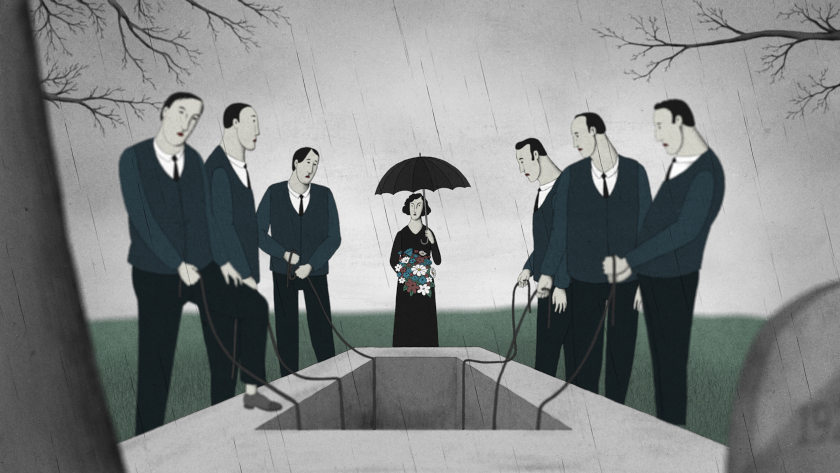
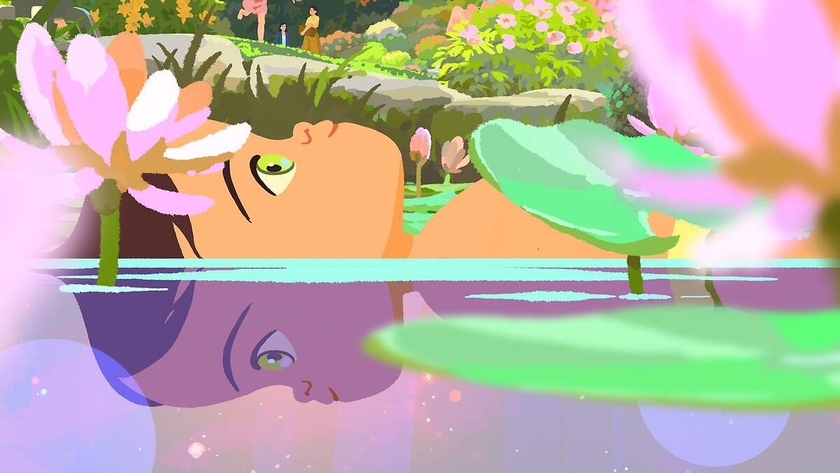
'Eeva' by Lucija Mrzljak and Morten Tšinakov, produced by Ivezić
ZF: What interests you most about your company, Adriatic Animation?
DI: At the moment, we want to focus on this feature, [‘Saima – Scenes from a Midlife Crisis’], which is co-developed by Alexandra Films from Estonia, my own Adriatic Animation from Croatia, and Avec ou Sans Vous from France. I made some wrong decisions before where I took on a lot of films, and now I want to slow down and try to make a bit higher-budget work. I want to try to focus on authors like Lucija Mrzljak and Lea Vidaković, and to keep working with Chintis Lundgren and Marko Dješka. I want to work with a smaller number of really good auteurs, and I want to be very careful about who we are bringing on, because otherwise we will constantly be rushing and doing something superficial. I want to focus more on quality and aim for bigger festivals. Others, for example, like Lucija and Lea, could consider feature films in the future—Marko, too. These directors with whom I’m working could conceive some projects which would fit that format. For TV series, I’m not sure, because I feel like the environment in Europe is still too much kids’ business, which doesn’t touch me. I don’t feel comfortable there. Maybe in the future, we could do a series, but at the moment, I feel like this is not a very tangible way to go, at least for Europe. We could still encourage cooperation within CEE, as I believe CEE Animation is a strong brand. I would also like to participate in enforcing that brand as a producer and somebody who advocates.
| Related: 29 Selected Animation Projects for CEE Animation Forum 2025 |
ZF: Many of the films that you produce through Adriatic Animation could be described as more quirky or eccentric. Do you have a particular style or tone that you are drawn toward?
DI: I like to make comedies as a director because I like to make people laugh. I also think there is some power in humor. I think humor is probably my favorite human invention, because it really opens you up to receiving different ways of looking at life and yourself. You recognize something which you may be too shy to say, but then it’s easier to laugh and admit that, okay, maybe we are jerks or whatever. I see film as a storytelling tool—film is, at the moment, the most popular medium for telling stories after video games. Right before that it was, perhaps, poems and then novels. Now, we live in a time where film is the medium. I’m interested in stories, and that’s how I’m picking my projects. If I believe an auteur is presenting authentic stories, and they can also inspire others to consider them, then I would take on that project. There are sometimes abstract films which don’t have a story, but then I’m trying to take something which is fresh, either in technique or aesthetics, that surprises me. When I walk around festivals, I would like to see something fresh, because I realize this is also something programmers want, and we want to work together. We want to inspire the festival programmers who want to inspire others, because I feel like it’s important that we are all in this kind of dialogue together.
ZF: Do you intend to approach this next feature very differently from your shorts?
DI: We don’t have any clear strategy yet. I feel like it’s still too early, and all of this in my head is theoretical. We are doing an adult film, which almost no animation distributor would normally take because distributors are focused on children. If we open some doors here, you can ask me about it in a few years. It’s the same with short films, but the only difference is that it’s a feature film for cinemas. In my mind, festivals are also important, but it’s not the only reason—we also want to find a commercial distributor and show films to a “regular” audience. If someone watches our film instead of a Wes Anderson film, then I feel like I’ve done my job. For some filmmakers who make very indie films, staying at festivals is enough for them. I would also like to see people who normally wouldn't attend an animation festival—like my mom, for instance—watch our films.
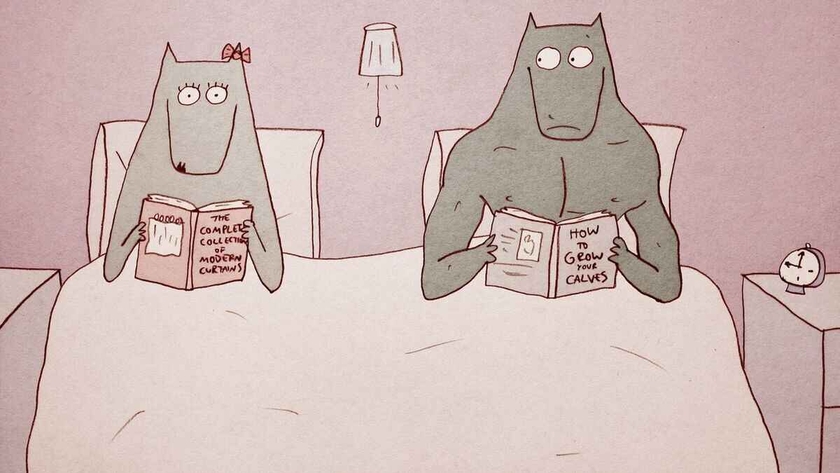
'Toomas Beneath the Valley of the Wild Wolves', co-created, produced, and main character voiced by Ivezić
ZF: Could you elaborate on your long-standing collaboration with your personal and professional partner, Chintis Lundgren?
DI: We are co-authors, as I’m not just producing, and Chintis is also producing through her company in Estonia. The first film we did with Adriatic Animation was ‘Life with Herman H. Rott’. It was natural for us to try that, given that we are a couple and spend a lot of time together. Then, we started to develop that story together. Since this was the perfect case for co-production, we joked about creating a “matching” agency for different countries. It was learning how to work together as authors, and then later learning how to produce. For ‘Manivald’, this was a bit more advanced, because my dream was always to work with the National Film Board of Canada. I just said, let’s try it, and we did it. The producer, Jelena Popović, luckily liked the project, and this is where I also learned a lot. The third film, ‘Toomas Beneath the Valley of the Wild Wolves’, was always my dream to work with ARTE. I wanted to work with this legendary [ARTE France selector for short- and medium-length films] Hélène Vayssières and to have her editorial stamp. She looks at hundreds and hundreds of films, and in Croatia, we simply don’t have anybody with that experience, except maybe festival programmers. But it’s not usual that you work with festival programmers when you make your film. But since Hélène pre-buys the film from us, she always gives notes. Chintis and I wanted to gain experience working with Hélène, and the only way to do so was through French companies, as Arte only pre-buys from them. Then, we found Miyu, and everything started to fall into place.
ZF: You work in many different capacities as a creator, director, producer, and more. How do these roles fit together and cross-pollinate each other?
DI: When I was a teenager, I was doing a lot of theater. You have to think about the set design, lights, costumes—and I was also acting in it, not just directing. We made a musical in my hometown that we wrote together, and it was performed like 20 times, which was a lot, and it was full all the time. When I went to study, I was already carrying that experience, and I appreciated it because I know now that it gives you a lot of perspective. I was always dreaming of working in, let’s call it, entertainment. I was bringing in all kinds of art that you needed. That’s why I think these different roles make sense together.
| Related: All Those Sensations In My Belly by Marko Dješka (pr. Adriatic Animation) |
The interview with Draško Ivezić was conducted during the 2025 edition of Anibar Festival (14-20 July 2025, Peja, Kosovo).
contributed by: Olivia Popp
Want to read more free articles like this?

Keep this professional animation journalism effort relevant and updated. Become our patron

Read More About:
Related Articles
Zippy Frames is the premier online animation journal promoting European and Independent Animation animation since 2011
Zippy Frames
Quick Links