
Shorts
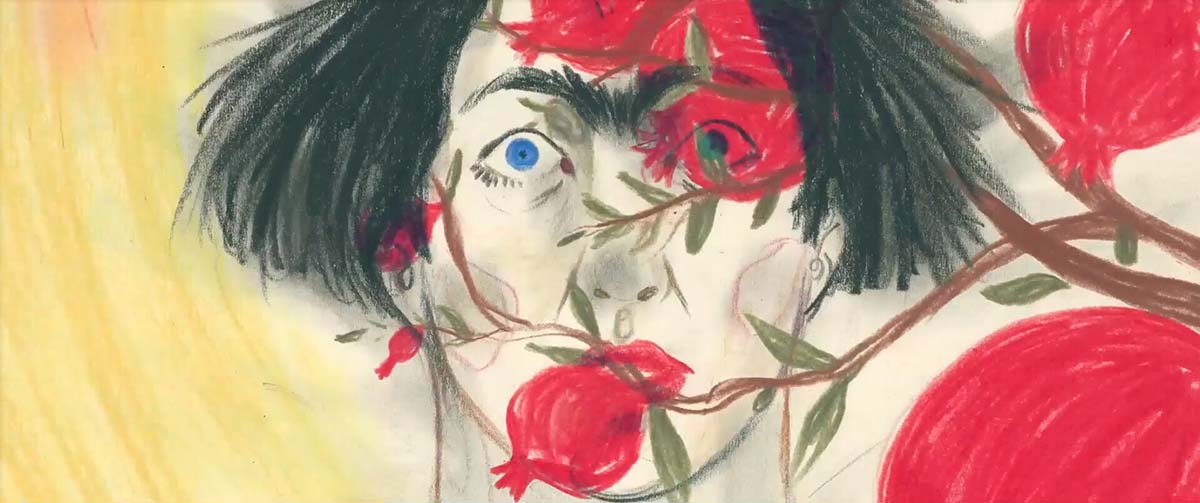


'Sphere Supreme' Animation Short by Hasan Pastaci
ZF Team
Turkish-born animation director Hasan Pastaci has something to say about queerness, psychoanalysis, and peculiar encounters that turn into extraordinarily beautiful short films and an aura of mysticism.
In his student 2D animation short, 'Sphere Supreme', he utilizes these elements to a very successful extent. He talks to Zippy Frames.
ZF: Some films, especially student films, start from a personal experience. Your film seems to start with an abstract psychoanalytic concept, Karl Jung's supra-consciousness, a form of transcendental Self that exists above our individual Ego and its actions. How did the whole thing start?
HP: Even though the film might look abstract, it actually started from something very personal. I am Turkish, and I moved to Belgium almost ten years ago to pursue animation. Immigration has been difficult from the beginning, and even now, after all these years, I still struggle with my residence permit.
Every year, I have to prove myself again. I have to work, perform, and justify my presence. Last year was especially hard. My studies are finished, and it is really difficult to find work in the field. Living in this in-between state for so long, not being able to settle, feel that I am home or not, had a strong impact on me.
I often feel like I’m breaking into pieces, disintegrating from my own being. That feeling went directly into Arama.
At the same time, I have a strong spiritual side. Music has always been very important to me, especially artists like Dead Can Dance, Enigma, and Vangelis. I’m interested in the sublime, in the idea that we are more connected to the world than we usually think. To nature, animals, and others. That belief, that everything is made of energies, is what slowly led me toward Jung.
ZF: The film's main character, Arama, meets a Kite-Man who gives him a pomegranate tree fruit. Did you have any part of this imagery in your experiences/memories/ social environment, and how did you use this creatively?
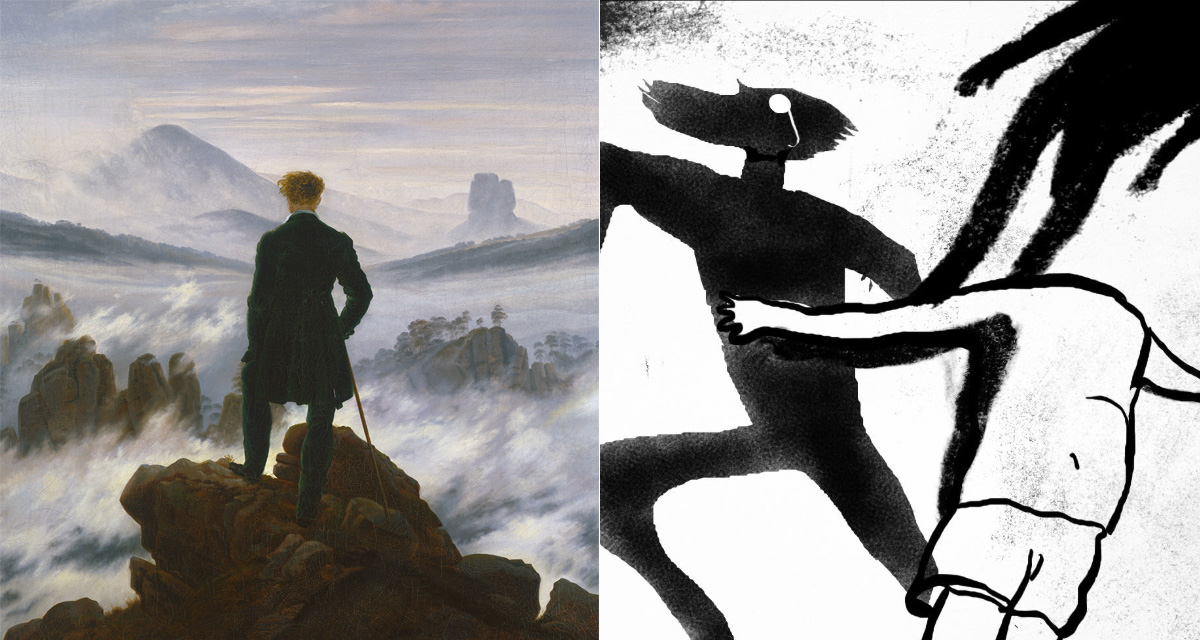
HP: Arama is mostly a passive, observant character. Things don’t happen because he searches for them. They come to him. The pomegranate tree exists in a parallel or sublime world, and the seed of truth reaches Arama through a mythic creature, the Kite-Man. I tend to believe that the tree has its own will, and that Arama and the tree are actually one. But Arama has to go through this psychedelic inner experience in order to realize that connection and see the truth. Be the tree itself.
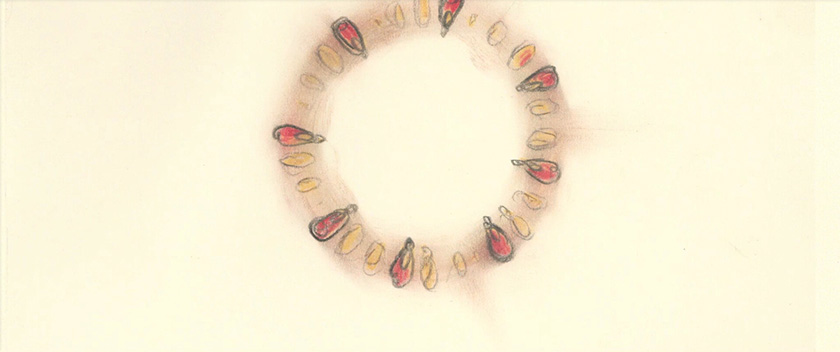
There is a shot inside the pomegranate that appears twice in the film. The first time, it’s chaos. The second time, Arama knows how to look at it. He starts to see harmony inside the chaos. This time, we experience chaos in a peaceful way, more vividly.
I tried very consciously to avoid giving the film one clear meaning. I wanted to keep it open for personal interpretation. I have my own readings, of course, but I prefer to give people space to create their own version of the story. For me, that openness is what makes the film alive.
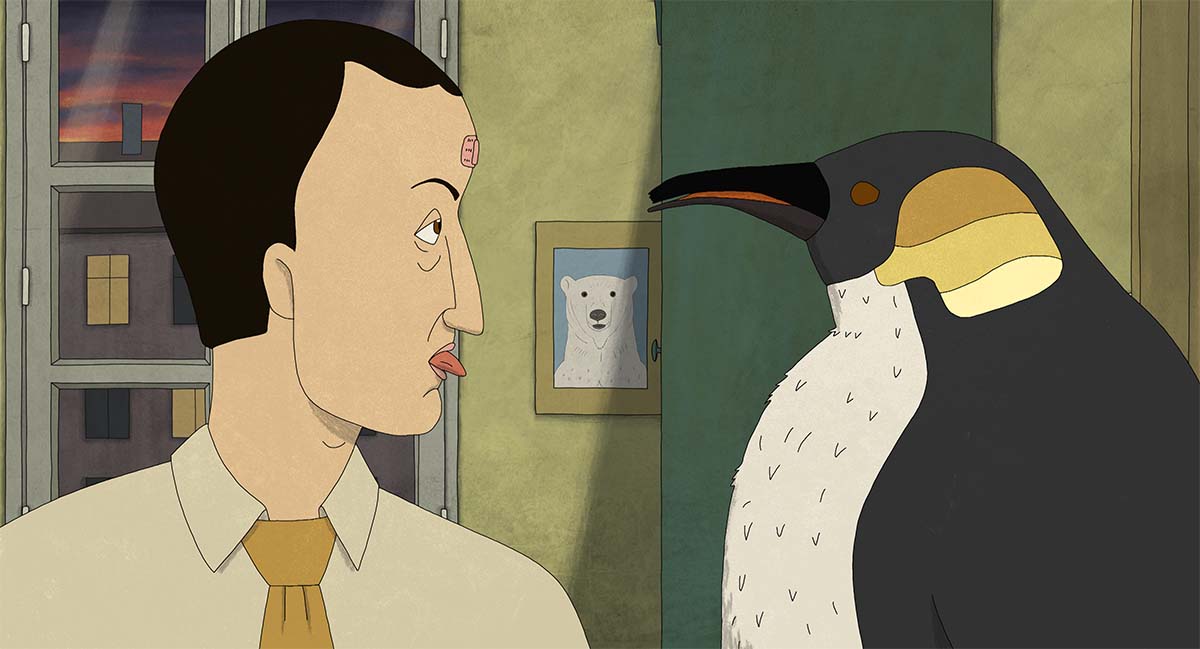
'Sphere Supreme', dir. Hasan Pastacı
ZF: You're referring to the détournement process, which can be roughly defined as the creation of a layer and a new concept or meaning overlaid on an existing work of art or culture. How did that work in the film?
HP: I learned about détournement during my studies at KASK. The idea that nothing is completely new really stayed with me. Everything has already been made in some form.
Instead of trying to invent something from starch, I like to look at what already exists and deconstruct it. Sometimes, only small fragments, and then add something personal on top. Sphere Supreme was built exactly like that. I had no clear storyboard, animatic or anything alike. The film emerged spontaneously.
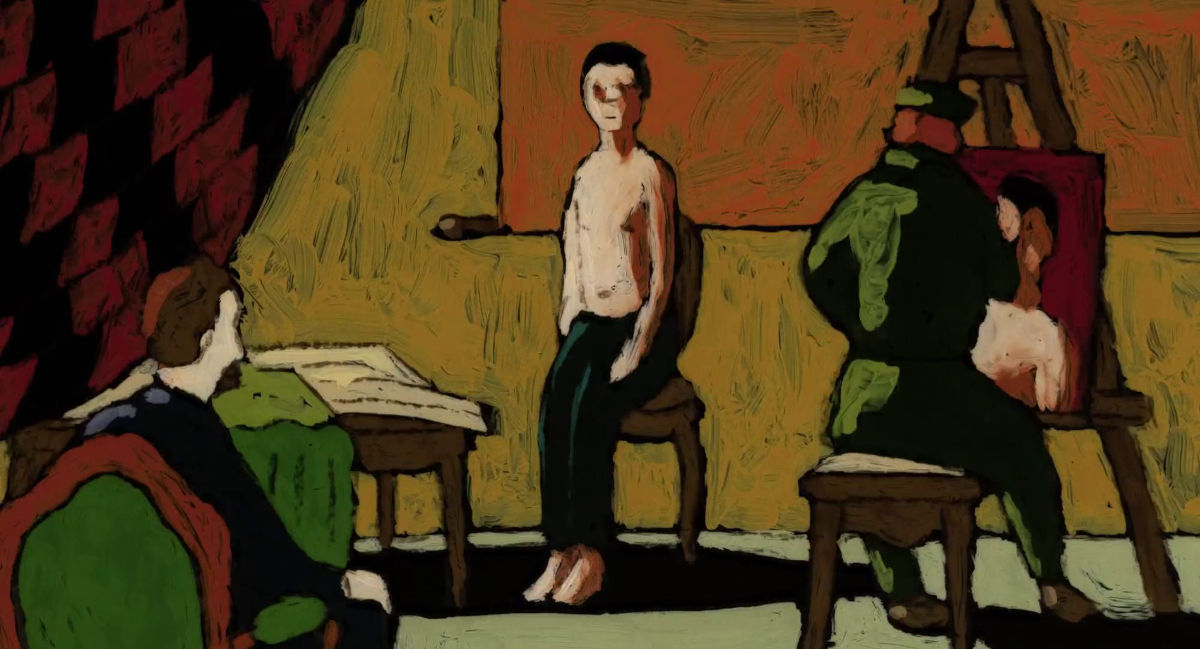
ZF: By watching the film, you feel that Amara is deconstructed into a Vitruvian Man, and the visual feel is that of a study in a Renaissance painter's atelier. How did you construct the visual style for Sphere Supreme?
HP: Leonardo da Vinci was one of my earliest inspirations, especially his sketches. I always loved lines that feel personal, researched, and curious.
Besides Da Vinci, I was inspired by artists like Lautrec, Degas, Klimt, and Schiele. Their lines feel dynamic, emotional, and alive. Around five years ago, I also met my mentor, Joanna Quinn, who had a big impact on me.
I see my work as an organism. It keeps growing, changing, and refining itself. Recently, I’ve been very inspired by Taiyō Matsumoto. His work, especially Tekkonkinkreet, gave me a lot of courage in terms of freedom and expression.
ZF: This is a student film, so could you briefly outline the key facts? For instance, the time available, collaborators, any challenges faced, etc.
HP: Sphere Supreme was made during my master’s, which was a two-year program. I actually only started animating in the second semester of the second year. Before that, I spent a long time researching and exploring.
For this film, I wanted to try a different process. I name this nomadic way of animating. I took my papers to Barcelona and animated in cafés and public spaces. Perfectionism was not a goal, but being in that moment was. Working around people felt important to me. I like the idea of bringing art closer to everyday life. I got many positive reactions and it was such a good conversation starter.
One of my best friends, Sofie van Wesemael, was incredibly important for this project. She believed in it deeply, helped me scan drawings, saved me time, and shared her thoughts, brainstormed together with me. I’m endlessly grateful for that.
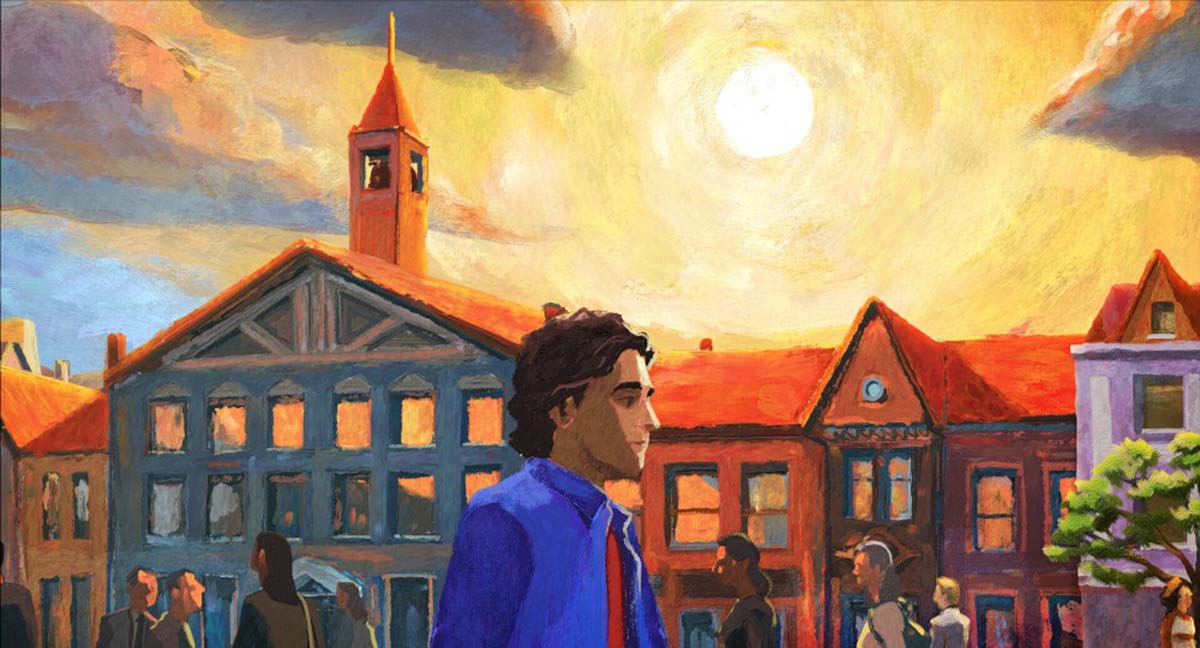
'Sphere Supreme', dir. Hasan Pastacı
ZF: As expected, the music accompanies the film's transcendental theme. What guidance did you give to your composers, and how was the work carried out?
HP: The music was made by two friends, Anthony Touzalin and Yohann Brunn (Emotive Music). I met Anthony in Annecy six years ago, and since then we have bonded closely. Knowing their work, I immediately reached out to them once I had some footage related to the film. I mainly talked to them about feelings and atmosphere, and shared my musical inspirations.
I didn’t want to give strict instructions. It was important for me to trust them and give them freedom to add their own layer. Their music gave the film its soul. In the end, it really feels like a collective voice, something we made together.
ZF: What was the most difficult scene to animate or direct in the 'Sphere Supreme'?
HP: Starting to animate was already difficult for me. I love drawing, but animation still intimidates me sometimes. I’ve learned to accept that limitation as part of who I am and how I work.
ZF: Would you classify your work here as queer animation based on the topic and its narrative approach? I know filmmakers don't really want to pigeonhole their work, but what does that term mean to you, if anything?
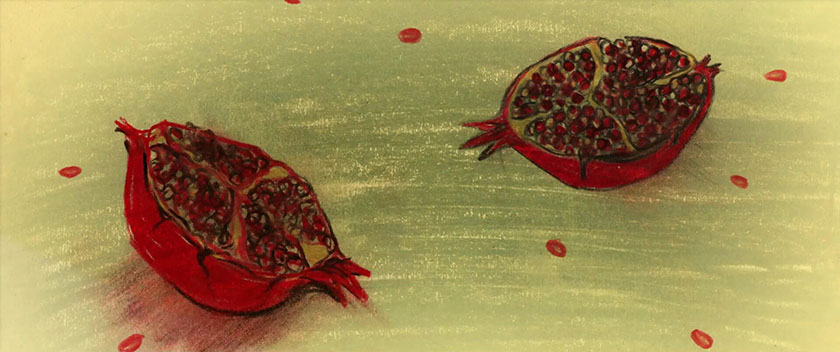
HP: Yes, I would definitely call Sphere Supreme a queer film. For me, queerness is anything that exists outside what is considered normal. Anything that doesn’t fit neatly into predefined structures. A small but important symbol for me is the pomegranate. In Latin, pōmum grānātum means “apple with many seeds.” If the apple is traditionally linked to Adam and Eve, then the pomegranate becomes something else. I like to think of it as a queer symbol.
ZF: Is 'Sphere Supreme' an example of what you'd like to do artistically in the future as well? Or perhaps you'd like to continue with something completely different?
HP: I want to stay open. I want to experiment with different media, forms, and styles. That doesn’t mean I won’t return to this visual language, but I don’t want to limit myself. Curiosity is very important to me. I would like to gradually add new layers and develop a stronger audiovisual language through experimentation.
Watch 'Sphere Supreme'
About the Author
Hasan Pastacı is a Turkish animation filmmaker and visual artist based in Belgium. He studied Animation Film at KASK School of Arts in Ghent, where he completed both his bachelor’s and master’s degrees. His work often starts from personal experiences of migration, in-betweenness, and inner fragmentation, and translates them into hand-drawn animation. Drawing is central to his practice. Hasan approaches animation through line, movement, and rhythm, using drawing as a way of thinking and researching. His visual language is influenced by art history, expressionism, and music. It often balances intuition with long periods of exploration.
His graduation film Sphere Supreme has been selected for over 70 international film festivals, including Annecy, Sydney Film Festival, and PÖFF, and won the best Turkish Film in Canlandiranlar Animation Festival in Turkiye. Through his work, Hasan continues to explore animation as a space for experimentation, emotional resonance, and personal storytelling.
Want to read more free articles like this?
Keep this professional animation journalism effort relevant and updated. Become our patron