

'Dog Ear' Animation Short and Reenacting Role Play: Interview with Péter Vácz
Vassilis Kroustallis
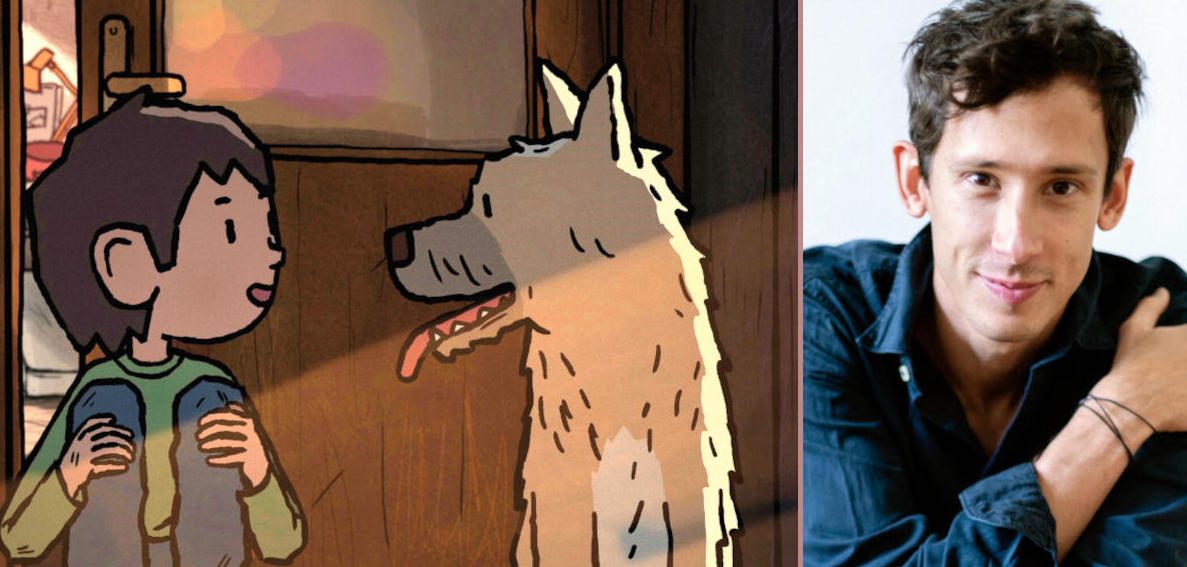
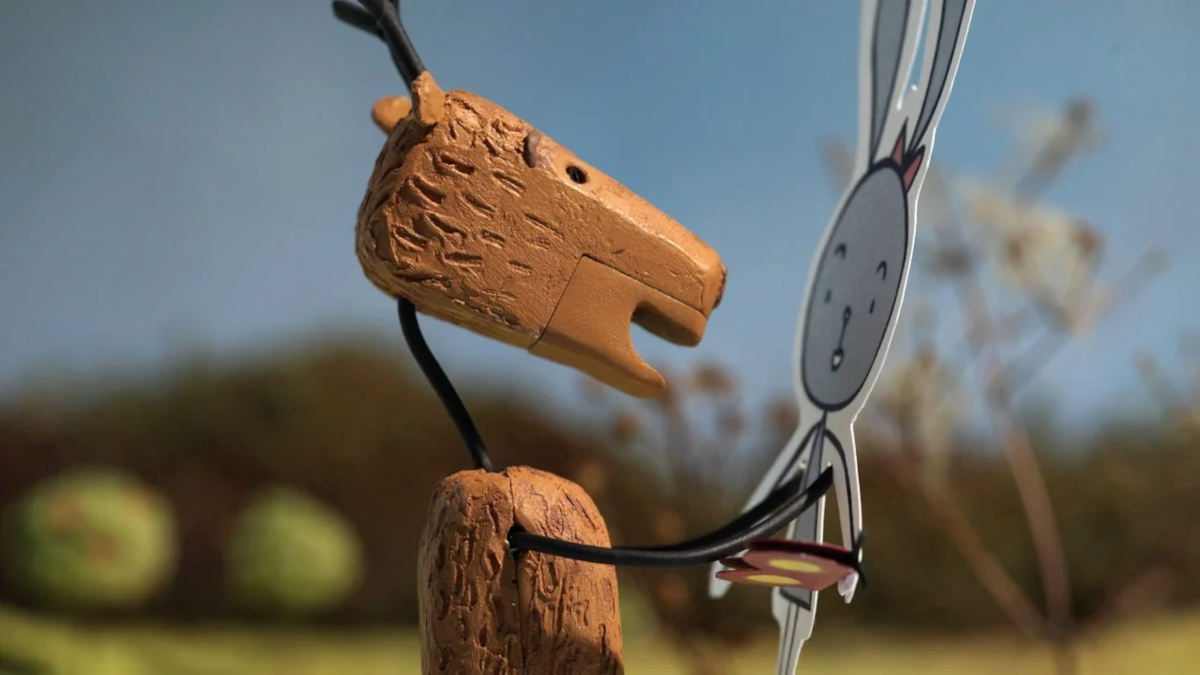
Hungarian animation artist Péter Vácz first came to the spotlight with his 16-minute graduation film (MOME Anim) 'Rabbit and Deer' (2013). The story of two friends and partners who need to tackle their sudden separation and subsequent stay in two different dimensional settings (a 2D dimensional world for the Rabbit, a 3D dimensional world for the Deer), resonated with both children and adult audiences; the film was screened at more than 300 festivals and won over 125 awards and special mentions, including the Annecy Festival Junior Jury Award, two awards qualifying for the Oscars, a special mention at Animateka Festival, the best short film at Kecskemét Animation Film Festival, and a number of other distinctions. It also permitted its director to experiment with both 2D animation and stop-motion animation at the same time, reflecting the film's plot transitions from 2D to three-dimensional.
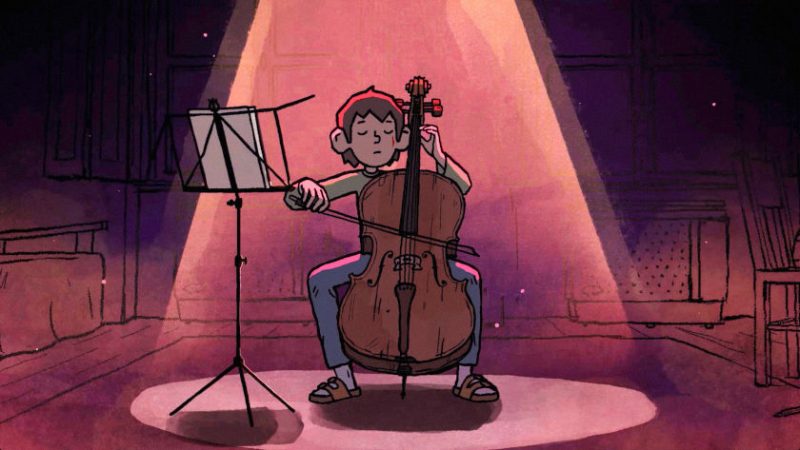
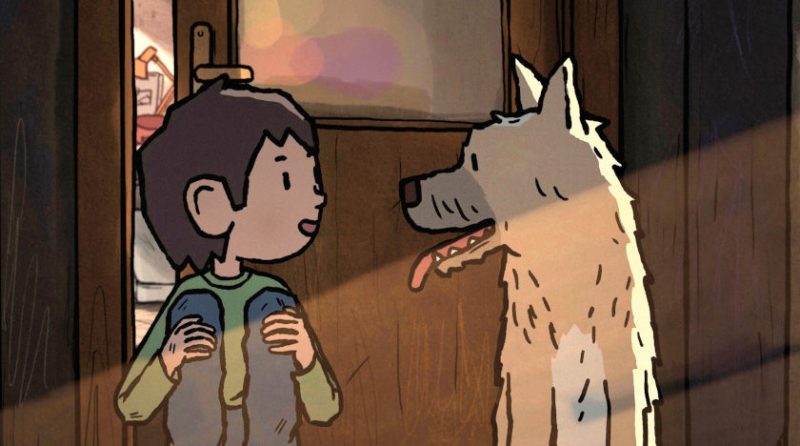
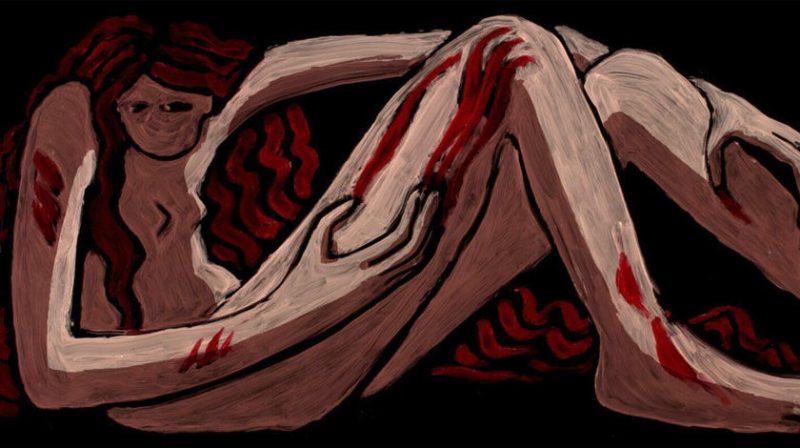
Fast forward to 2025, and after several commissioned films and other projects (including 'James: All I'm Saying', 'Pillowface'), Péter Vácz presents 'Dog Ear'. The 2D animated short, a 20-minute film, features Berci, an eleven-year-old boy who spends an afternoon alone at home with his dog, lingering in his anger after witnessing his parents' violent fight. The film's thick, drawn character lines and sense of abandonment permeate it, as absent adult characters still shape the tone of the resulting role-play between the boy and his dog.
We met Péter Vácz during the 33rd Etiuda&Anima Festival, where he served on the festival jury; he talked at length about the film. So far, 'Dog Ear' has won 28 awards (including a screenplay award at the Animage Festival and the Silver Jabberwocky Award at the 2025 edition of Etiuda&Anima).
'Dog Ear' and Its Production History
‘Dog Ear’ was inspired by the difficulties I experienced during my parents’ divorce, which led to therapy and eventually to making the film. Because of its deeply personal nature, I had to closely oversee most of the creative process, including character animation, background design, and character design. As a result—after a 2.5-year pre-production period—the production itself also became just as long.
When I make a personal narrative short film, I never know how long it will be. At the beginning, Rita Domonyi, the film's dramaturgy consultant, said it should be around 8 minutes so it would work well for festivals. I was like, “We will see,” but then I got it to 17 minutes with the animatic. I understood the consequences of a long short film having less chance of getting into festivals, but I think in terms of bigger emotional arcs - so I need time. So I keep building the animatic until I feel that it tells the story the way I wanted to express it, with all the initial ideas, gestures, and emotions.
In the 1990s in Hungary, it was normal for my siblings and me to be spanked, sent to stand in the corner, or given the silent treatment for misbehaving. As a middle-class family, we had a good education—we learned music, did sports—and we also received love and care from our parents. But as adults, like our parents, we also struggle to express our emotions, manage our relationships, and find our place in society.
Design and Background References
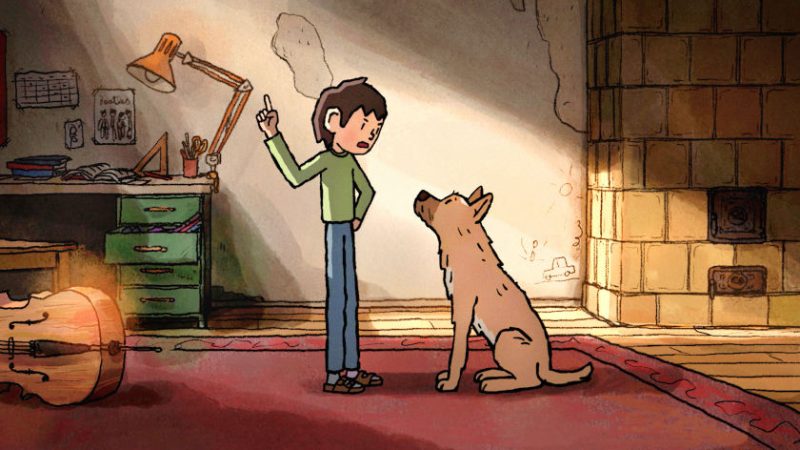
For the character design, I wanted to have a very loose ink drawing style, with random thicker and thinner lines, like Quentin Blake’s illustrations or the 'Ernest & Celestine' movie. But as we made more animation tests, I couldn’t adapt those styles to 'Dog Ear', and the lines became more concrete. It was intuitive. I kept the outlines for the backgrounds as well, but thinner so that they don’t interfere with the characters. The house is an exact copy of where I grew up, with the washing machine behind the broken wall. It was intentional to emphasize the ‘ready to collapse’ state of the house to use as a metaphor for his insecurity about his parents' collapsing relationship.
Role play: Children Mimicking Adults
I had several sketches that involved some kind of role-play. I think they initially emerged as a subconscious way for me to explore certain conflicts that I otherwise wouldn’t have known how to approach with just a boy. Later in the production, I learned that children often use role-play to reenact and symbolically express experiences and emotions they don’t yet know how to put into words. During development, however, I deliberately used each of these scenes to build the narrative and reinforce the underlying story. The interactions between the boy and his dog were also a conscious choice, intended to show how deeply he is affected by his family falling apart and how we absorb and imitate our parents' behaviors.
'Rabbit and Deer' film – the Breakout Graduation Short
I like simple, sweet, and playful characters, which can often be perceived as childlike, but I never set out to make films specifically for children. When it comes to storytelling, I approach it as if I were telling a story to a random person on the street. 'Rabbit and Deer' is a story about two grown-ups trying to figure out their relationship problems. I deliberately left it a little ambiguous whether they were friends or a couple to leave more room for personal interpretation.
Being Diverse in European Independent Animation: Opportunities and Challenges
I’m constantly changing, and so are my interests; I need to try new things simply for the sake of exploration, and I keep switching between different techniques and fields. My choices never come from necessity, but rather from the idea, the project itself, or the circumstances — such as the budget, schedule, or available studio facilities
In 2018–19, before 'Dog Ear', I was developing a 25-minute puppet-animated Christmas TV special titled 'Noah’s Tree'. I took it to several pitching forums, including Annecy, Cartoon Forum, Animarkt, and Visegrad [now CEE Animation Forum], and even found potential French and Belgian co-producers who were willing to come on board. In the end, however, the project was rejected four times by the Hungarian National Film Institute (NFI), and our Creative Europe application fell short by just a few points. Eventually, I had to put it in a drawer. But the core subject matter found its way into Dog Ear, so it certainly wasn’t all in vain.
With ' Dog Ear', my producer, Gábor Osváth, and I consciously decided not to complicate our lives with pitching forums and co-productions. Initially, we envisioned it as a relatively simple, hand-drawn 2D film, around 10 minutes long, that would take about a year to make. I was prepared to make it on my own, even if we didn’t get any funding. The NFI rejected us twice more, first for script development and then for pre-production. But two years later, when I had finished the animatic and we saw how well it worked, we decided to give it one last shot. This time, we finally got production funding.
As an independent filmmaker, I rely on several income sources. I teach animation, received a three-year artistic scholarship in 2018, occasionally work on commercials and other commissioned projects, and earn some money from awards and film distribution. For me, being an indie filmmaker is partly about finding ways to sustain my creative work while remaining free to follow my curiosity and work on the projects I believe in.
Community-building: Being the president and founding Member of the Hungarian Society of Animation Artists (AA1)
A group of Hungarian independent animation filmmakers first came together in 2022, mainly because of our concerns about the NFI (National Film Institute) and its funding system. Very little money was available, grants were often insufficient, and the animation application system was essentially adapted from live-action filmmaking without being properly tailored to our profession's needs. The same predominantly male jury members had also been in place for almost a decade, so we wanted more diversity and greater representation for animation professionals in the decision-making process.
Fortunately, we’re not alone: HAPA, the Hungarian Animation Producers Association, is another important partner, and we can join forces when advocating for change at the NFI.
Our other main goal is to build a community, especially for younger artists starting out in the industry, where they can connect, share knowledge and experiences, and support one another through the challenges of their careers. We've been organizing animation events every month for years now.
More recently, following the change of government in April, more than twenty new film organizations have been established, bringing the total to 39, to come together under an initiative called Filmreform2026 to rethink the structure of the Hungarian film industry and establish more democratic, transparent processes for discussion and decision-making. Building a stronger, more connected professional community is an important foundation for changing that perception in the future.
Etiuda & Anima Festival
This is my first time at Etiuda&Anima – ‘Dog Ear’ won the Silver Jabberwocky here, and now I come forward as a Jury member. I think it’s great to have both live-action and animation at the same festival so directors can draw inspiration from different fields of filmmaking.

Péter Vácz at the 33rd Etiuda& Anima Festival. His webpage
Read More About:
Related Articles

Zippy Frames is the premier online animation journal promoting European and Independent Animation since 2011
Zippy Frames
Quick Links
